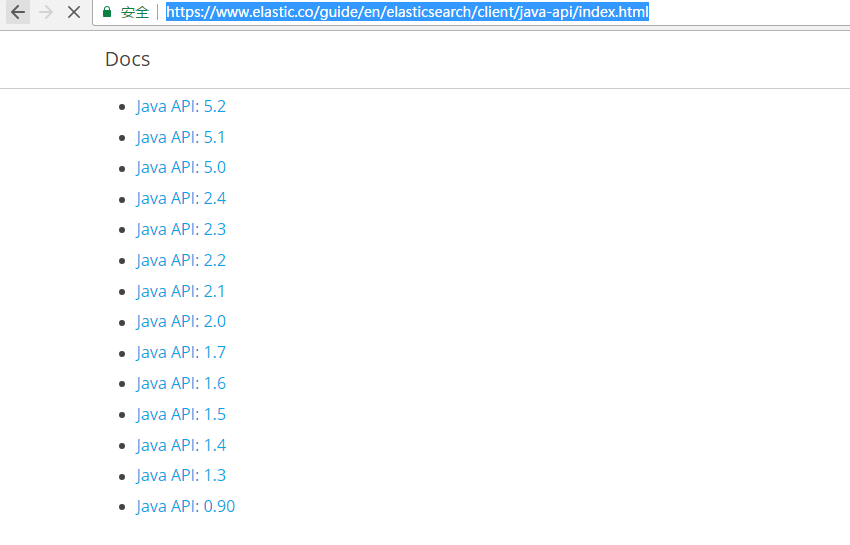
Elasticsearch 编程API入门系列---入门1(Java Client类型、连接es集群、添加json格式的数据、添加map格式...
https://www.elastic.co/guide/en/elasticsearch/client/java-api/index.html 我这里,elasticsearch用的是2.4.X版本。 https://www.elastic.co/guide/en/elasticsearch/client/java-api/2.4/java-docs.html 第一步:删除默认的App.java 第二步:选中后,再ctrl + n ,记住,要求自己能用快捷键,就用快捷键! 第三步:输入class,直接回车,再回车 第四步:我这里,以TestEs.java为例 第五步: 第六步:输入代码,这里不多说 通过TransportClient这个类,指定es集群中其中一台或多台机的ip地址和端口 TransportClient client = TransportClient.builder().build().addTransportAddress(new InetSocketTransportAddress (InetAddress.getByName("host1"), 9300)).addTransportAddress(new InetSocketTransportAddress(InetAddress.getByName("host2"), 9300)); 如果需要使用其他名称的集群(默认是elasticsearch),需要如下设置 Settings settings = Settings.settingsBuilder().put("cluster.name", "myClusterName").build(); TransportClientclient = TransportClient.builder().settings(settings).build().addTransportAddress(new InetSocketTransportAddress (InetAddress.getByName("host1"), 9300)); 通过TransportClient这个接口,自动嗅探整个集群的状态,es会自动把集群中其它机器的ip地址加到客户端中 Settings settings = Settings.settingsBuilder().put("client.transport.sniff", true).build(); TransportClient.builder().settings(settings).build().addTransportAddress(new InetSocketTransportAddress (InetAddress.getByName("host1"), 9300)); 更详细,请见 Elasticsearch的Java Client类型 索引index(四种json,map,bean,es helper) IndexResponse response = client.prepareIndex("zhouls", "emp", "1").setSource().get() 查询get GetResponse response = client.prepareGet("zhouls", "emp", "1").get(); 更新update 删除delete DeleteResponse response = client.prepareDelete("zhouls", "emp", "1").execute().actionGet(); 总数count long count = client.prepareCount("zhouls").get().getCount(); 附上代码 前提 准备,开启3台机器组建的es集群进程 test1测试(连接192.168.80.10和192.168.80.11) 1 package zhouls.bigdata.myElasticsearch; 2 3 import static org.junit.Assert.*; 4 5 import java.net.InetAddress; 6 import java.util.HashMap; 7 import java.util.List; 8 9 import org.elasticsearch.action.bulk.BulkItemResponse; 10 import org.elasticsearch.action.bulk.BulkRequestBuilder; 11 import org.elasticsearch.action.bulk.BulkResponse; 12 import org.elasticsearch.action.delete.DeleteRequest; 13 import org.elasticsearch.action.get.GetResponse; 14 import org.elasticsearch.action.index.IndexRequest; 15 import org.elasticsearch.action.index.IndexResponse; 16 import org.elasticsearch.action.search.SearchResponse; 17 import org.elasticsearch.action.search.SearchType; 18 import org.elasticsearch.action.update.UpdateResponse; 19 import org.elasticsearch.client.transport.TransportClient; 20 import org.elasticsearch.cluster.node.DiscoveryNode; 21 import org.elasticsearch.common.settings.Settings; 22 import org.elasticsearch.common.transport.InetSocketTransportAddress; 23 import org.elasticsearch.common.transport.TransportAddress; 24 import org.elasticsearch.common.xcontent.XContentBuilder; 25 import org.elasticsearch.common.xcontent.XContentFactory; 26 import org.elasticsearch.index.query.MatchQueryBuilder.Operator; 27 import org.elasticsearch.index.query.QueryBuilders; 28 import org.elasticsearch.search.SearchHit; 29 import org.elasticsearch.search.SearchHits; 30 import org.elasticsearch.search.aggregations.Aggregation; 31 import org.elasticsearch.search.aggregations.AggregationBuilders; 32 import org.elasticsearch.search.aggregations.bucket.terms.Terms; 33 import org.elasticsearch.search.aggregations.bucket.terms.Terms.Bucket; 34 import org.elasticsearch.search.aggregations.metrics.sum.Sum; 35 import org.elasticsearch.search.sort.SortOrder; 36 import org.junit.Before; 37 import org.junit.Test; 38 39 import com.fasterxml.jackson.databind.ObjectMapper; 40 import com.google.common.collect.ImmutableList; 41 42 public class TestEs { 43 44 //es和hadoop没关系啊,获取一个transportclient就可以操作es了 45 46 47 private TransportClient transportClient; 48 @Before//@Before和@Test的区别:每次执行都要先经过@Before,好比是,它是一个模板。 49 //before表示在执行每个test方法之前运行,常与@Test搭配使用 50 public void test0() throws Exception { 51 //获取TransportClient,来操作es 52 transportClient = TransportClient.builder().build(); 53 //需要使用9300端口 54 TransportAddress transportAddress = new InetSocketTransportAddress(InetAddress.getByName("192.168.80.10"), 9300); 55 //添加节点信息,最少指定集群内的某一个节点即可操作这个es集群 56 transportClient.addTransportAddress(transportAddress); 57 } 58 59 /** 60 * 用java代码测试的时候这样写是没有问题的,比较简单 61 * @throws Exception 62 */ 63 @Test 64 public void test1() throws Exception { 65 //获取TransportClient,来操作es 66 TransportClient transportClient = TransportClient.builder().build(); 67 //需要使用9300端口,指定es集群中的节点信息, 这个地方指定的端口是节点和节点之间的通信端口是9300,不是Http请求的端口9200. 68 TransportAddress transportAddress = new InetSocketTransportAddress(InetAddress.getByName("192.168.80.11"), 9300); 69 //添加节点信息,最少指定集群内的某一个节点即可操作这个es集群 70 transportClient.addTransportAddress(transportAddress); 71 System.out.println(transportClient.toString()); 72 } test2测试(连接192.168.80.10、192.168.80.11和192.168.80.12)(即es集群) 1 package zhouls.bigdata.myElasticsearch; 2 3 import static org.junit.Assert.*; 4 5 import java.net.InetAddress; 6 import java.util.HashMap; 7 import java.util.List; 8 9 import org.elasticsearch.action.bulk.BulkItemResponse; 10 import org.elasticsearch.action.bulk.BulkRequestBuilder; 11 import org.elasticsearch.action.bulk.BulkResponse; 12 import org.elasticsearch.action.delete.DeleteRequest; 13 import org.elasticsearch.action.get.GetResponse; 14 import org.elasticsearch.action.index.IndexRequest; 15 import org.elasticsearch.action.index.IndexResponse; 16 import org.elasticsearch.action.search.SearchResponse; 17 import org.elasticsearch.action.search.SearchType; 18 import org.elasticsearch.action.update.UpdateResponse; 19 import org.elasticsearch.client.transport.TransportClient; 20 import org.elasticsearch.cluster.node.DiscoveryNode; 21 import org.elasticsearch.common.settings.Settings; 22 import org.elasticsearch.common.transport.InetSocketTransportAddress; 23 import org.elasticsearch.common.transport.TransportAddress; 24 import org.elasticsearch.common.xcontent.XContentBuilder; 25 import org.elasticsearch.common.xcontent.XContentFactory; 26 import org.elasticsearch.index.query.MatchQueryBuilder.Operator; 27 import org.elasticsearch.index.query.QueryBuilders; 28 import org.elasticsearch.search.SearchHit; 29 import org.elasticsearch.search.SearchHits; 30 import org.elasticsearch.search.aggregations.Aggregation; 31 import org.elasticsearch.search.aggregations.AggregationBuilders; 32 import org.elasticsearch.search.aggregations.bucket.terms.Terms; 33 import org.elasticsearch.search.aggregations.bucket.terms.Terms.Bucket; 34 import org.elasticsearch.search.aggregations.metrics.sum.Sum; 35 import org.elasticsearch.search.sort.SortOrder; 36 import org.junit.Before; 37 import org.junit.Test; 38 39 import com.fasterxml.jackson.databind.ObjectMapper; 40 import com.google.common.collect.ImmutableList; 41 42 public class TestEs { 43 44 //es和hadoop没关系啊,获取一个transportclient就可以操作es了 45 46 47 private TransportClient transportClient; 48 @Before//@Before和@Test的区别:每次执行都要先经过@Before,好比是,它是一个模板。 49 //before表示在执行每个test方法之前运行,常与@Test搭配使用 50 public void test0() throws Exception { 51 //获取TransportClient,来操作es 52 transportClient = TransportClient.builder().build(); 53 //需要使用9300端口 54 TransportAddress transportAddress = new InetSocketTransportAddress(InetAddress.getByName("192.168.80.10"), 9300); 55 //添加节点信息,最少指定集群内的某一个节点即可操作这个es集群 56 transportClient.addTransportAddress(transportAddress); 57 } 58 59 /** 60 * 用java代码测试的时候这样写是没有问题的,比较简单 61 * @throws Exception 62 */ 63 @Test 64 public void test1() throws Exception { 65 //获取TransportClient,来操作es 66 TransportClient transportClient = TransportClient.builder().build(); 67 //需要使用9300端口,指定es集群中的节点信息, 这个地方指定的端口是节点和节点之间的通信端口是9300,不是Http请求的端口9200. 68 TransportAddress transportAddress = new InetSocketTransportAddress(InetAddress.getByName("192.168.80.11"), 9300); 69 //添加节点信息,最少指定集群内的某一个节点即可操作这个es集群 70 transportClient.addTransportAddress(transportAddress); 71 System.out.println(transportClient.toString()); 72 } 73 74 /** 75 * 可以这样写,防止代码中指定的链接失效 76 * 但是写起来比较麻烦 77 * 在实际工作中这样写不是很靠谱,需要完善,做测试可以 78 * @throws Exception 79 */ 80 @Test 81 public void test2() throws Exception { 82 //获取TransportClient,来操作es,通过TransportClient可以和es集群交互 83 TransportClient transportClient = TransportClient.builder().build(); 84 //需要使用9300端口,指定es集群中的节点信息, 这个地方指定的端口是节点和节点之间的通信端口是9300,不是Http请求的端口9200. 85 TransportAddress transportAddress = new InetSocketTransportAddress(InetAddress.getByName("192.168.80.10"), 9300); 86 TransportAddress transportAddress1 = new InetSocketTransportAddress(InetAddress.getByName("192.168.80.11"), 9300); 87 TransportAddress transportAddress2 = new InetSocketTransportAddress(InetAddress.getByName("192.168.80.12"), 9300); 88 //添加节点信息,最少指定集群内的某一个节点即可操作这个es集群 89 transportClient.addTransportAddresses(transportAddress,transportAddress1,transportAddress2);//加入多个地址 90 System.out.println(transportClient.toString()); 91 } test3测试(连接192.168.80.10、192.168.80.11和192.168.80.12)(生产环境下建议) 1 package zhouls.bigdata.myElasticsearch; 2 3 import static org.junit.Assert.*; 4 5 import java.net.InetAddress; 6 import java.util.HashMap; 7 import java.util.List; 8 9 import org.elasticsearch.action.bulk.BulkItemResponse; 10 import org.elasticsearch.action.bulk.BulkRequestBuilder; 11 import org.elasticsearch.action.bulk.BulkResponse; 12 import org.elasticsearch.action.delete.DeleteRequest; 13 import org.elasticsearch.action.get.GetResponse; 14 import org.elasticsearch.action.index.IndexRequest; 15 import org.elasticsearch.action.index.IndexResponse; 16 import org.elasticsearch.action.search.SearchResponse; 17 import org.elasticsearch.action.search.SearchType; 18 import org.elasticsearch.action.update.UpdateResponse; 19 import org.elasticsearch.client.transport.TransportClient; 20 import org.elasticsearch.cluster.node.DiscoveryNode; 21 import org.elasticsearch.common.settings.Settings; 22 import org.elasticsearch.common.transport.InetSocketTransportAddress; 23 import org.elasticsearch.common.transport.TransportAddress; 24 import org.elasticsearch.common.xcontent.XContentBuilder; 25 import org.elasticsearch.common.xcontent.XContentFactory; 26 import org.elasticsearch.index.query.MatchQueryBuilder.Operator; 27 import org.elasticsearch.index.query.QueryBuilders; 28 import org.elasticsearch.search.SearchHit; 29 import org.elasticsearch.search.SearchHits; 30 import org.elasticsearch.search.aggregations.Aggregation; 31 import org.elasticsearch.search.aggregations.AggregationBuilders; 32 import org.elasticsearch.search.aggregations.bucket.terms.Terms; 33 import org.elasticsearch.search.aggregations.bucket.terms.Terms.Bucket; 34 import org.elasticsearch.search.aggregations.metrics.sum.Sum; 35 import org.elasticsearch.search.sort.SortOrder; 36 import org.junit.Before; 37 import org.junit.Test; 38 39 import com.fasterxml.jackson.databind.ObjectMapper; 40 import com.google.common.collect.ImmutableList; 41 42 public class TestEs { 43 44 //es和hadoop没关系啊,获取一个transportclient就可以操作es了 45 46 47 private TransportClient transportClient; 48 @Before//@Before和@Test的区别:每次执行都要先经过@Before,好比是,它是一个模板。 49 //before表示在执行每个test方法之前运行,常与@Test搭配使用 50 public void test0() throws Exception { 51 //获取TransportClient,来操作es 52 transportClient = TransportClient.builder().build(); 53 //需要使用9300端口 54 TransportAddress transportAddress = new InetSocketTransportAddress(InetAddress.getByName("192.168.80.10"), 9300); 55 //添加节点信息,最少指定集群内的某一个节点即可操作这个es集群 56 transportClient.addTransportAddress(transportAddress); 57 } 58 59 /** 60 * 用java代码测试的时候这样写是没有问题的,比较简单 61 * @throws Exception 62 */ 63 @Test 64 public void test1() throws Exception { 65 //获取TransportClient,来操作es 66 TransportClient transportClient = TransportClient.builder().build(); 67 //需要使用9300端口,指定es集群中的节点信息, 这个地方指定的端口是节点和节点之间的通信端口是9300,不是Http请求的端口9200. 68 TransportAddress transportAddress = new InetSocketTransportAddress(InetAddress.getByName("192.168.80.11"), 9300); 69 //添加节点信息,最少指定集群内的某一个节点即可操作这个es集群 70 transportClient.addTransportAddress(transportAddress); 71 System.out.println(transportClient.toString()); 72 } 73 74 /** 75 * 可以这样写,防止代码中指定的链接失效 76 * 但是写起来比较麻烦 77 * 在实际工作中这样写不是很靠谱,需要完善,做测试可以 78 * @throws Exception 79 */ 80 @Test 81 public void test2() throws Exception { 82 //获取TransportClient,来操作es,通过TransportClient可以和es集群交互 83 TransportClient transportClient = TransportClient.builder().build(); 84 //需要使用9300端口,指定es集群中的节点信息, 这个地方指定的端口是节点和节点之间的通信端口是9300,不是Http请求的端口9200. 85 TransportAddress transportAddress = new InetSocketTransportAddress(InetAddress.getByName("192.168.80.10"), 9300); 86 TransportAddress transportAddress1 = new InetSocketTransportAddress(InetAddress.getByName("192.168.80.11"), 9300); 87 TransportAddress transportAddress2 = new InetSocketTransportAddress(InetAddress.getByName("192.168.80.12"), 9300); 88 //添加节点信息,最少指定集群内的某一个节点即可操作这个es集群 89 transportClient.addTransportAddresses(transportAddress,transportAddress1,transportAddress2);//加入多个地址 90 System.out.println(transportClient.toString()); 91 } 92 93 /** 94 * 实际生产环境下面,建议这样用,加上下面这些配置信息 95 * @throws Exception 96 */ 97 @Test 98 public void test3() throws Exception { 99 //指定es的配置信息 100 Settings settings = Settings.settingsBuilder() 101 .put("cluster.name", "elasticsearch")//集群名称 102 //如果集群名称在配置文件中被修改了,那么在这需要显式定义一下 103 //es集群名称默认是 elasticsearch sniff嗅; 发现; 104 .put("client.transport.sniff", true)//开启集群的嗅探功能,只需要指定集群中一个节点信息即可获取到集群中的所有节点信息 105 //开启集群的嗅探功能,这样可以保证es会自动把集群中的其他节点信息添加到transportClient里面 106 //开启嗅探功能后 只要指定集群中的任意一个可用节点就可以了.当把代码运行之后TransportClient里面会把集群中所有节点的信息都拿到,能识别集群中的所有节点. 107 .build(); 108 109 //获取TransportClient,来操作es,//通过TransportClient可以和es集群交互 110 TransportClient transportClient = TransportClient.builder().settings(settings).build(); 111 //需要使用9300端口,指定es集群中的节点信息, 这个地方指定的端口是节点和节点之间的通信端口是9300,不是Http请求的端口9200. 112 TransportAddress transportAddress = new InetSocketTransportAddress(InetAddress.getByName("192.168.80.10"), 9300); 113 //添加节点信息,最少指定集群内的某一个节点即可操作这个es集群 114 transportClient.addTransportAddress(transportAddress); 115 116 //获取client链接到的节点信息, //获取当前transportClient连接到了集群多少个节点 117 List<DiscoveryNode> connectedNodes = transportClient.connectedNodes(); 118 for (DiscoveryNode discoveryNode : connectedNodes) {//for星型循环,将connectedNodes的值,一一传给DiscoveryNode discoveryNode 119 System.out.println(discoveryNode.getHostName());//打印192.168.80.10;192.168.80.11;192.168.80.12 120 //如果加入transportClient.addTransportAddresses(transportAddress) 只有一个ip,打印的就只有一个. 121 } 122 } test4测试(添加json格式的数据) 1 package zhouls.bigdata.myElasticsearch; 2 3 import static org.junit.Assert.*; 4 5 import java.net.InetAddress; 6 import java.util.HashMap; 7 import java.util.List; 8 9 import org.elasticsearch.action.bulk.BulkItemResponse; 10 import org.elasticsearch.action.bulk.BulkRequestBuilder; 11 import org.elasticsearch.action.bulk.BulkResponse; 12 import org.elasticsearch.action.delete.DeleteRequest; 13 import org.elasticsearch.action.get.GetResponse; 14 import org.elasticsearch.action.index.IndexRequest; 15 import org.elasticsearch.action.index.IndexResponse; 16 import org.elasticsearch.action.search.SearchResponse; 17 import org.elasticsearch.action.search.SearchType; 18 import org.elasticsearch.action.update.UpdateResponse; 19 import org.elasticsearch.client.transport.TransportClient; 20 import org.elasticsearch.cluster.node.DiscoveryNode; 21 import org.elasticsearch.common.settings.Settings; 22 import org.elasticsearch.common.transport.InetSocketTransportAddress; 23 import org.elasticsearch.common.transport.TransportAddress; 24 import org.elasticsearch.common.xcontent.XContentBuilder; 25 import org.elasticsearch.common.xcontent.XContentFactory; 26 import org.elasticsearch.index.query.MatchQueryBuilder.Operator; 27 import org.elasticsearch.index.query.QueryBuilders; 28 import org.elasticsearch.search.SearchHit; 29 import org.elasticsearch.search.SearchHits; 30 import org.elasticsearch.search.aggregations.Aggregation; 31 import org.elasticsearch.search.aggregations.AggregationBuilders; 32 import org.elasticsearch.search.aggregations.bucket.terms.Terms; 33 import org.elasticsearch.search.aggregations.bucket.terms.Terms.Bucket; 34 import org.elasticsearch.search.aggregations.metrics.sum.Sum; 35 import org.elasticsearch.search.sort.SortOrder; 36 import org.junit.Before; 37 import org.junit.Test; 38 39 import com.fasterxml.jackson.databind.ObjectMapper; 40 import com.google.common.collect.ImmutableList; 41 42 public class TestEs { 43 44 //es和hadoop没关系啊,获取一个transportclient就可以操作es了 45 46 47 private TransportClient transportClient; 48 @Before//@Before和@Test的区别:每次执行都要先经过@Before,好比是,它是一个模板。 49 //before表示在执行每个test方法之前运行,常与@Test搭配使用 50 public void test0() throws Exception { 51 //获取TransportClient,来操作es 52 transportClient = TransportClient.builder().build(); 53 //需要使用9300端口 54 TransportAddress transportAddress = new InetSocketTransportAddress(InetAddress.getByName("192.168.80.10"), 9300); 55 //添加节点信息,最少指定集群内的某一个节点即可操作这个es集群 56 transportClient.addTransportAddress(transportAddress); 57 } 58 59 /** 60 * 用java代码测试的时候这样写是没有问题的,比较简单 61 * @throws Exception 62 */ 63 @Test 64 public void test1() throws Exception { 65 //获取TransportClient,来操作es 66 TransportClient transportClient = TransportClient.builder().build(); 67 //需要使用9300端口,指定es集群中的节点信息, 这个地方指定的端口是节点和节点之间的通信端口是9300,不是Http请求的端口9200. 68 TransportAddress transportAddress = new InetSocketTransportAddress(InetAddress.getByName("192.168.80.11"), 9300); 69 //添加节点信息,最少指定集群内的某一个节点即可操作这个es集群 70 transportClient.addTransportAddress(transportAddress); 71 System.out.println(transportClient.toString()); 72 } 73 74 /** 75 * 可以这样写,防止代码中指定的链接失效 76 * 但是写起来比较麻烦 77 * 在实际工作中这样写不是很靠谱,需要完善,做测试可以 78 * @throws Exception 79 */ 80 @Test 81 public void test2() throws Exception { 82 //获取TransportClient,来操作es,通过TransportClient可以和es集群交互 83 TransportClient transportClient = TransportClient.builder().build(); 84 //需要使用9300端口,指定es集群中的节点信息, 这个地方指定的端口是节点和节点之间的通信端口是9300,不是Http请求的端口9200. 85 TransportAddress transportAddress = new InetSocketTransportAddress(InetAddress.getByName("192.168.80.10"), 9300); 86 TransportAddress transportAddress1 = new InetSocketTransportAddress(InetAddress.getByName("192.168.80.11"), 9300); 87 TransportAddress transportAddress2 = new InetSocketTransportAddress(InetAddress.getByName("192.168.80.12"), 9300); 88 //添加节点信息,最少指定集群内的某一个节点即可操作这个es集群 89 transportClient.addTransportAddresses(transportAddress,transportAddress1,transportAddress2);//加入多个地址 90 System.out.println(transportClient.toString()); 91 } 92 93 /** 94 * 实际生产环境下面,建议这样用,加上下面这些配置信息 95 * @throws Exception 96 */ 97 @Test 98 public void test3() throws Exception { 99 //指定es的配置信息 100 Settings settings = Settings.settingsBuilder() 101 .put("cluster.name", "elasticsearch")//集群名称 102 //如果集群名称在配置文件中被修改了,那么在这需要显式定义一下 103 //es集群名称默认是 elasticsearch sniff嗅; 发现; 104 .put("client.transport.sniff", true)//开启集群的嗅探功能,只需要指定集群中一个节点信息即可获取到集群中的所有节点信息 105 //开启集群的嗅探功能,这样可以保证es会自动把集群中的其他节点信息添加到transportClient里面 106 //开启嗅探功能后 只要指定集群中的任意一个可用节点就可以了.当把代码运行之后TransportClient里面会把集群中所有节点的信息都拿到,能识别集群中的所有节点. 107 .build(); 108 109 //获取TransportClient,来操作es,//通过TransportClient可以和es集群交互 110 TransportClient transportClient = TransportClient.builder().settings(settings).build(); 111 //需要使用9300端口,指定es集群中的节点信息, 这个地方指定的端口是节点和节点之间的通信端口是9300,不是Http请求的端口9200. 112 TransportAddress transportAddress = new InetSocketTransportAddress(InetAddress.getByName("192.168.80.10"), 9300); 113 //添加节点信息,最少指定集群内的某一个节点即可操作这个es集群 114 transportClient.addTransportAddress(transportAddress); 115 116 //获取client链接到的节点信息, //获取当前transportClient连接到了集群多少个节点 117 List<DiscoveryNode> connectedNodes = transportClient.connectedNodes(); 118 for (DiscoveryNode discoveryNode : connectedNodes) {//for星型循环,将connectedNodes的值,一一传给DiscoveryNode discoveryNode 119 System.out.println(discoveryNode.getHostName());//打印192.168.80.10;192.168.80.11;192.168.80.12 120 //如果加入transportClient.addTransportAddresses(transportAddress) 只有一个ip,打印的就只有一个. 121 } 122 } 123 124 125 String index = "zhouls";//设置索引库 126 String type = "emp";//设置类型 127 128 //索引index(四种格式:json,map,bean,es helper) 129 130 /** 131 * index-1 json 132 * 实际工作中使用 133 * @throws Exception 134 */ 135 @Test 136 public void test4() throws Exception { 137 String jsonStr = "{\"name\":\"tom zhang\",\"age\":19}";//需要转义下 //向索引库中传入一个String字符串,还可以接受其他类型 138 IndexResponse indexResponse = transportClient.prepareIndex(index, type, "1")//添加一个id=1的数据 139 .setSource(jsonStr)//设值,这是json格式的 140 .get(); 141 //.execute().actionGet(); 这个和上面的get()方法是一样的,get()就是对.execute().actionGet() 进行了封装 142 System.out.println(indexResponse.getVersion()); 143 //得到这个数据的version,如果version=1代表是新添加的数据 144 } 然后,在浏览器里,输入http://192.168.80.10:9200/_plugin/head/ test5测试(添加map格式的数据) 1 package zhouls.bigdata.myElasticsearch; 2 3 import static org.junit.Assert.*; 4 5 import java.net.InetAddress; 6 import java.util.HashMap; 7 import java.util.List; 8 9 import org.elasticsearch.action.bulk.BulkItemResponse; 10 import org.elasticsearch.action.bulk.BulkRequestBuilder; 11 import org.elasticsearch.action.bulk.BulkResponse; 12 import org.elasticsearch.action.delete.DeleteRequest; 13 import org.elasticsearch.action.get.GetResponse; 14 import org.elasticsearch.action.index.IndexRequest; 15 import org.elasticsearch.action.index.IndexResponse; 16 import org.elasticsearch.action.search.SearchResponse; 17 import org.elasticsearch.action.search.SearchType; 18 import org.elasticsearch.action.update.UpdateResponse; 19 import org.elasticsearch.client.transport.TransportClient; 20 import org.elasticsearch.cluster.node.DiscoveryNode; 21 import org.elasticsearch.common.settings.Settings; 22 import org.elasticsearch.common.transport.InetSocketTransportAddress; 23 import org.elasticsearch.common.transport.TransportAddress; 24 import org.elasticsearch.common.xcontent.XContentBuilder; 25 import org.elasticsearch.common.xcontent.XContentFactory; 26 import org.elasticsearch.index.query.MatchQueryBuilder.Operator; 27 import org.elasticsearch.index.query.QueryBuilders; 28 import org.elasticsearch.search.SearchHit; 29 import org.elasticsearch.search.SearchHits; 30 import org.elasticsearch.search.aggregations.Aggregation; 31 import org.elasticsearch.search.aggregations.AggregationBuilders; 32 import org.elasticsearch.search.aggregations.bucket.terms.Terms; 33 import org.elasticsearch.search.aggregations.bucket.terms.Terms.Bucket; 34 import org.elasticsearch.search.aggregations.metrics.sum.Sum; 35 import org.elasticsearch.search.sort.SortOrder; 36 import org.junit.Before; 37 import org.junit.Test; 38 39 import com.fasterxml.jackson.databind.ObjectMapper; 40 import com.google.common.collect.ImmutableList; 41 42 public class TestEs { 43 44 //es和hadoop没关系啊,获取一个transportclient就可以操作es了 45 46 47 private TransportClient transportClient; 48 @Before//@Before和@Test的区别:每次执行都要先经过@Before,好比是,它是一个模板。 49 //before表示在执行每个test方法之前运行,常与@Test搭配使用 50 public void test0() throws Exception { 51 //获取TransportClient,来操作es 52 transportClient = TransportClient.builder().build(); 53 //需要使用9300端口 54 TransportAddress transportAddress = new InetSocketTransportAddress(InetAddress.getByName("192.168.80.10"), 9300); 55 //添加节点信息,最少指定集群内的某一个节点即可操作这个es集群 56 transportClient.addTransportAddress(transportAddress); 57 } 58 59 /** 60 * 用java代码测试的时候这样写是没有问题的,比较简单 61 * @throws Exception 62 */ 63 @Test 64 public void test1() throws Exception { 65 //获取TransportClient,来操作es 66 TransportClient transportClient = TransportClient.builder().build(); 67 //需要使用9300端口,指定es集群中的节点信息, 这个地方指定的端口是节点和节点之间的通信端口是9300,不是Http请求的端口9200. 68 TransportAddress transportAddress = new InetSocketTransportAddress(InetAddress.getByName("192.168.80.11"), 9300); 69 //添加节点信息,最少指定集群内的某一个节点即可操作这个es集群 70 transportClient.addTransportAddress(transportAddress); 71 System.out.println(transportClient.toString()); 72 } 73 74 /** 75 * 可以这样写,防止代码中指定的链接失效 76 * 但是写起来比较麻烦 77 * 在实际工作中这样写不是很靠谱,需要完善,做测试可以 78 * @throws Exception 79 */ 80 @Test 81 public void test2() throws Exception { 82 //获取TransportClient,来操作es,通过TransportClient可以和es集群交互 83 TransportClient transportClient = TransportClient.builder().build(); 84 //需要使用9300端口,指定es集群中的节点信息, 这个地方指定的端口是节点和节点之间的通信端口是9300,不是Http请求的端口9200. 85 TransportAddress transportAddress = new InetSocketTransportAddress(InetAddress.getByName("192.168.80.10"), 9300); 86 TransportAddress transportAddress1 = new InetSocketTransportAddress(InetAddress.getByName("192.168.80.11"), 9300); 87 TransportAddress transportAddress2 = new InetSocketTransportAddress(InetAddress.getByName("192.168.80.12"), 9300); 88 //添加节点信息,最少指定集群内的某一个节点即可操作这个es集群 89 transportClient.addTransportAddresses(transportAddress,transportAddress1,transportAddress2);//加入多个地址 90 System.out.println(transportClient.toString()); 91 } 92 93 /** 94 * 实际生产环境下面,建议这样用,加上下面这些配置信息 95 * @throws Exception 96 */ 97 @Test 98 public void test3() throws Exception { 99 //指定es的配置信息 100 Settings settings = Settings.settingsBuilder() 101 .put("cluster.name", "elasticsearch")//集群名称 102 //如果集群名称在配置文件中被修改了,那么在这需要显式定义一下 103 //es集群名称默认是 elasticsearch sniff嗅; 发现; 104 .put("client.transport.sniff", true)//开启集群的嗅探功能,只需要指定集群中一个节点信息即可获取到集群中的所有节点信息 105 //开启集群的嗅探功能,这样可以保证es会自动把集群中的其他节点信息添加到transportClient里面 106 //开启嗅探功能后 只要指定集群中的任意一个可用节点就可以了.当把代码运行之后TransportClient里面会把集群中所有节点的信息都拿到,能识别集群中的所有节点. 107 .build(); 108 109 //获取TransportClient,来操作es,//通过TransportClient可以和es集群交互 110 TransportClient transportClient = TransportClient.builder().settings(settings).build(); 111 //需要使用9300端口,指定es集群中的节点信息, 这个地方指定的端口是节点和节点之间的通信端口是9300,不是Http请求的端口9200. 112 TransportAddress transportAddress = new InetSocketTransportAddress(InetAddress.getByName("192.168.80.10"), 9300); 113 //添加节点信息,最少指定集群内的某一个节点即可操作这个es集群 114 transportClient.addTransportAddress(transportAddress); 115 116 //获取client链接到的节点信息, //获取当前transportClient连接到了集群多少个节点 117 List<DiscoveryNode> connectedNodes = transportClient.connectedNodes(); 118 for (DiscoveryNode discoveryNode : connectedNodes) {//for星型循环,将connectedNodes的值,一一传给DiscoveryNode discoveryNode 119 System.out.println(discoveryNode.getHostName());//打印192.168.80.10;192.168.80.11;192.168.80.12 120 //如果加入transportClient.addTransportAddresses(transportAddress) 只有一个ip,打印的就只有一个. 121 } 122 } 123 124 125 String index = "zhouls";//设置索引库 126 String type = "emp";//设置类型 127 128 //索引index(四种格式:json,map,bean,es helper) 129 130 /** 131 * index-1 json 132 * 实际工作中使用 133 * @throws Exception 134 */ 135 @Test 136 public void test4() throws Exception { 137 String jsonStr = "{\"name\":\"tom zhang\",\"age\":19}";//需要转义下 //向索引库中传入一个String字符串,还可以接受其他类型 138 IndexResponse indexResponse = transportClient.prepareIndex(index, type, "1")//添加一个id=1的数据 139 .setSource(jsonStr)//设值,这是json格式的 140 .get(); 141 //.execute().actionGet(); 这个和上面的get()方法是一样的,get()就是对.execute().actionGet() 进行了封装 142 System.out.println(indexResponse.getVersion()); 143 //得到这个数据的version,如果version=1代表是新添加的数据 144 } 145 146 147 148 /** 149 * index-2 hashmap 150 * 实际工作中使用 151 * @throws Exception 152 */ 153 @Test 154 public void test5() throws Exception {//把hashmap类型的数据放入index库 155 HashMap<String, Object> hashMap = new HashMap<String, Object>(); 156 //HashMap<String, Object> hashMap是迭代器变量 157 hashMap.put("name", "tom"); 158 hashMap.put("age", 15); 159 IndexResponse indexResponse = transportClient.prepareIndex(index, type, "2")//添加一个id=2的数据 160 .setSource(hashMap)//设值 161 .get(); 162 //.execute().actionGet(); 这个和上面的get()方法是一样的,get()就是对.execute().actionGet() 进行了封装 163 System.out.println(indexResponse.getVersion()); 164 } 165 test6测试(添加bean格式的数据) 需要引入对象,这里新建Person.java实体类 1 package zhouls.bigdata.myElasticsearch; 2 3 4 5 public class Person {//实体类 6 7 private String name; 8 private int age; 9 public String getName() { 10 return name; 11 } 12 public void setName(String name) { 13 this.name = name; 14 } 15 public int getAge() { 16 return age; 17 } 18 public void setAge(int age) { 19 this.age = age; 20 } 21 22 23 24 } 1 package zhouls.bigdata.myElasticsearch; 2 3 import static org.junit.Assert.*; 4 5 import java.net.InetAddress; 6 import java.util.HashMap; 7 import java.util.List; 8 9 import org.elasticsearch.action.bulk.BulkItemResponse; 10 import org.elasticsearch.action.bulk.BulkRequestBuilder; 11 import org.elasticsearch.action.bulk.BulkResponse; 12 import org.elasticsearch.action.delete.DeleteRequest; 13 import org.elasticsearch.action.get.GetResponse; 14 import org.elasticsearch.action.index.IndexRequest; 15 import org.elasticsearch.action.index.IndexResponse; 16 import org.elasticsearch.action.search.SearchResponse; 17 import org.elasticsearch.action.search.SearchType; 18 import org.elasticsearch.action.update.UpdateResponse; 19 import org.elasticsearch.client.transport.TransportClient; 20 import org.elasticsearch.cluster.node.DiscoveryNode; 21 import org.elasticsearch.common.settings.Settings; 22 import org.elasticsearch.common.transport.InetSocketTransportAddress; 23 import org.elasticsearch.common.transport.TransportAddress; 24 import org.elasticsearch.common.xcontent.XContentBuilder; 25 import org.elasticsearch.common.xcontent.XContentFactory; 26 import org.elasticsearch.index.query.MatchQueryBuilder.Operator; 27 import org.elasticsearch.index.query.QueryBuilders; 28 import org.elasticsearch.search.SearchHit; 29 import org.elasticsearch.search.SearchHits; 30 import org.elasticsearch.search.aggregations.Aggregation; 31 import org.elasticsearch.search.aggregations.AggregationBuilders; 32 import org.elasticsearch.search.aggregations.bucket.terms.Terms; 33 import org.elasticsearch.search.aggregations.bucket.terms.Terms.Bucket; 34 import org.elasticsearch.search.aggregations.metrics.sum.Sum; 35 import org.elasticsearch.search.sort.SortOrder; 36 import org.junit.Before; 37 import org.junit.Test; 38 39 import com.fasterxml.jackson.databind.ObjectMapper; 40 import com.google.common.collect.ImmutableList; 41 42 public class TestEs { 43 44 //es和hadoop没关系啊,获取一个transportclient就可以操作es了 45 46 47 private TransportClient transportClient; 48 @Before//@Before和@Test的区别:每次执行都要先经过@Before,好比是,它是一个模板。 49 //before表示在执行每个test方法之前运行,常与@Test搭配使用 50 public void test0() throws Exception { 51 //获取TransportClient,来操作es 52 transportClient = TransportClient.builder().build(); 53 //需要使用9300端口 54 TransportAddress transportAddress = new InetSocketTransportAddress(InetAddress.getByName("192.168.80.10"), 9300); 55 //添加节点信息,最少指定集群内的某一个节点即可操作这个es集群 56 transportClient.addTransportAddress(transportAddress); 57 } 58 59 /** 60 * 用java代码测试的时候这样写是没有问题的,比较简单 61 * @throws Exception 62 */ 63 @Test 64 public void test1() throws Exception { 65 //获取TransportClient,来操作es 66 TransportClient transportClient = TransportClient.builder().build(); 67 //需要使用9300端口,指定es集群中的节点信息, 这个地方指定的端口是节点和节点之间的通信端口是9300,不是Http请求的端口9200. 68 TransportAddress transportAddress = new InetSocketTransportAddress(InetAddress.getByName("192.168.80.11"), 9300); 69 //添加节点信息,最少指定集群内的某一个节点即可操作这个es集群 70 transportClient.addTransportAddress(transportAddress); 71 System.out.println(transportClient.toString()); 72 } 73 74 /** 75 * 可以这样写,防止代码中指定的链接失效 76 * 但是写起来比较麻烦 77 * 在实际工作中这样写不是很靠谱,需要完善,做测试可以 78 * @throws Exception 79 */ 80 @Test 81 public void test2() throws Exception { 82 //获取TransportClient,来操作es,通过TransportClient可以和es集群交互 83 TransportClient transportClient = TransportClient.builder().build(); 84 //需要使用9300端口,指定es集群中的节点信息, 这个地方指定的端口是节点和节点之间的通信端口是9300,不是Http请求的端口9200. 85 TransportAddress transportAddress = new InetSocketTransportAddress(InetAddress.getByName("192.168.80.10"), 9300); 86 TransportAddress transportAddress1 = new InetSocketTransportAddress(InetAddress.getByName("192.168.80.11"), 9300); 87 TransportAddress transportAddress2 = new InetSocketTransportAddress(InetAddress.getByName("192.168.80.12"), 9300); 88 //添加节点信息,最少指定集群内的某一个节点即可操作这个es集群 89 transportClient.addTransportAddresses(transportAddress,transportAddress1,transportAddress2);//加入多个地址 90 System.out.println(transportClient.toString()); 91 } 92 93 /** 94 * 实际生产环境下面,建议这样用,加上下面这些配置信息 95 * @throws Exception 96 */ 97 @Test 98 public void test3() throws Exception { 99 //指定es的配置信息 100 Settings settings = Settings.settingsBuilder() 101 .put("cluster.name", "elasticsearch")//集群名称 102 //如果集群名称在配置文件中被修改了,那么在这需要显式定义一下 103 //es集群名称默认是 elasticsearch sniff嗅; 发现; 104 .put("client.transport.sniff", true)//开启集群的嗅探功能,只需要指定集群中一个节点信息即可获取到集群中的所有节点信息 105 //开启集群的嗅探功能,这样可以保证es会自动把集群中的其他节点信息添加到transportClient里面 106 //开启嗅探功能后 只要指定集群中的任意一个可用节点就可以了.当把代码运行之后TransportClient里面会把集群中所有节点的信息都拿到,能识别集群中的所有节点. 107 .build(); 108 109 //获取TransportClient,来操作es,//通过TransportClient可以和es集群交互 110 TransportClient transportClient = TransportClient.builder().settings(settings).build(); 111 //需要使用9300端口,指定es集群中的节点信息, 这个地方指定的端口是节点和节点之间的通信端口是9300,不是Http请求的端口9200. 112 TransportAddress transportAddress = new InetSocketTransportAddress(InetAddress.getByName("192.168.80.10"), 9300); 113 //添加节点信息,最少指定集群内的某一个节点即可操作这个es集群 114 transportClient.addTransportAddress(transportAddress); 115 116 //获取client链接到的节点信息, //获取当前transportClient连接到了集群多少个节点 117 List<DiscoveryNode> connectedNodes = transportClient.connectedNodes(); 118 for (DiscoveryNode discoveryNode : connectedNodes) {//for星型循环,将connectedNodes的值,一一传给DiscoveryNode discoveryNode 119 System.out.println(discoveryNode.getHostName());//打印192.168.80.10;192.168.80.11;192.168.80.12 120 //如果加入transportClient.addTransportAddresses(transportAddress) 只有一个ip,打印的就只有一个. 121 } 122 } 123 124 125 String index = "zhouls";//设置索引库 126 String type = "emp";//设置类型 127 128 //索引index(四种格式:json,map,bean,es helper) 129 130 /** 131 * index-1 json 132 * 实际工作中使用 133 * @throws Exception 134 */ 135 @Test 136 public void test4() throws Exception { 137 String jsonStr = "{\"name\":\"tom zhang\",\"age\":19}";//需要转义下 //向索引库中传入一个String字符串,还可以接受其他类型 138 IndexResponse indexResponse = transportClient.prepareIndex(index, type, "1")//添加一个id=1的数据 139 .setSource(jsonStr)//设值,这是json格式的 140 .get(); 141 //.execute().actionGet(); 这个和上面的get()方法是一样的,get()就是对.execute().actionGet() 进行了封装 142 System.out.println(indexResponse.getVersion()); 143 //得到这个数据的version,如果version=1代表是新添加的数据 144 } 145 146 147 148 /** 149 * index-2 hashmap 150 * 实际工作中使用 151 * @throws Exception 152 */ 153 @Test 154 public void test5() throws Exception {//把hashmap类型的数据放入index库 155 HashMap<String, Object> hashMap = new HashMap<String, Object>(); 156 //HashMap<String, Object> hashMap是迭代器变量 157 hashMap.put("name", "tom"); 158 hashMap.put("age", 15); 159 IndexResponse indexResponse = transportClient.prepareIndex(index, type, "2")//添加一个id=2的数据 160 .setSource(hashMap)//设值 161 .get(); 162 //.execute().actionGet(); 这个和上面的get()方法是一样的,get()就是对.execute().actionGet() 进行了封装 163 System.out.println(indexResponse.getVersion()); 164 } 165 166 167 168 169 /** 170 * index-3 bean 171 * 实际工作中使用 172 * 使用对象的时候需要把对象中的属性转化成json字符串 173 * @throws Exception 174 */ 175 176 // <dependency> 177 // <groupId>com.fasterxml.jackson.core</groupId> 178 // <artifactId>jackson-databind</artifactId> 179 // <version>2.1.3</version> 180 // </dependency> 181 182 183 @Test 184 public void test6() throws Exception {//传入一个对象到index索引库,这里是Person对象 185 Person person = new Person(); 186 person.setName("mack"); 187 person.setAge(20); 188 189 //如果直接传入一个person对象会报错,java.lang.IllegalArgumentException,必须把对象转换成一个Json字符串,使用jackson依赖 190 //IndexResponse indexResponse = transportClient.prepareIndex(index, type, "9").setSource(person).get(); 191 192 193 ObjectMapper objectMapper = new ObjectMapper(); 194 String writeValueAsString = objectMapper.writeValueAsString(person); 195 IndexResponse indexResponse = transportClient.prepareIndex(index, type, "3") 196 .setSource(writeValueAsString) 197 .get(); 198 // IndexResponse indexResponse = transportClient.prepareIndex(index, type, "3").setSource(objectMapper.writeValueAsString(person)).get(); 199 200 System.out.println(indexResponse.getVersion()); 201 } test7测试(添加helper格式的数据) 1 package zhouls.bigdata.myElasticsearch; 2 3 import static org.junit.Assert.*; 4 5 import java.net.InetAddress; 6 import java.util.HashMap; 7 import java.util.List; 8 9 import org.elasticsearch.action.bulk.BulkItemResponse; 10 import org.elasticsearch.action.bulk.BulkRequestBuilder; 11 import org.elasticsearch.action.bulk.BulkResponse; 12 import org.elasticsearch.action.delete.DeleteRequest; 13 import org.elasticsearch.action.get.GetResponse; 14 import org.elasticsearch.action.index.IndexRequest; 15 import org.elasticsearch.action.index.IndexResponse; 16 import org.elasticsearch.action.search.SearchResponse; 17 import org.elasticsearch.action.search.SearchType; 18 import org.elasticsearch.action.update.UpdateResponse; 19 import org.elasticsearch.client.transport.TransportClient; 20 import org.elasticsearch.cluster.node.DiscoveryNode; 21 import org.elasticsearch.common.settings.Settings; 22 import org.elasticsearch.common.transport.InetSocketTransportAddress; 23 import org.elasticsearch.common.transport.TransportAddress; 24 import org.elasticsearch.common.xcontent.XContentBuilder; 25 import org.elasticsearch.common.xcontent.XContentFactory; 26 import org.elasticsearch.index.query.MatchQueryBuilder.Operator; 27 import org.elasticsearch.index.query.QueryBuilders; 28 import org.elasticsearch.search.SearchHit; 29 import org.elasticsearch.search.SearchHits; 30 import org.elasticsearch.search.aggregations.Aggregation; 31 import org.elasticsearch.search.aggregations.AggregationBuilders; 32 import org.elasticsearch.search.aggregations.bucket.terms.Terms; 33 import org.elasticsearch.search.aggregations.bucket.terms.Terms.Bucket; 34 import org.elasticsearch.search.aggregations.metrics.sum.Sum; 35 import org.elasticsearch.search.sort.SortOrder; 36 import org.junit.Before; 37 import org.junit.Test; 38 39 import com.fasterxml.jackson.databind.ObjectMapper; 40 import com.google.common.collect.ImmutableList; 41 42 public class TestEs { 43 44 //es和hadoop没关系啊,获取一个transportclient就可以操作es了 45 46 47 private TransportClient transportClient; 48 @Before//@Before和@Test的区别:每次执行都要先经过@Before,好比是,它是一个模板。 49 //before表示在执行每个test方法之前运行,常与@Test搭配使用 50 public void test0() throws Exception { 51 //获取TransportClient,来操作es 52 transportClient = TransportClient.builder().build(); 53 //需要使用9300端口 54 TransportAddress transportAddress = new InetSocketTransportAddress(InetAddress.getByName("192.168.80.10"), 9300); 55 //添加节点信息,最少指定集群内的某一个节点即可操作这个es集群 56 transportClient.addTransportAddress(transportAddress); 57 } 58 59 /** 60 * 用java代码测试的时候这样写是没有问题的,比较简单 61 * @throws Exception 62 */ 63 @Test 64 public void test1() throws Exception { 65 //获取TransportClient,来操作es 66 TransportClient transportClient = TransportClient.builder().build(); 67 //需要使用9300端口,指定es集群中的节点信息, 这个地方指定的端口是节点和节点之间的通信端口是9300,不是Http请求的端口9200. 68 TransportAddress transportAddress = new InetSocketTransportAddress(InetAddress.getByName("192.168.80.11"), 9300); 69 //添加节点信息,最少指定集群内的某一个节点即可操作这个es集群 70 transportClient.addTransportAddress(transportAddress); 71 System.out.println(transportClient.toString()); 72 } 73 74 /** 75 * 可以这样写,防止代码中指定的链接失效 76 * 但是写起来比较麻烦 77 * 在实际工作中这样写不是很靠谱,需要完善,做测试可以 78 * @throws Exception 79 */ 80 @Test 81 public void test2() throws Exception { 82 //获取TransportClient,来操作es,通过TransportClient可以和es集群交互 83 TransportClient transportClient = TransportClient.builder().build(); 84 //需要使用9300端口,指定es集群中的节点信息, 这个地方指定的端口是节点和节点之间的通信端口是9300,不是Http请求的端口9200. 85 TransportAddress transportAddress = new InetSocketTransportAddress(InetAddress.getByName("192.168.80.10"), 9300); 86 TransportAddress transportAddress1 = new InetSocketTransportAddress(InetAddress.getByName("192.168.80.11"), 9300); 87 TransportAddress transportAddress2 = new InetSocketTransportAddress(InetAddress.getByName("192.168.80.12"), 9300); 88 //添加节点信息,最少指定集群内的某一个节点即可操作这个es集群 89 transportClient.addTransportAddresses(transportAddress,transportAddress1,transportAddress2);//加入多个地址 90 System.out.println(transportClient.toString()); 91 } 92 93 /** 94 * 实际生产环境下面,建议这样用,加上下面这些配置信息 95 * @throws Exception 96 */ 97 @Test 98 public void test3() throws Exception { 99 //指定es的配置信息 100 Settings settings = Settings.settingsBuilder() 101 .put("cluster.name", "elasticsearch")//集群名称 102 //如果集群名称在配置文件中被修改了,那么在这需要显式定义一下 103 //es集群名称默认是 elasticsearch sniff嗅; 发现; 104 .put("client.transport.sniff", true)//开启集群的嗅探功能,只需要指定集群中一个节点信息即可获取到集群中的所有节点信息 105 //开启集群的嗅探功能,这样可以保证es会自动把集群中的其他节点信息添加到transportClient里面 106 //开启嗅探功能后 只要指定集群中的任意一个可用节点就可以了.当把代码运行之后TransportClient里面会把集群中所有节点的信息都拿到,能识别集群中的所有节点. 107 .build(); 108 109 //获取TransportClient,来操作es,//通过TransportClient可以和es集群交互 110 TransportClient transportClient = TransportClient.builder().settings(settings).build(); 111 //需要使用9300端口,指定es集群中的节点信息, 这个地方指定的端口是节点和节点之间的通信端口是9300,不是Http请求的端口9200. 112 TransportAddress transportAddress = new InetSocketTransportAddress(InetAddress.getByName("192.168.80.10"), 9300); 113 //添加节点信息,最少指定集群内的某一个节点即可操作这个es集群 114 transportClient.addTransportAddress(transportAddress); 115 116 //获取client链接到的节点信息, //获取当前transportClient连接到了集群多少个节点 117 List<DiscoveryNode> connectedNodes = transportClient.connectedNodes(); 118 for (DiscoveryNode discoveryNode : connectedNodes) {//for星型循环,将connectedNodes的值,一一传给DiscoveryNode discoveryNode 119 System.out.println(discoveryNode.getHostName());//打印192.168.80.10;192.168.80.11;192.168.80.12 120 //如果加入transportClient.addTransportAddresses(transportAddress) 只有一个ip,打印的就只有一个. 121 } 122 } 123 124 125 String index = "zhouls";//设置索引库 126 String type = "emp";//设置类型 127 128 //索引index(四种格式:json,map,bean,es helper) 129 130 /** 131 * index-1 json 132 * 实际工作中使用 133 * @throws Exception 134 */ 135 @Test 136 public void test4() throws Exception { 137 String jsonStr = "{\"name\":\"tom zhang\",\"age\":19}";//需要转义下 //向索引库中传入一个String字符串,还可以接受其他类型 138 IndexResponse indexResponse = transportClient.prepareIndex(index, type, "1")//添加一个id=1的数据 139 .setSource(jsonStr)//设值,这是json格式的 140 .get(); 141 //.execute().actionGet(); 这个和上面的get()方法是一样的,get()就是对.execute().actionGet() 进行了封装 142 System.out.println(indexResponse.getVersion()); 143 //得到这个数据的version,如果version=1代表是新添加的数据 144 } 145 146 147 148 /** 149 * index-2 hashmap 150 * 实际工作中使用 151 * @throws Exception 152 */ 153 @Test 154 public void test5() throws Exception {//把hashmap类型的数据放入index库 155 HashMap<String, Object> hashMap = new HashMap<String, Object>(); 156 //HashMap<String, Object> hashMap是迭代器变量 157 hashMap.put("name", "tom"); 158 hashMap.put("age", 15); 159 IndexResponse indexResponse = transportClient.prepareIndex(index, type, "2")//添加一个id=2的数据 160 .setSource(hashMap)//设值 161 .get(); 162 //.execute().actionGet(); 这个和上面的get()方法是一样的,get()就是对.execute().actionGet() 进行了封装 163 System.out.println(indexResponse.getVersion()); 164 } 165 166 167 168 169 /** 170 * index-3 bean 171 * 实际工作中使用 172 * 使用对象的时候需要把对象中的属性转化成json字符串 173 * @throws Exception 174 */ 175 176 // <dependency> 177 // <groupId>com.fasterxml.jackson.core</groupId> 178 // <artifactId>jackson-databind</artifactId> 179 // <version>2.1.3</version> 180 // </dependency> 181 182 183 @Test 184 public void test6() throws Exception {//传入一个对象到index索引库,这里是Person对象 185 Person person = new Person(); 186 person.setName("mack"); 187 person.setAge(20); 188 189 //如果直接传入一个person对象会报错,java.lang.IllegalArgumentException,必须把对象转换成一个Json字符串,使用jackson依赖 190 //IndexResponse indexResponse = transportClient.prepareIndex(index, type, "9").setSource(person).get(); 191 192 193 ObjectMapper objectMapper = new ObjectMapper(); 194 String writeValueAsString = objectMapper.writeValueAsString(person); 195 IndexResponse indexResponse = transportClient.prepareIndex(index, type, "3") 196 .setSource(writeValueAsString) 197 .get(); 198 // IndexResponse indexResponse = transportClient.prepareIndex(index, type, "3").setSource(objectMapper.writeValueAsString(person)).get(); 199 200 System.out.println(indexResponse.getVersion()); 201 } 202 203 /** 204 * index -4 es helper 205 * 测试数据这样使用 206 * @throws Exception 207 */ 208 @Test 209 public void test7() throws Exception { 210 XContentBuilder builder = XContentFactory.jsonBuilder()//XContentFactory 这个是ES官方提供的可以构建Json字符串的工具类. 211 .startObject() 212 .field("name", "jessic") 213 .field("age", 28) 214 .endObject(); 215 216 IndexResponse indexResponse = transportClient.prepareIndex(index, type, "4") 217 .setSource(builder) 218 .get(); 219 System.out.println(indexResponse.getVersion()); 220 } test8测试(通过id get查询数据) 1 package zhouls.bigdata.myElasticsearch; 2 3 import static org.junit.Assert.*; 4 5 import java.net.InetAddress; 6 import java.util.HashMap; 7 import java.util.List; 8 9 import org.elasticsearch.action.bulk.BulkItemResponse; 10 import org.elasticsearch.action.bulk.BulkRequestBuilder; 11 import org.elasticsearch.action.bulk.BulkResponse; 12 import org.elasticsearch.action.delete.DeleteRequest; 13 import org.elasticsearch.action.get.GetResponse; 14 import org.elasticsearch.action.index.IndexRequest; 15 import org.elasticsearch.action.index.IndexResponse; 16 import org.elasticsearch.action.search.SearchResponse; 17 import org.elasticsearch.action.search.SearchType; 18 import org.elasticsearch.action.update.UpdateResponse; 19 import org.elasticsearch.client.transport.TransportClient; 20 import org.elasticsearch.cluster.node.DiscoveryNode; 21 import org.elasticsearch.common.settings.Settings; 22 import org.elasticsearch.common.transport.InetSocketTransportAddress; 23 import org.elasticsearch.common.transport.TransportAddress; 24 import org.elasticsearch.common.xcontent.XContentBuilder; 25 import org.elasticsearch.common.xcontent.XContentFactory; 26 import org.elasticsearch.index.query.MatchQueryBuilder.Operator; 27 import org.elasticsearch.index.query.QueryBuilders; 28 import org.elasticsearch.search.SearchHit; 29 import org.elasticsearch.search.SearchHits; 30 import org.elasticsearch.search.aggregations.Aggregation; 31 import org.elasticsearch.search.aggregations.AggregationBuilders; 32 import org.elasticsearch.search.aggregations.bucket.terms.Terms; 33 import org.elasticsearch.search.aggregations.bucket.terms.Terms.Bucket; 34 import org.elasticsearch.search.aggregations.metrics.sum.Sum; 35 import org.elasticsearch.search.sort.SortOrder; 36 import org.junit.Before; 37 import org.junit.Test; 38 39 import com.fasterxml.jackson.databind.ObjectMapper; 40 import com.google.common.collect.ImmutableList; 41 42 public class TestEs { 43 44 //es和hadoop没关系啊,获取一个transportclient就可以操作es了 45 46 47 private TransportClient transportClient; 48 @Before//@Before和@Test的区别:每次执行都要先经过@Before,好比是,它是一个模板。 49 //before表示在执行每个test方法之前运行,常与@Test搭配使用 50 public void test0() throws Exception { 51 //获取TransportClient,来操作es 52 transportClient = TransportClient.builder().build(); 53 //需要使用9300端口 54 TransportAddress transportAddress = new InetSocketTransportAddress(InetAddress.getByName("192.168.80.10"), 9300); 55 //添加节点信息,最少指定集群内的某一个节点即可操作这个es集群 56 transportClient.addTransportAddress(transportAddress); 57 } 58 59 /** 60 * 用java代码测试的时候这样写是没有问题的,比较简单 61 * @throws Exception 62 */ 63 @Test 64 public void test1() throws Exception { 65 //获取TransportClient,来操作es 66 TransportClient transportClient = TransportClient.builder().build(); 67 //需要使用9300端口,指定es集群中的节点信息, 这个地方指定的端口是节点和节点之间的通信端口是9300,不是Http请求的端口9200. 68 TransportAddress transportAddress = new InetSocketTransportAddress(InetAddress.getByName("192.168.80.11"), 9300); 69 //添加节点信息,最少指定集群内的某一个节点即可操作这个es集群 70 transportClient.addTransportAddress(transportAddress); 71 System.out.println(transportClient.toString()); 72 } 73 74 /** 75 * 可以这样写,防止代码中指定的链接失效 76 * 但是写起来比较麻烦 77 * 在实际工作中这样写不是很靠谱,需要完善,做测试可以 78 * @throws Exception 79 */ 80 @Test 81 public void test2() throws Exception { 82 //获取TransportClient,来操作es,通过TransportClient可以和es集群交互 83 TransportClient transportClient = TransportClient.builder().build(); 84 //需要使用9300端口,指定es集群中的节点信息, 这个地方指定的端口是节点和节点之间的通信端口是9300,不是Http请求的端口9200. 85 TransportAddress transportAddress = new InetSocketTransportAddress(InetAddress.getByName("192.168.80.10"), 9300); 86 TransportAddress transportAddress1 = new InetSocketTransportAddress(InetAddress.getByName("192.168.80.11"), 9300); 87 TransportAddress transportAddress2 = new InetSocketTransportAddress(InetAddress.getByName("192.168.80.12"), 9300); 88 //添加节点信息,最少指定集群内的某一个节点即可操作这个es集群 89 transportClient.addTransportAddresses(transportAddress,transportAddress1,transportAddress2);//加入多个地址 90 System.out.println(transportClient.toString()); 91 } 92 93 /** 94 * 实际生产环境下面,建议这样用,加上下面这些配置信息 95 * @throws Exception 96 */ 97 @Test 98 public void test3() throws Exception { 99 //指定es的配置信息 100 Settings settings = Settings.settingsBuilder() 101 .put("cluster.name", "elasticsearch")//集群名称 102 //如果集群名称在配置文件中被修改了,那么在这需要显式定义一下 103 //es集群名称默认是 elasticsearch sniff嗅; 发现; 104 .put("client.transport.sniff", true)//开启集群的嗅探功能,只需要指定集群中一个节点信息即可获取到集群中的所有节点信息 105 //开启集群的嗅探功能,这样可以保证es会自动把集群中的其他节点信息添加到transportClient里面 106 //开启嗅探功能后 只要指定集群中的任意一个可用节点就可以了.当把代码运行之后TransportClient里面会把集群中所有节点的信息都拿到,能识别集群中的所有节点. 107 .build(); 108 109 //获取TransportClient,来操作es,//通过TransportClient可以和es集群交互 110 TransportClient transportClient = TransportClient.builder().settings(settings).build(); 111 //需要使用9300端口,指定es集群中的节点信息, 这个地方指定的端口是节点和节点之间的通信端口是9300,不是Http请求的端口9200. 112 TransportAddress transportAddress = new InetSocketTransportAddress(InetAddress.getByName("192.168.80.10"), 9300); 113 //添加节点信息,最少指定集群内的某一个节点即可操作这个es集群 114 transportClient.addTransportAddress(transportAddress); 115 116 //获取client链接到的节点信息, //获取当前transportClient连接到了集群多少个节点 117 List<DiscoveryNode> connectedNodes = transportClient.connectedNodes(); 118 for (DiscoveryNode discoveryNode : connectedNodes) {//for星型循环,将connectedNodes的值,一一传给DiscoveryNode discoveryNode 119 System.out.println(discoveryNode.getHostName());//打印192.168.80.10;192.168.80.11;192.168.80.12 120 //如果加入transportClient.addTransportAddresses(transportAddress) 只有一个ip,打印的就只有一个. 121 } 122 } 123 124 125 String index = "zhouls";//设置索引库 126 String type = "emp";//设置类型 127 128 //索引index(四种格式:json,map,bean,es helper) 129 130 /** 131 * index-1 json 132 * 实际工作中使用 133 * @throws Exception 134 */ 135 @Test 136 public void test4() throws Exception { 137 String jsonStr = "{\"name\":\"tom zhang\",\"age\":19}";//需要转义下 //向索引库中传入一个String字符串,还可以接受其他类型 138 IndexResponse indexResponse = transportClient.prepareIndex(index, type, "1")//添加一个id=1的数据 139 .setSource(jsonStr)//设值,这是json格式的 140 .get(); 141 //.execute().actionGet(); 这个和上面的get()方法是一样的,get()就是对.execute().actionGet() 进行了封装 142 System.out.println(indexResponse.getVersion()); 143 //得到这个数据的version,如果version=1代表是新添加的数据 144 } 145 146 147 148 /** 149 * index-2 hashmap 150 * 实际工作中使用 151 * @throws Exception 152 */ 153 @Test 154 public void test5() throws Exception {//把hashmap类型的数据放入index库 155 HashMap<String, Object> hashMap = new HashMap<String, Object>(); 156 //HashMap<String, Object> hashMap是迭代器变量 157 hashMap.put("name", "tom"); 158 hashMap.put("age", 15); 159 IndexResponse indexResponse = transportClient.prepareIndex(index, type, "2")//添加一个id=2的数据 160 .setSource(hashMap)//设值 161 .get(); 162 //.execute().actionGet(); 这个和上面的get()方法是一样的,get()就是对.execute().actionGet() 进行了封装 163 System.out.println(indexResponse.getVersion()); 164 } 165 166 167 168 169 /** 170 * index-3 bean 171 * 实际工作中使用 172 * 使用对象的时候需要把对象中的属性转化成json字符串 173 * @throws Exception 174 */ 175 176 // <dependency> 177 // <groupId>com.fasterxml.jackson.core</groupId> 178 // <artifactId>jackson-databind</artifactId> 179 // <version>2.1.3</version> 180 // </dependency> 181 182 183 @Test 184 public void test6() throws Exception {//传入一个对象到index索引库,这里是Person对象 185 Person person = new Person(); 186 person.setName("mack"); 187 person.setAge(20); 188 189 //如果直接传入一个person对象会报错,java.lang.IllegalArgumentException,必须把对象转换成一个Json字符串,使用jackson依赖 190 //IndexResponse indexResponse = transportClient.prepareIndex(index, type, "9").setSource(person).get(); 191 192 193 ObjectMapper objectMapper = new ObjectMapper(); 194 String writeValueAsString = objectMapper.writeValueAsString(person); 195 IndexResponse indexResponse = transportClient.prepareIndex(index, type, "3") 196 .setSource(writeValueAsString) 197 .get(); 198 // IndexResponse indexResponse = transportClient.prepareIndex(index, type, "3").setSource(objectMapper.writeValueAsString(person)).get(); 199 200 System.out.println(indexResponse.getVersion()); 201 } 202 203 /** 204 * index -4 es helper 205 * 测试数据这样使用 206 * @throws Exception 207 */ 208 @Test 209 public void test7() throws Exception { 210 XContentBuilder builder = XContentFactory.jsonBuilder()//XContentFactory 这个是ES官方提供的可以构建Json字符串的工具类. 211 .startObject() 212 .field("name", "jessic") 213 .field("age", 28) 214 .endObject(); 215 216 IndexResponse indexResponse = transportClient.prepareIndex(index, type, "4") 217 .setSource(builder) 218 .get(); 219 System.out.println(indexResponse.getVersion()); 220 } 221 222 223 /** 224 * get 查询 225 * 通过id查询 226 * @throws Exception 227 */ 228 @Test 229 public void test8() throws Exception { 230 GetResponse getResponse = transportClient.prepareGet(index, type, "4")//查询id为4的数据 231 .get(); 232 System.out.println(getResponse.getSourceAsString()); 233 } test9测试(局部更新数据) 1 package zhouls.bigdata.myElasticsearch; 2 3 import static org.junit.Assert.*; 4 5 import java.net.InetAddress; 6 import java.util.HashMap; 7 import java.util.List; 8 9 import org.elasticsearch.action.bulk.BulkItemResponse; 10 import org.elasticsearch.action.bulk.BulkRequestBuilder; 11 import org.elasticsearch.action.bulk.BulkResponse; 12 import org.elasticsearch.action.delete.DeleteRequest; 13 import org.elasticsearch.action.get.GetResponse; 14 import org.elasticsearch.action.index.IndexRequest; 15 import org.elasticsearch.action.index.IndexResponse; 16 import org.elasticsearch.action.search.SearchResponse; 17 import org.elasticsearch.action.search.SearchType; 18 import org.elasticsearch.action.update.UpdateResponse; 19 import org.elasticsearch.client.transport.TransportClient; 20 import org.elasticsearch.cluster.node.DiscoveryNode; 21 import org.elasticsearch.common.settings.Settings; 22 import org.elasticsearch.common.transport.InetSocketTransportAddress; 23 import org.elasticsearch.common.transport.TransportAddress; 24 import org.elasticsearch.common.xcontent.XContentBuilder; 25 import org.elasticsearch.common.xcontent.XContentFactory; 26 import org.elasticsearch.index.query.MatchQueryBuilder.Operator; 27 import org.elasticsearch.index.query.QueryBuilders; 28 import org.elasticsearch.search.SearchHit; 29 import org.elasticsearch.search.SearchHits; 30 import org.elasticsearch.search.aggregations.Aggregation; 31 import org.elasticsearch.search.aggregations.AggregationBuilders; 32 import org.elasticsearch.search.aggregations.bucket.terms.Terms; 33 import org.elasticsearch.search.aggregations.bucket.terms.Terms.Bucket; 34 import org.elasticsearch.search.aggregations.metrics.sum.Sum; 35 import org.elasticsearch.search.sort.SortOrder; 36 import org.junit.Before; 37 import org.junit.Test; 38 39 import com.fasterxml.jackson.databind.ObjectMapper; 40 import com.google.common.collect.ImmutableList; 41 42 public class TestEs { 43 44 //es和hadoop没关系啊,获取一个transportclient就可以操作es了 45 46 47 private TransportClient transportClient; 48 @Before//@Before和@Test的区别:每次执行都要先经过@Before,好比是,它是一个模板。 49 //before表示在执行每个test方法之前运行,常与@Test搭配使用 50 public void test0() throws Exception { 51 //获取TransportClient,来操作es 52 transportClient = TransportClient.builder().build(); 53 //需要使用9300端口 54 TransportAddress transportAddress = new InetSocketTransportAddress(InetAddress.getByName("192.168.80.10"), 9300); 55 //添加节点信息,最少指定集群内的某一个节点即可操作这个es集群 56 transportClient.addTransportAddress(transportAddress); 57 } 58 59 /** 60 * 用java代码测试的时候这样写是没有问题的,比较简单 61 * @throws Exception 62 */ 63 @Test 64 public void test1() throws Exception { 65 //获取TransportClient,来操作es 66 TransportClient transportClient = TransportClient.builder().build(); 67 //需要使用9300端口,指定es集群中的节点信息, 这个地方指定的端口是节点和节点之间的通信端口是9300,不是Http请求的端口9200. 68 TransportAddress transportAddress = new InetSocketTransportAddress(InetAddress.getByName("192.168.80.11"), 9300); 69 //添加节点信息,最少指定集群内的某一个节点即可操作这个es集群 70 transportClient.addTransportAddress(transportAddress); 71 System.out.println(transportClient.toString()); 72 } 73 74 /** 75 * 可以这样写,防止代码中指定的链接失效 76 * 但是写起来比较麻烦 77 * 在实际工作中这样写不是很靠谱,需要完善,做测试可以 78 * @throws Exception 79 */ 80 @Test 81 public void test2() throws Exception { 82 //获取TransportClient,来操作es,通过TransportClient可以和es集群交互 83 TransportClient transportClient = TransportClient.builder().build(); 84 //需要使用9300端口,指定es集群中的节点信息, 这个地方指定的端口是节点和节点之间的通信端口是9300,不是Http请求的端口9200. 85 TransportAddress transportAddress = new InetSocketTransportAddress(InetAddress.getByName("192.168.80.10"), 9300); 86 TransportAddress transportAddress1 = new InetSocketTransportAddress(InetAddress.getByName("192.168.80.11"), 9300); 87 TransportAddress transportAddress2 = new InetSocketTransportAddress(InetAddress.getByName("192.168.80.12"), 9300); 88 //添加节点信息,最少指定集群内的某一个节点即可操作这个es集群 89 transportClient.addTransportAddresses(transportAddress,transportAddress1,transportAddress2);//加入多个地址 90 System.out.println(transportClient.toString()); 91 } 92 93 /** 94 * 实际生产环境下面,建议这样用,加上下面这些配置信息 95 * @throws Exception 96 */ 97 @Test 98 public void test3() throws Exception { 99 //指定es的配置信息 100 Settings settings = Settings.settingsBuilder() 101 .put("cluster.name", "elasticsearch")//集群名称 102 //如果集群名称在配置文件中被修改了,那么在这需要显式定义一下 103 //es集群名称默认是 elasticsearch sniff嗅; 发现; 104 .put("client.transport.sniff", true)//开启集群的嗅探功能,只需要指定集群中一个节点信息即可获取到集群中的所有节点信息 105 //开启集群的嗅探功能,这样可以保证es会自动把集群中的其他节点信息添加到transportClient里面 106 //开启嗅探功能后 只要指定集群中的任意一个可用节点就可以了.当把代码运行之后TransportClient里面会把集群中所有节点的信息都拿到,能识别集群中的所有节点. 107 .build(); 108 109 //获取TransportClient,来操作es,//通过TransportClient可以和es集群交互 110 TransportClient transportClient = TransportClient.builder().settings(settings).build(); 111 //需要使用9300端口,指定es集群中的节点信息, 这个地方指定的端口是节点和节点之间的通信端口是9300,不是Http请求的端口9200. 112 TransportAddress transportAddress = new InetSocketTransportAddress(InetAddress.getByName("192.168.80.10"), 9300); 113 //添加节点信息,最少指定集群内的某一个节点即可操作这个es集群 114 transportClient.addTransportAddress(transportAddress); 115 116 //获取client链接到的节点信息, //获取当前transportClient连接到了集群多少个节点 117 List<DiscoveryNode> connectedNodes = transportClient.connectedNodes(); 118 for (DiscoveryNode discoveryNode : connectedNodes) {//for星型循环,将connectedNodes的值,一一传给DiscoveryNode discoveryNode 119 System.out.println(discoveryNode.getHostName());//打印192.168.80.10;192.168.80.11;192.168.80.12 120 //如果加入transportClient.addTransportAddresses(transportAddress) 只有一个ip,打印的就只有一个. 121 } 122 } 123 124 125 String index = "zhouls";//设置索引库 126 String type = "emp";//设置类型 127 128 //索引index(四种格式:json,map,bean,es helper) 129 130 /** 131 * index-1 json 132 * 实际工作中使用 133 * @throws Exception 134 */ 135 @Test 136 public void test4() throws Exception { 137 String jsonStr = "{\"name\":\"tom zhang\",\"age\":19}";//需要转义下 //向索引库中传入一个String字符串,还可以接受其他类型 138 IndexResponse indexResponse = transportClient.prepareIndex(index, type, "1")//添加一个id=1的数据 139 .setSource(jsonStr)//设值,这是json格式的 140 .get(); 141 //.execute().actionGet(); 这个和上面的get()方法是一样的,get()就是对.execute().actionGet() 进行了封装 142 System.out.println(indexResponse.getVersion()); 143 //得到这个数据的version,如果version=1代表是新添加的数据 144 } 145 146 147 148 /** 149 * index-2 hashmap 150 * 实际工作中使用 151 * @throws Exception 152 */ 153 @Test 154 public void test5() throws Exception {//把hashmap类型的数据放入index库 155 HashMap<String, Object> hashMap = new HashMap<String, Object>(); 156 //HashMap<String, Object> hashMap是迭代器变量 157 hashMap.put("name", "tom"); 158 hashMap.put("age", 15); 159 IndexResponse indexResponse = transportClient.prepareIndex(index, type, "2")//添加一个id=2的数据 160 .setSource(hashMap)//设值 161 .get(); 162 //.execute().actionGet(); 这个和上面的get()方法是一样的,get()就是对.execute().actionGet() 进行了封装 163 System.out.println(indexResponse.getVersion()); 164 } 165 166 167 168 169 /** 170 * index-3 bean 171 * 实际工作中使用 172 * 使用对象的时候需要把对象中的属性转化成json字符串 173 * @throws Exception 174 */ 175 176 // <dependency> 177 // <groupId>com.fasterxml.jackson.core</groupId> 178 // <artifactId>jackson-databind</artifactId> 179 // <version>2.1.3</version> 180 // </dependency> 181 182 183 @Test 184 public void test6() throws Exception {//传入一个对象到index索引库,这里是Person对象 185 Person person = new Person(); 186 person.setName("mack"); 187 person.setAge(20); 188 189 //如果直接传入一个person对象会报错,java.lang.IllegalArgumentException,必须把对象转换成一个Json字符串,使用jackson依赖 190 //IndexResponse indexResponse = transportClient.prepareIndex(index, type, "9").setSource(person).get(); 191 192 193 ObjectMapper objectMapper = new ObjectMapper(); 194 String writeValueAsString = objectMapper.writeValueAsString(person); 195 IndexResponse indexResponse = transportClient.prepareIndex(index, type, "3") 196 .setSource(writeValueAsString) 197 .get(); 198 // IndexResponse indexResponse = transportClient.prepareIndex(index, type, "3").setSource(objectMapper.writeValueAsString(person)).get(); 199 200 System.out.println(indexResponse.getVersion()); 201 } 202 203 /** 204 * index -4 es helper 205 * 测试数据这样使用 206 * @throws Exception 207 */ 208 @Test 209 public void test7() throws Exception { 210 XContentBuilder builder = XContentFactory.jsonBuilder()//XContentFactory 这个是ES官方提供的可以构建Json字符串的工具类. 211 .startObject() 212 .field("name", "jessic") 213 .field("age", 28) 214 .endObject(); 215 216 IndexResponse indexResponse = transportClient.prepareIndex(index, type, "4") 217 .setSource(builder) 218 .get(); 219 System.out.println(indexResponse.getVersion()); 220 } 221 222 223 /** 224 * get 查询 225 * 通过id查询 226 * @throws Exception 227 */ 228 @Test 229 public void test8() throws Exception { 230 GetResponse getResponse = transportClient.prepareGet(index, type, "4")//查询id为4的数据 231 .get(); 232 System.out.println(getResponse.getSourceAsString()); 233 } 234 235 /** 236 * 局部更新 237 * @throws Exception 238 */ 239 @Test 240 public void test9() throws Exception { 241 XContentBuilder builder = XContentFactory.jsonBuilder()//XContentFactory 这个是ES官方提供的可以构建Json字符串的工具类. 242 .startObject() 243 .field("age", 29) 244 .endObject(); 245 246 UpdateResponse updateResponse = transportClient.prepareUpdate(index, type, "4")//更新id为4的数据 247 .setDoc(builder) 248 .get(); 249 System.out.println(updateResponse.getVersion());//version打印2 数据更新 250 } test10测试(通过id来删除数据) 1 package zhouls.bigdata.myElasticsearch; 2 3 import static org.junit.Assert.*; 4 5 import java.net.InetAddress; 6 import java.util.HashMap; 7 import java.util.List; 8 9 import org.elasticsearch.action.bulk.BulkItemResponse; 10 import org.elasticsearch.action.bulk.BulkRequestBuilder; 11 import org.elasticsearch.action.bulk.BulkResponse; 12 import org.elasticsearch.action.delete.DeleteRequest; 13 import org.elasticsearch.action.get.GetResponse; 14 import org.elasticsearch.action.index.IndexRequest; 15 import org.elasticsearch.action.index.IndexResponse; 16 import org.elasticsearch.action.search.SearchResponse; 17 import org.elasticsearch.action.search.SearchType; 18 import org.elasticsearch.action.update.UpdateResponse; 19 import org.elasticsearch.client.transport.TransportClient; 20 import org.elasticsearch.cluster.node.DiscoveryNode; 21 import org.elasticsearch.common.settings.Settings; 22 import org.elasticsearch.common.transport.InetSocketTransportAddress; 23 import org.elasticsearch.common.transport.TransportAddress; 24 import org.elasticsearch.common.xcontent.XContentBuilder; 25 import org.elasticsearch.common.xcontent.XContentFactory; 26 import org.elasticsearch.index.query.MatchQueryBuilder.Operator; 27 import org.elasticsearch.index.query.QueryBuilders; 28 import org.elasticsearch.search.SearchHit; 29 import org.elasticsearch.search.SearchHits; 30 import org.elasticsearch.search.aggregations.Aggregation; 31 import org.elasticsearch.search.aggregations.AggregationBuilders; 32 import org.elasticsearch.search.aggregations.bucket.terms.Terms; 33 import org.elasticsearch.search.aggregations.bucket.terms.Terms.Bucket; 34 import org.elasticsearch.search.aggregations.metrics.sum.Sum; 35 import org.elasticsearch.search.sort.SortOrder; 36 import org.junit.Before; 37 import org.junit.Test; 38 39 import com.fasterxml.jackson.databind.ObjectMapper; 40 import com.google.common.collect.ImmutableList; 41 42 public class TestEs { 43 44 //es和hadoop没关系啊,获取一个transportclient就可以操作es了 45 46 47 private TransportClient transportClient; 48 @Before//@Before和@Test的区别:每次执行都要先经过@Before,好比是,它是一个模板。 49 //before表示在执行每个test方法之前运行,常与@Test搭配使用 50 public void test0() throws Exception { 51 //获取TransportClient,来操作es 52 transportClient = TransportClient.builder().build(); 53 //需要使用9300端口 54 TransportAddress transportAddress = new InetSocketTransportAddress(InetAddress.getByName("192.168.80.10"), 9300); 55 //添加节点信息,最少指定集群内的某一个节点即可操作这个es集群 56 transportClient.addTransportAddress(transportAddress); 57 } 58 59 /** 60 * 用java代码测试的时候这样写是没有问题的,比较简单 61 * @throws Exception 62 */ 63 @Test 64 public void test1() throws Exception { 65 //获取TransportClient,来操作es 66 TransportClient transportClient = TransportClient.builder().build(); 67 //需要使用9300端口,指定es集群中的节点信息, 这个地方指定的端口是节点和节点之间的通信端口是9300,不是Http请求的端口9200. 68 TransportAddress transportAddress = new InetSocketTransportAddress(InetAddress.getByName("192.168.80.11"), 9300); 69 //添加节点信息,最少指定集群内的某一个节点即可操作这个es集群 70 transportClient.addTransportAddress(transportAddress); 71 System.out.println(transportClient.toString()); 72 } 73 74 /** 75 * 可以这样写,防止代码中指定的链接失效 76 * 但是写起来比较麻烦 77 * 在实际工作中这样写不是很靠谱,需要完善,做测试可以 78 * @throws Exception 79 */ 80 @Test 81 public void test2() throws Exception { 82 //获取TransportClient,来操作es,通过TransportClient可以和es集群交互 83 TransportClient transportClient = TransportClient.builder().build(); 84 //需要使用9300端口,指定es集群中的节点信息, 这个地方指定的端口是节点和节点之间的通信端口是9300,不是Http请求的端口9200. 85 TransportAddress transportAddress = new InetSocketTransportAddress(InetAddress.getByName("192.168.80.10"), 9300); 86 TransportAddress transportAddress1 = new InetSocketTransportAddress(InetAddress.getByName("192.168.80.11"), 9300); 87 TransportAddress transportAddress2 = new InetSocketTransportAddress(InetAddress.getByName("192.168.80.12"), 9300); 88 //添加节点信息,最少指定集群内的某一个节点即可操作这个es集群 89 transportClient.addTransportAddresses(transportAddress,transportAddress1,transportAddress2);//加入多个地址 90 System.out.println(transportClient.toString()); 91 } 92 93 /** 94 * 实际生产环境下面,建议这样用,加上下面这些配置信息 95 * @throws Exception 96 */ 97 @Test 98 public void test3() throws Exception { 99 //指定es的配置信息 100 Settings settings = Settings.settingsBuilder() 101 .put("cluster.name", "elasticsearch")//集群名称 102 //如果集群名称在配置文件中被修改了,那么在这需要显式定义一下 103 //es集群名称默认是 elasticsearch sniff嗅; 发现; 104 .put("client.transport.sniff", true)//开启集群的嗅探功能,只需要指定集群中一个节点信息即可获取到集群中的所有节点信息 105 //开启集群的嗅探功能,这样可以保证es会自动把集群中的其他节点信息添加到transportClient里面 106 //开启嗅探功能后 只要指定集群中的任意一个可用节点就可以了.当把代码运行之后TransportClient里面会把集群中所有节点的信息都拿到,能识别集群中的所有节点. 107 .build(); 108 109 //获取TransportClient,来操作es,//通过TransportClient可以和es集群交互 110 TransportClient transportClient = TransportClient.builder().settings(settings).build(); 111 //需要使用9300端口,指定es集群中的节点信息, 这个地方指定的端口是节点和节点之间的通信端口是9300,不是Http请求的端口9200. 112 TransportAddress transportAddress = new InetSocketTransportAddress(InetAddress.getByName("192.168.80.10"), 9300); 113 //添加节点信息,最少指定集群内的某一个节点即可操作这个es集群 114 transportClient.addTransportAddress(transportAddress); 115 116 //获取client链接到的节点信息, //获取当前transportClient连接到了集群多少个节点 117 List<DiscoveryNode> connectedNodes = transportClient.connectedNodes(); 118 for (DiscoveryNode discoveryNode : connectedNodes) {//for星型循环,将connectedNodes的值,一一传给DiscoveryNode discoveryNode 119 System.out.println(discoveryNode.getHostName());//打印192.168.80.10;192.168.80.11;192.168.80.12 120 //如果加入transportClient.addTransportAddresses(transportAddress) 只有一个ip,打印的就只有一个. 121 } 122 } 123 124 125 String index = "zhouls";//设置索引库 126 String type = "emp";//设置类型 127 128 //索引index(四种格式:json,map,bean,es helper) 129 130 /** 131 * index-1 json 132 * 实际工作中使用 133 * @throws Exception 134 */ 135 @Test 136 public void test4() throws Exception { 137 String jsonStr = "{\"name\":\"tom zhang\",\"age\":19}";//需要转义下 //向索引库中传入一个String字符串,还可以接受其他类型 138 IndexResponse indexResponse = transportClient.prepareIndex(index, type, "1")//添加一个id=1的数据 139 .setSource(jsonStr)//设值,这是json格式的 140 .get(); 141 //.execute().actionGet(); 这个和上面的get()方法是一样的,get()就是对.execute().actionGet() 进行了封装 142 System.out.println(indexResponse.getVersion()); 143 //得到这个数据的version,如果version=1代表是新添加的数据 144 } 145 146 147 148 /** 149 * index-2 hashmap 150 * 实际工作中使用 151 * @throws Exception 152 */ 153 @Test 154 public void test5() throws Exception {//把hashmap类型的数据放入index库 155 HashMap<String, Object> hashMap = new HashMap<String, Object>(); 156 //HashMap<String, Object> hashMap是迭代器变量 157 hashMap.put("name", "tom"); 158 hashMap.put("age", 15); 159 IndexResponse indexResponse = transportClient.prepareIndex(index, type, "2")//添加一个id=2的数据 160 .setSource(hashMap)//设值 161 .get(); 162 //.execute().actionGet(); 这个和上面的get()方法是一样的,get()就是对.execute().actionGet() 进行了封装 163 System.out.println(indexResponse.getVersion()); 164 } 165 166 167 168 169 /** 170 * index-3 bean 171 * 实际工作中使用 172 * 使用对象的时候需要把对象中的属性转化成json字符串 173 * @throws Exception 174 */ 175 176 // <dependency> 177 // <groupId>com.fasterxml.jackson.core</groupId> 178 // <artifactId>jackson-databind</artifactId> 179 // <version>2.1.3</version> 180 // </dependency> 181 182 183 @Test 184 public void test6() throws Exception {//传入一个对象到index索引库,这里是Person对象 185 Person person = new Person(); 186 person.setName("mack"); 187 person.setAge(20); 188 189 //如果直接传入一个person对象会报错,java.lang.IllegalArgumentException,必须把对象转换成一个Json字符串,使用jackson依赖 190 //IndexResponse indexResponse = transportClient.prepareIndex(index, type, "9").setSource(person).get(); 191 192 193 ObjectMapper objectMapper = new ObjectMapper(); 194 String writeValueAsString = objectMapper.writeValueAsString(person); 195 IndexResponse indexResponse = transportClient.prepareIndex(index, type, "3") 196 .setSource(writeValueAsString) 197 .get(); 198 // IndexResponse indexResponse = transportClient.prepareIndex(index, type, "3").setSource(objectMapper.writeValueAsString(person)).get(); 199 200 System.out.println(indexResponse.getVersion()); 201 } 202 203 /** 204 * index -4 es helper 205 * 测试数据这样使用 206 * @throws Exception 207 */ 208 @Test 209 public void test7() throws Exception { 210 XContentBuilder builder = XContentFactory.jsonBuilder()//XContentFactory 这个是ES官方提供的可以构建Json字符串的工具类. 211 .startObject() 212 .field("name", "jessic") 213 .field("age", 28) 214 .endObject(); 215 216 IndexResponse indexResponse = transportClient.prepareIndex(index, type, "4") 217 .setSource(builder) 218 .get(); 219 System.out.println(indexResponse.getVersion()); 220 } 221 222 223 /** 224 * get 查询 225 * 通过id查询 226 * @throws Exception 227 */ 228 @Test 229 public void test8() throws Exception { 230 GetResponse getResponse = transportClient.prepareGet(index, type, "4")//查询id为4的数据 231 .get(); 232 System.out.println(getResponse.getSourceAsString()); 233 } 234 235 /** 236 * 局部更新 237 * @throws Exception 238 */ 239 @Test 240 public void test9() throws Exception { 241 XContentBuilder builder = XContentFactory.jsonBuilder()//XContentFactory 这个是ES官方提供的可以构建Json字符串的工具类. 242 .startObject() 243 .field("age", 29) 244 .endObject(); 245 246 UpdateResponse updateResponse = transportClient.prepareUpdate(index, type, "4")//更新id为4的数据 247 .setDoc(builder) 248 .get(); 249 System.out.println(updateResponse.getVersion());//version打印2 数据更新 250 } 251 252 /** 253 * 删除 254 * 通过id删除 255 * @throws Exception 256 */ 257 @Test 258 public void test10() throws Exception { 259 transportClient.prepareDelete(index, type, "4")//删除id为4的数据 260 .get(); 261 } test11测试(求数据行总数) 1 package zhouls.bigdata.myElasticsearch; 2 3 import static org.junit.Assert.*; 4 5 import java.net.InetAddress; 6 import java.util.HashMap; 7 import java.util.List; 8 9 import org.elasticsearch.action.bulk.BulkItemResponse; 10 import org.elasticsearch.action.bulk.BulkRequestBuilder; 11 import org.elasticsearch.action.bulk.BulkResponse; 12 import org.elasticsearch.action.delete.DeleteRequest; 13 import org.elasticsearch.action.get.GetResponse; 14 import org.elasticsearch.action.index.IndexRequest; 15 import org.elasticsearch.action.index.IndexResponse; 16 import org.elasticsearch.action.search.SearchResponse; 17 import org.elasticsearch.action.search.SearchType; 18 import org.elasticsearch.action.update.UpdateResponse; 19 import org.elasticsearch.client.transport.TransportClient; 20 import org.elasticsearch.cluster.node.DiscoveryNode; 21 import org.elasticsearch.common.settings.Settings; 22 import org.elasticsearch.common.transport.InetSocketTransportAddress; 23 import org.elasticsearch.common.transport.TransportAddress; 24 import org.elasticsearch.common.xcontent.XContentBuilder; 25 import org.elasticsearch.common.xcontent.XContentFactory; 26 import org.elasticsearch.index.query.MatchQueryBuilder.Operator; 27 import org.elasticsearch.index.query.QueryBuilders; 28 import org.elasticsearch.search.SearchHit; 29 import org.elasticsearch.search.SearchHits; 30 import org.elasticsearch.search.aggregations.Aggregation; 31 import org.elasticsearch.search.aggregations.AggregationBuilders; 32 import org.elasticsearch.search.aggregations.bucket.terms.Terms; 33 import org.elasticsearch.search.aggregations.bucket.terms.Terms.Bucket; 34 import org.elasticsearch.search.aggregations.metrics.sum.Sum; 35 import org.elasticsearch.search.sort.SortOrder; 36 import org.junit.Before; 37 import org.junit.Test; 38 39 import com.fasterxml.jackson.databind.ObjectMapper; 40 import com.google.common.collect.ImmutableList; 41 42 public class TestEs { 43 44 //es和hadoop没关系啊,获取一个transportclient就可以操作es了 45 46 47 private TransportClient transportClient; 48 @Before//@Before和@Test的区别:每次执行都要先经过@Before,好比是,它是一个模板。 49 //before表示在执行每个test方法之前运行,常与@Test搭配使用 50 public void test0() throws Exception { 51 //获取TransportClient,来操作es 52 transportClient = TransportClient.builder().build(); 53 //需要使用9300端口 54 TransportAddress transportAddress = new InetSocketTransportAddress(InetAddress.getByName("192.168.80.10"), 9300); 55 //添加节点信息,最少指定集群内的某一个节点即可操作这个es集群 56 transportClient.addTransportAddress(transportAddress); 57 } 58 59 /** 60 * 用java代码测试的时候这样写是没有问题的,比较简单 61 * @throws Exception 62 */ 63 @Test 64 public void test1() throws Exception { 65 //获取TransportClient,来操作es 66 TransportClient transportClient = TransportClient.builder().build(); 67 //需要使用9300端口,指定es集群中的节点信息, 这个地方指定的端口是节点和节点之间的通信端口是9300,不是Http请求的端口9200. 68 TransportAddress transportAddress = new InetSocketTransportAddress(InetAddress.getByName("192.168.80.11"), 9300); 69 //添加节点信息,最少指定集群内的某一个节点即可操作这个es集群 70 transportClient.addTransportAddress(transportAddress); 71 System.out.println(transportClient.toString()); 72 } 73 74 /** 75 * 可以这样写,防止代码中指定的链接失效 76 * 但是写起来比较麻烦 77 * 在实际工作中这样写不是很靠谱,需要完善,做测试可以 78 * @throws Exception 79 */ 80 @Test 81 public void test2() throws Exception { 82 //获取TransportClient,来操作es,通过TransportClient可以和es集群交互 83 TransportClient transportClient = TransportClient.builder().build(); 84 //需要使用9300端口,指定es集群中的节点信息, 这个地方指定的端口是节点和节点之间的通信端口是9300,不是Http请求的端口9200. 85 TransportAddress transportAddress = new InetSocketTransportAddress(InetAddress.getByName("192.168.80.10"), 9300); 86 TransportAddress transportAddress1 = new InetSocketTransportAddress(InetAddress.getByName("192.168.80.11"), 9300); 87 TransportAddress transportAddress2 = new InetSocketTransportAddress(InetAddress.getByName("192.168.80.12"), 9300); 88 //添加节点信息,最少指定集群内的某一个节点即可操作这个es集群 89 transportClient.addTransportAddresses(transportAddress,transportAddress1,transportAddress2);//加入多个地址 90 System.out.println(transportClient.toString()); 91 } 92 93 /** 94 * 实际生产环境下面,建议这样用,加上下面这些配置信息 95 * @throws Exception 96 */ 97 @Test 98 public void test3() throws Exception { 99 //指定es的配置信息 100 Settings settings = Settings.settingsBuilder() 101 .put("cluster.name", "elasticsearch")//集群名称 102 //如果集群名称在配置文件中被修改了,那么在这需要显式定义一下 103 //es集群名称默认是 elasticsearch sniff嗅; 发现; 104 .put("client.transport.sniff", true)//开启集群的嗅探功能,只需要指定集群中一个节点信息即可获取到集群中的所有节点信息 105 //开启集群的嗅探功能,这样可以保证es会自动把集群中的其他节点信息添加到transportClient里面 106 //开启嗅探功能后 只要指定集群中的任意一个可用节点就可以了.当把代码运行之后TransportClient里面会把集群中所有节点的信息都拿到,能识别集群中的所有节点. 107 .build(); 108 109 //获取TransportClient,来操作es,//通过TransportClient可以和es集群交互 110 TransportClient transportClient = TransportClient.builder().settings(settings).build(); 111 //需要使用9300端口,指定es集群中的节点信息, 这个地方指定的端口是节点和节点之间的通信端口是9300,不是Http请求的端口9200. 112 TransportAddress transportAddress = new InetSocketTransportAddress(InetAddress.getByName("192.168.80.10"), 9300); 113 //添加节点信息,最少指定集群内的某一个节点即可操作这个es集群 114 transportClient.addTransportAddress(transportAddress); 115 116 //获取client链接到的节点信息, //获取当前transportClient连接到了集群多少个节点 117 List<DiscoveryNode> connectedNodes = transportClient.connectedNodes(); 118 for (DiscoveryNode discoveryNode : connectedNodes) {//for星型循环,将connectedNodes的值,一一传给DiscoveryNode discoveryNode 119 System.out.println(discoveryNode.getHostName());//打印192.168.80.10;192.168.80.11;192.168.80.12 120 //如果加入transportClient.addTransportAddresses(transportAddress) 只有一个ip,打印的就只有一个. 121 } 122 } 123 124 125 String index = "zhouls";//设置索引库 126 String type = "emp";//设置类型 127 128 //索引index(四种格式:json,map,bean,es helper) 129 130 /** 131 * index-1 json 132 * 实际工作中使用 133 * @throws Exception 134 */ 135 @Test 136 public void test4() throws Exception { 137 String jsonStr = "{\"name\":\"tom zhang\",\"age\":19}";//需要转义下 //向索引库中传入一个String字符串,还可以接受其他类型 138 IndexResponse indexResponse = transportClient.prepareIndex(index, type, "1")//添加一个id=1的数据 139 .setSource(jsonStr)//设值,这是json格式的 140 .get(); 141 //.execute().actionGet(); 这个和上面的get()方法是一样的,get()就是对.execute().actionGet() 进行了封装 142 System.out.println(indexResponse.getVersion()); 143 //得到这个数据的version,如果version=1代表是新添加的数据 144 } 145 146 147 148 /** 149 * index-2 hashmap 150 * 实际工作中使用 151 * @throws Exception 152 */ 153 @Test 154 public void test5() throws Exception {//把hashmap类型的数据放入index库 155 HashMap<String, Object> hashMap = new HashMap<String, Object>(); 156 //HashMap<String, Object> hashMap是迭代器变量 157 hashMap.put("name", "tom"); 158 hashMap.put("age", 15); 159 IndexResponse indexResponse = transportClient.prepareIndex(index, type, "2")//添加一个id=2的数据 160 .setSource(hashMap)//设值 161 .get(); 162 //.execute().actionGet(); 这个和上面的get()方法是一样的,get()就是对.execute().actionGet() 进行了封装 163 System.out.println(indexResponse.getVersion()); 164 } 165 166 167 168 169 /** 170 * index-3 bean 171 * 实际工作中使用 172 * 使用对象的时候需要把对象中的属性转化成json字符串 173 * @throws Exception 174 */ 175 176 // <dependency> 177 // <groupId>com.fasterxml.jackson.core</groupId> 178 // <artifactId>jackson-databind</artifactId> 179 // <version>2.1.3</version> 180 // </dependency> 181 182 183 @Test 184 public void test6() throws Exception {//传入一个对象到index索引库,这里是Person对象 185 Person person = new Person(); 186 person.setName("mack"); 187 person.setAge(20); 188 189 //如果直接传入一个person对象会报错,java.lang.IllegalArgumentException,必须把对象转换成一个Json字符串,使用jackson依赖 190 //IndexResponse indexResponse = transportClient.prepareIndex(index, type, "9").setSource(person).get(); 191 192 193 ObjectMapper objectMapper = new ObjectMapper(); 194 String writeValueAsString = objectMapper.writeValueAsString(person); 195 IndexResponse indexResponse = transportClient.prepareIndex(index, type, "3") 196 .setSource(writeValueAsString) 197 .get(); 198 // IndexResponse indexResponse = transportClient.prepareIndex(index, type, "3").setSource(objectMapper.writeValueAsString(person)).get(); 199 200 System.out.println(indexResponse.getVersion()); 201 } 202 203 /** 204 * index -4 es helper 205 * 测试数据这样使用 206 * @throws Exception 207 */ 208 @Test 209 public void test7() throws Exception { 210 XContentBuilder builder = XContentFactory.jsonBuilder()//XContentFactory 这个是ES官方提供的可以构建Json字符串的工具类. 211 .startObject() 212 .field("name", "jessic") 213 .field("age", 28) 214 .endObject(); 215 216 IndexResponse indexResponse = transportClient.prepareIndex(index, type, "4") 217 .setSource(builder) 218 .get(); 219 System.out.println(indexResponse.getVersion()); 220 } 221 222 223 /** 224 * get 查询 225 * 通过id查询 226 * @throws Exception 227 */ 228 @Test 229 public void test8() throws Exception { 230 GetResponse getResponse = transportClient.prepareGet(index, type, "4")//查询id为4的数据 231 .get(); 232 System.out.println(getResponse.getSourceAsString()); 233 } 234 235 /** 236 * 局部更新 237 * @throws Exception 238 */ 239 @Test 240 public void test9() throws Exception { 241 XContentBuilder builder = XContentFactory.jsonBuilder()//XContentFactory 这个是ES官方提供的可以构建Json字符串的工具类. 242 .startObject() 243 .field("age", 29) 244 .endObject(); 245 246 UpdateResponse updateResponse = transportClient.prepareUpdate(index, type, "4")//更新id为4的数据 247 .setDoc(builder) 248 .get(); 249 System.out.println(updateResponse.getVersion());//version打印2 数据更新 250 } 251 252 /** 253 * 删除 254 * 通过id删除 255 * @throws Exception 256 */ 257 @Test 258 public void test10() throws Exception { 259 transportClient.prepareDelete(index, type, "4")//删除id为4的数据 260 .get(); 261 } 262 263 /** 264 * count 取总数 类似于sql中的 select count(1) from table; 265 * 求总数 266 * 类似于mysql中的select count(*) 267 */ 268 @Test 269 public void test11() throws Exception { 270 long count = transportClient.prepareCount(index)//查找索引库中的数据个数 271 .setTypes(type) 272 .get() 273 .getCount(); 274 System.out.println(count); 275 } test12测试(批量 bulk操作数据) 1 package zhouls.bigdata.myElasticsearch; 2 3 import static org.junit.Assert.*; 4 5 import java.net.InetAddress; 6 import java.util.HashMap; 7 import java.util.List; 8 9 import org.elasticsearch.action.bulk.BulkItemResponse; 10 import org.elasticsearch.action.bulk.BulkRequestBuilder; 11 import org.elasticsearch.action.bulk.BulkResponse; 12 import org.elasticsearch.action.delete.DeleteRequest; 13 import org.elasticsearch.action.get.GetResponse; 14 import org.elasticsearch.action.index.IndexRequest; 15 import org.elasticsearch.action.index.IndexResponse; 16 import org.elasticsearch.action.search.SearchResponse; 17 import org.elasticsearch.action.search.SearchType; 18 import org.elasticsearch.action.update.UpdateResponse; 19 import org.elasticsearch.client.transport.TransportClient; 20 import org.elasticsearch.cluster.node.DiscoveryNode; 21 import org.elasticsearch.common.settings.Settings; 22 import org.elasticsearch.common.transport.InetSocketTransportAddress; 23 import org.elasticsearch.common.transport.TransportAddress; 24 import org.elasticsearch.common.xcontent.XContentBuilder; 25 import org.elasticsearch.common.xcontent.XContentFactory; 26 import org.elasticsearch.index.query.MatchQueryBuilder.Operator; 27 import org.elasticsearch.index.query.QueryBuilders; 28 import org.elasticsearch.search.SearchHit; 29 import org.elasticsearch.search.SearchHits; 30 import org.elasticsearch.search.aggregations.Aggregation; 31 import org.elasticsearch.search.aggregations.AggregationBuilders; 32 import org.elasticsearch.search.aggregations.bucket.terms.Terms; 33 import org.elasticsearch.search.aggregations.bucket.terms.Terms.Bucket; 34 import org.elasticsearch.search.aggregations.metrics.sum.Sum; 35 import org.elasticsearch.search.sort.SortOrder; 36 import org.junit.Before; 37 import org.junit.Test; 38 39 import com.fasterxml.jackson.databind.ObjectMapper; 40 import com.google.common.collect.ImmutableList; 41 42 public class TestEs { 43 44 //es和hadoop没关系啊,获取一个transportclient就可以操作es了 45 46 47 private TransportClient transportClient; 48 @Before//@Before和@Test的区别:每次执行都要先经过@Before,好比是,它是一个模板。 49 //before表示在执行每个test方法之前运行,常与@Test搭配使用 50 public void test0() throws Exception { 51 //获取TransportClient,来操作es 52 transportClient = TransportClient.builder().build(); 53 //需要使用9300端口 54 TransportAddress transportAddress = new InetSocketTransportAddress(InetAddress.getByName("192.168.80.10"), 9300); 55 //添加节点信息,最少指定集群内的某一个节点即可操作这个es集群 56 transportClient.addTransportAddress(transportAddress); 57 } 58 59 /** 60 * 用java代码测试的时候这样写是没有问题的,比较简单 61 * @throws Exception 62 */ 63 @Test 64 public void test1() throws Exception { 65 //获取TransportClient,来操作es 66 TransportClient transportClient = TransportClient.builder().build(); 67 //需要使用9300端口,指定es集群中的节点信息, 这个地方指定的端口是节点和节点之间的通信端口是9300,不是Http请求的端口9200. 68 TransportAddress transportAddress = new InetSocketTransportAddress(InetAddress.getByName("192.168.80.11"), 9300); 69 //添加节点信息,最少指定集群内的某一个节点即可操作这个es集群 70 transportClient.addTransportAddress(transportAddress); 71 System.out.println(transportClient.toString()); 72 } 73 74 /** 75 * 可以这样写,防止代码中指定的链接失效 76 * 但是写起来比较麻烦 77 * 在实际工作中这样写不是很靠谱,需要完善,做测试可以 78 * @throws Exception 79 */ 80 @Test 81 public void test2() throws Exception { 82 //获取TransportClient,来操作es,通过TransportClient可以和es集群交互 83 TransportClient transportClient = TransportClient.builder().build(); 84 //需要使用9300端口,指定es集群中的节点信息, 这个地方指定的端口是节点和节点之间的通信端口是9300,不是Http请求的端口9200. 85 TransportAddress transportAddress = new InetSocketTransportAddress(InetAddress.getByName("192.168.80.10"), 9300); 86 TransportAddress transportAddress1 = new InetSocketTransportAddress(InetAddress.getByName("192.168.80.11"), 9300); 87 TransportAddress transportAddress2 = new InetSocketTransportAddress(InetAddress.getByName("192.168.80.12"), 9300); 88 //添加节点信息,最少指定集群内的某一个节点即可操作这个es集群 89 transportClient.addTransportAddresses(transportAddress,transportAddress1,transportAddress2);//加入多个地址 90 System.out.println(transportClient.toString()); 91 } 92 93 /** 94 * 实际生产环境下面,建议这样用,加上下面这些配置信息 95 * @throws Exception 96 */ 97 @Test 98 public void test3() throws Exception { 99 //指定es的配置信息 100 Settings settings = Settings.settingsBuilder() 101 .put("cluster.name", "elasticsearch")//集群名称 102 //如果集群名称在配置文件中被修改了,那么在这需要显式定义一下 103 //es集群名称默认是 elasticsearch sniff嗅; 发现; 104 .put("client.transport.sniff", true)//开启集群的嗅探功能,只需要指定集群中一个节点信息即可获取到集群中的所有节点信息 105 //开启集群的嗅探功能,这样可以保证es会自动把集群中的其他节点信息添加到transportClient里面 106 //开启嗅探功能后 只要指定集群中的任意一个可用节点就可以了.当把代码运行之后TransportClient里面会把集群中所有节点的信息都拿到,能识别集群中的所有节点. 107 .build(); 108 109 //获取TransportClient,来操作es,//通过TransportClient可以和es集群交互 110 TransportClient transportClient = TransportClient.builder().settings(settings).build(); 111 //需要使用9300端口,指定es集群中的节点信息, 这个地方指定的端口是节点和节点之间的通信端口是9300,不是Http请求的端口9200. 112 TransportAddress transportAddress = new InetSocketTransportAddress(InetAddress.getByName("192.168.80.10"), 9300); 113 //添加节点信息,最少指定集群内的某一个节点即可操作这个es集群 114 transportClient.addTransportAddress(transportAddress); 115 116 //获取client链接到的节点信息, //获取当前transportClient连接到了集群多少个节点 117 List<DiscoveryNode> connectedNodes = transportClient.connectedNodes(); 118 for (DiscoveryNode discoveryNode : connectedNodes) {//for星型循环,将connectedNodes的值,一一传给DiscoveryNode discoveryNode 119 System.out.println(discoveryNode.getHostName());//打印192.168.80.10;192.168.80.11;192.168.80.12 120 //如果加入transportClient.addTransportAddresses(transportAddress) 只有一个ip,打印的就只有一个. 121 } 122 } 123 124 125 String index = "zhouls";//设置索引库 126 String type = "emp";//设置类型 127 128 //索引index(四种格式:json,map,bean,es helper) 129 130 /** 131 * index-1 json 132 * 实际工作中使用 133 * @throws Exception 134 */ 135 @Test 136 public void test4() throws Exception { 137 String jsonStr = "{\"name\":\"tom zhang\",\"age\":19}";//需要转义下 //向索引库中传入一个String字符串,还可以接受其他类型 138 IndexResponse indexResponse = transportClient.prepareIndex(index, type, "1")//添加一个id=1的数据 139 .setSource(jsonStr)//设值,这是json格式的 140 .get(); 141 //.execute().actionGet(); 这个和上面的get()方法是一样的,get()就是对.execute().actionGet() 进行了封装 142 System.out.println(indexResponse.getVersion()); 143 //得到这个数据的version,如果version=1代表是新添加的数据 144 } 145 146 147 148 /** 149 * index-2 hashmap 150 * 实际工作中使用 151 * @throws Exception 152 */ 153 @Test 154 public void test5() throws Exception {//把hashmap类型的数据放入index库 155 HashMap<String, Object> hashMap = new HashMap<String, Object>(); 156 //HashMap<String, Object> hashMap是迭代器变量 157 hashMap.put("name", "tom"); 158 hashMap.put("age", 15); 159 IndexResponse indexResponse = transportClient.prepareIndex(index, type, "2")//添加一个id=2的数据 160 .setSource(hashMap)//设值 161 .get(); 162 //.execute().actionGet(); 这个和上面的get()方法是一样的,get()就是对.execute().actionGet() 进行了封装 163 System.out.println(indexResponse.getVersion()); 164 } 165 166 167 168 169 /** 170 * index-3 bean 171 * 实际工作中使用 172 * 使用对象的时候需要把对象中的属性转化成json字符串 173 * @throws Exception 174 */ 175 176 // <dependency> 177 // <groupId>com.fasterxml.jackson.core</groupId> 178 // <artifactId>jackson-databind</artifactId> 179 // <version>2.1.3</version> 180 // </dependency> 181 182 183 @Test 184 public void test6() throws Exception {//传入一个对象到index索引库,这里是Person对象 185 Person person = new Person(); 186 person.setName("mack"); 187 person.setAge(20); 188 189 //如果直接传入一个person对象会报错,java.lang.IllegalArgumentException,必须把对象转换成一个Json字符串,使用jackson依赖 190 //IndexResponse indexResponse = transportClient.prepareIndex(index, type, "9").setSource(person).get(); 191 192 193 ObjectMapper objectMapper = new ObjectMapper(); 194 String writeValueAsString = objectMapper.writeValueAsString(person); 195 IndexResponse indexResponse = transportClient.prepareIndex(index, type, "3") 196 .setSource(writeValueAsString) 197 .get(); 198 // IndexResponse indexResponse = transportClient.prepareIndex(index, type, "3").setSource(objectMapper.writeValueAsString(person)).get(); 199 200 System.out.println(indexResponse.getVersion()); 201 } 202 203 /** 204 * index -4 es helper 205 * 测试数据这样使用 206 * @throws Exception 207 */ 208 @Test 209 public void test7() throws Exception { 210 XContentBuilder builder = XContentFactory.jsonBuilder()//XContentFactory 这个是ES官方提供的可以构建Json字符串的工具类. 211 .startObject() 212 .field("name", "jessic") 213 .field("age", 28) 214 .endObject(); 215 216 IndexResponse indexResponse = transportClient.prepareIndex(index, type, "4") 217 .setSource(builder) 218 .get(); 219 System.out.println(indexResponse.getVersion()); 220 } 221 222 223 /** 224 * get 查询 225 * 通过id查询 226 * @throws Exception 227 */ 228 @Test 229 public void test8() throws Exception { 230 GetResponse getResponse = transportClient.prepareGet(index, type, "4")//查询id为4的数据 231 .get(); 232 System.out.println(getResponse.getSourceAsString()); 233 } 234 235 /** 236 * 局部更新 237 * @throws Exception 238 */ 239 @Test 240 public void test9() throws Exception { 241 XContentBuilder builder = XContentFactory.jsonBuilder()//XContentFactory 这个是ES官方提供的可以构建Json字符串的工具类. 242 .startObject() 243 .field("age", 29) 244 .endObject(); 245 246 UpdateResponse updateResponse = transportClient.prepareUpdate(index, type, "4")//更新id为4的数据 247 .setDoc(builder) 248 .get(); 249 System.out.println(updateResponse.getVersion());//version打印2 数据更新 250 } 251 252 /** 253 * 删除 254 * 通过id删除 255 * @throws Exception 256 */ 257 @Test 258 public void test10() throws Exception { 259 transportClient.prepareDelete(index, type, "4")//删除id为4的数据 260 .get(); 261 } 262 263 /** 264 * count 取总数 类似于sql中的 select count(1) from table; 265 * 求总数 266 * 类似于mysql中的select count(*) 267 */ 268 @Test 269 public void test11() throws Exception { 270 long count = transportClient.prepareCount(index)//查找索引库中的数据个数 271 .setTypes(type) 272 .get() 273 .getCount(); 274 System.out.println(count); 275 } 276 277 278 /** 279 * bulk 批量操作 适合初始化数据的时候使用,提高效率 280 * 批量操作 bulk 281 * @throws Exception 282 */ 283 @Test 284 public void test12() throws Exception { 285 BulkRequestBuilder prepareBulk = transportClient.prepareBulk(); 286 287 //for循环执行---- 288 //index请求 289 IndexRequest indexRequest = new IndexRequest(index, type, "10"); 290 indexRequest.source("{\"name\":\"zhangsan\",\"age\":17}"); 291 //delete请求 292 DeleteRequest deleteRequest = new DeleteRequest(index, type, "1"); 293 294 295 prepareBulk.add(indexRequest );//bulkBuilder中可以添加多个操作,这里一个是建立索引的操作. 296 prepareBulk.add(deleteRequest);//一个是删除的操作 297 298 //执行 bulk 299 BulkResponse bulkResponse = prepareBulk.get(); 300 if(bulkResponse.hasFailures()){//批量操作中可能有的操作会出现问题,这个地方对操作失败的处理 301 //有执行失败的 302 BulkItemResponse[] items = bulkResponse.getItems(); 303 for (BulkItemResponse bulkItemResponse : items) { 304 //获取失败信息,并打印 305 System.out.println(bulkItemResponse.getFailureMessage()); 306 } 307 }else{ 308 System.out.println("全部执行成功!"); 309 } 310 } https://www.elastic.co/guide/en/elasticsearch/client/java-api/index.html 我这里,elasticsearch用的是2.4.X版本。 https://www.elastic.co/guide/en/elasticsearch/client/java-api/2.4/java-docs.html 第一步:删除默认的App.java 第二步:选中后,再ctrl + n ,记住,要求自己能用快捷键,就用快捷键! 第三步:输入class,直接回车,再回车 第四步:我这里,以TestEs.java为例 第五步: 第六步:输入代码,这里不多说 通过TransportClient这个类,指定es集群中其中一台或多台机的ip地址和端口 TransportClient client = TransportClient.builder().build().addTransportAddress(new InetSocketTransportAddress (InetAddress.getByName("host1"), 9300)).addTransportAddress(new InetSocketTransportAddress(InetAddress.getByName("host2"), 9300)); 如果需要使用其他名称的集群(默认是elasticsearch),需要如下设置 Settings settings = Settings.settingsBuilder().put("cluster.name", "myClusterName").build(); TransportClientclient = TransportClient.builder().settings(settings).build().addTransportAddress(new InetSocketTransportAddress (InetAddress.getByName("host1"), 9300)); 通过TransportClient这个接口,自动嗅探整个集群的状态,es会自动把集群中其它机器的ip地址加到客户端中 Settings settings = Settings.settingsBuilder().put("client.transport.sniff", true).build(); TransportClient.builder().settings(settings).build().addTransportAddress(new InetSocketTransportAddress (InetAddress.getByName("host1"), 9300)); 更详细,请见 Elasticsearch的Java Client类型 索引index(四种json,map,bean,es helper) IndexResponse response = client.prepareIndex("zhouls", "emp", "1").setSource().get() 查询get GetResponse response = client.prepareGet("zhouls", "emp", "1").get(); 更新update 删除delete DeleteResponse response = client.prepareDelete("zhouls", "emp", "1").execute().actionGet(); 总数count long count = client.prepareCount("zhouls").get().getCount(); 附上代码 前提 准备,开启3台机器组建的es集群进程 test1测试(连接192.168.80.10和192.168.80.11) 1 package zhouls.bigdata.myElasticsearch; 2 3 import static org.junit.Assert.*; 4 5 import java.net.InetAddress; 6 import java.util.HashMap; 7 import java.util.List; 8 9 import org.elasticsearch.action.bulk.BulkItemResponse; 10 import org.elasticsearch.action.bulk.BulkRequestBuilder; 11 import org.elasticsearch.action.bulk.BulkResponse; 12 import org.elasticsearch.action.delete.DeleteRequest; 13 import org.elasticsearch.action.get.GetResponse; 14 import org.elasticsearch.action.index.IndexRequest; 15 import org.elasticsearch.action.index.IndexResponse; 16 import org.elasticsearch.action.search.SearchResponse; 17 import org.elasticsearch.action.search.SearchType; 18 import org.elasticsearch.action.update.UpdateResponse; 19 import org.elasticsearch.client.transport.TransportClient; 20 import org.elasticsearch.cluster.node.DiscoveryNode; 21 import org.elasticsearch.common.settings.Settings; 22 import org.elasticsearch.common.transport.InetSocketTransportAddress; 23 import org.elasticsearch.common.transport.TransportAddress; 24 import org.elasticsearch.common.xcontent.XContentBuilder; 25 import org.elasticsearch.common.xcontent.XContentFactory; 26 import org.elasticsearch.index.query.MatchQueryBuilder.Operator; 27 import org.elasticsearch.index.query.QueryBuilders; 28 import org.elasticsearch.search.SearchHit; 29 import org.elasticsearch.search.SearchHits; 30 import org.elasticsearch.search.aggregations.Aggregation; 31 import org.elasticsearch.search.aggregations.AggregationBuilders; 32 import org.elasticsearch.search.aggregations.bucket.terms.Terms; 33 import org.elasticsearch.search.aggregations.bucket.terms.Terms.Bucket; 34 import org.elasticsearch.search.aggregations.metrics.sum.Sum; 35 import org.elasticsearch.search.sort.SortOrder; 36 import org.junit.Before; 37 import org.junit.Test; 38 39 import com.fasterxml.jackson.databind.ObjectMapper; 40 import com.google.common.collect.ImmutableList; 41 42 public class TestEs { 43 44 //es和hadoop没关系啊,获取一个transportclient就可以操作es了 45 46 47 private TransportClient transportClient; 48 @Before//@Before和@Test的区别:每次执行都要先经过@Before,好比是,它是一个模板。 49 //before表示在执行每个test方法之前运行,常与@Test搭配使用 50 public void test0() throws Exception { 51 //获取TransportClient,来操作es 52 transportClient = TransportClient.builder().build(); 53 //需要使用9300端口 54 TransportAddress transportAddress = new InetSocketTransportAddress(InetAddress.getByName("192.168.80.10"), 9300); 55 //添加节点信息,最少指定集群内的某一个节点即可操作这个es集群 56 transportClient.addTransportAddress(transportAddress); 57 } 58 59 /** 60 * 用java代码测试的时候这样写是没有问题的,比较简单 61 * @throws Exception 62 */ 63 @Test 64 public void test1() throws Exception { 65 //获取TransportClient,来操作es 66 TransportClient transportClient = TransportClient.builder().build(); 67 //需要使用9300端口,指定es集群中的节点信息, 这个地方指定的端口是节点和节点之间的通信端口是9300,不是Http请求的端口9200. 68 TransportAddress transportAddress = new InetSocketTransportAddress(InetAddress.getByName("192.168.80.11"), 9300); 69 //添加节点信息,最少指定集群内的某一个节点即可操作这个es集群 70 transportClient.addTransportAddress(transportAddress); 71 System.out.println(transportClient.toString()); 72 } test2测试(连接192.168.80.10、192.168.80.11和192.168.80.12)(即es集群) 1 package zhouls.bigdata.myElasticsearch; 2 3 import static org.junit.Assert.*; 4 5 import java.net.InetAddress; 6 import java.util.HashMap; 7 import java.util.List; 8 9 import org.elasticsearch.action.bulk.BulkItemResponse; 10 import org.elasticsearch.action.bulk.BulkRequestBuilder; 11 import org.elasticsearch.action.bulk.BulkResponse; 12 import org.elasticsearch.action.delete.DeleteRequest; 13 import org.elasticsearch.action.get.GetResponse; 14 import org.elasticsearch.action.index.IndexRequest; 15 import org.elasticsearch.action.index.IndexResponse; 16 import org.elasticsearch.action.search.SearchResponse; 17 import org.elasticsearch.action.search.SearchType; 18 import org.elasticsearch.action.update.UpdateResponse; 19 import org.elasticsearch.client.transport.TransportClient; 20 import org.elasticsearch.cluster.node.DiscoveryNode; 21 import org.elasticsearch.common.settings.Settings; 22 import org.elasticsearch.common.transport.InetSocketTransportAddress; 23 import org.elasticsearch.common.transport.TransportAddress; 24 import org.elasticsearch.common.xcontent.XContentBuilder; 25 import org.elasticsearch.common.xcontent.XContentFactory; 26 import org.elasticsearch.index.query.MatchQueryBuilder.Operator; 27 import org.elasticsearch.index.query.QueryBuilders; 28 import org.elasticsearch.search.SearchHit; 29 import org.elasticsearch.search.SearchHits; 30 import org.elasticsearch.search.aggregations.Aggregation; 31 import org.elasticsearch.search.aggregations.AggregationBuilders; 32 import org.elasticsearch.search.aggregations.bucket.terms.Terms; 33 import org.elasticsearch.search.aggregations.bucket.terms.Terms.Bucket; 34 import org.elasticsearch.search.aggregations.metrics.sum.Sum; 35 import org.elasticsearch.search.sort.SortOrder; 36 import org.junit.Before; 37 import org.junit.Test; 38 39 import com.fasterxml.jackson.databind.ObjectMapper; 40 import com.google.common.collect.ImmutableList; 41 42 public class TestEs { 43 44 //es和hadoop没关系啊,获取一个transportclient就可以操作es了 45 46 47 private TransportClient transportClient; 48 @Before//@Before和@Test的区别:每次执行都要先经过@Before,好比是,它是一个模板。 49 //before表示在执行每个test方法之前运行,常与@Test搭配使用 50 public void test0() throws Exception { 51 //获取TransportClient,来操作es 52 transportClient = TransportClient.builder().build(); 53 //需要使用9300端口 54 TransportAddress transportAddress = new InetSocketTransportAddress(InetAddress.getByName("192.168.80.10"), 9300); 55 //添加节点信息,最少指定集群内的某一个节点即可操作这个es集群 56 transportClient.addTransportAddress(transportAddress); 57 } 58 59 /** 60 * 用java代码测试的时候这样写是没有问题的,比较简单 61 * @throws Exception 62 */ 63 @Test 64 public void test1() throws Exception { 65 //获取TransportClient,来操作es 66 TransportClient transportClient = TransportClient.builder().build(); 67 //需要使用9300端口,指定es集群中的节点信息, 这个地方指定的端口是节点和节点之间的通信端口是9300,不是Http请求的端口9200. 68 TransportAddress transportAddress = new InetSocketTransportAddress(InetAddress.getByName("192.168.80.11"), 9300); 69 //添加节点信息,最少指定集群内的某一个节点即可操作这个es集群 70 transportClient.addTransportAddress(transportAddress); 71 System.out.println(transportClient.toString()); 72 } 73 74 /** 75 * 可以这样写,防止代码中指定的链接失效 76 * 但是写起来比较麻烦 77 * 在实际工作中这样写不是很靠谱,需要完善,做测试可以 78 * @throws Exception 79 */ 80 @Test 81 public void test2() throws Exception { 82 //获取TransportClient,来操作es,通过TransportClient可以和es集群交互 83 TransportClient transportClient = TransportClient.builder().build(); 84 //需要使用9300端口,指定es集群中的节点信息, 这个地方指定的端口是节点和节点之间的通信端口是9300,不是Http请求的端口9200. 85 TransportAddress transportAddress = new InetSocketTransportAddress(InetAddress.getByName("192.168.80.10"), 9300); 86 TransportAddress transportAddress1 = new InetSocketTransportAddress(InetAddress.getByName("192.168.80.11"), 9300); 87 TransportAddress transportAddress2 = new InetSocketTransportAddress(InetAddress.getByName("192.168.80.12"), 9300); 88 //添加节点信息,最少指定集群内的某一个节点即可操作这个es集群 89 transportClient.addTransportAddresses(transportAddress,transportAddress1,transportAddress2);//加入多个地址 90 System.out.println(transportClient.toString()); 91 } test3测试(连接192.168.80.10、192.168.80.11和192.168.80.12)(生产环境下建议) 1 package zhouls.bigdata.myElasticsearch; 2 3 import static org.junit.Assert.*; 4 5 import java.net.InetAddress; 6 import java.util.HashMap; 7 import java.util.List; 8 9 import org.elasticsearch.action.bulk.BulkItemResponse; 10 import org.elasticsearch.action.bulk.BulkRequestBuilder; 11 import org.elasticsearch.action.bulk.BulkResponse; 12 import org.elasticsearch.action.delete.DeleteRequest; 13 import org.elasticsearch.action.get.GetResponse; 14 import org.elasticsearch.action.index.IndexRequest; 15 import org.elasticsearch.action.index.IndexResponse; 16 import org.elasticsearch.action.search.SearchResponse; 17 import org.elasticsearch.action.search.SearchType; 18 import org.elasticsearch.action.update.UpdateResponse; 19 import org.elasticsearch.client.transport.TransportClient; 20 import org.elasticsearch.cluster.node.DiscoveryNode; 21 import org.elasticsearch.common.settings.Settings; 22 import org.elasticsearch.common.transport.InetSocketTransportAddress; 23 import org.elasticsearch.common.transport.TransportAddress; 24 import org.elasticsearch.common.xcontent.XContentBuilder; 25 import org.elasticsearch.common.xcontent.XContentFactory; 26 import org.elasticsearch.index.query.MatchQueryBuilder.Operator; 27 import org.elasticsearch.index.query.QueryBuilders; 28 import org.elasticsearch.search.SearchHit; 29 import org.elasticsearch.search.SearchHits; 30 import org.elasticsearch.search.aggregations.Aggregation; 31 import org.elasticsearch.search.aggregations.AggregationBuilders; 32 import org.elasticsearch.search.aggregations.bucket.terms.Terms; 33 import org.elasticsearch.search.aggregations.bucket.terms.Terms.Bucket; 34 import org.elasticsearch.search.aggregations.metrics.sum.Sum; 35 import org.elasticsearch.search.sort.SortOrder; 36 import org.junit.Before; 37 import org.junit.Test; 38 39 import com.fasterxml.jackson.databind.ObjectMapper; 40 import com.google.common.collect.ImmutableList; 41 42 public class TestEs { 43 44 //es和hadoop没关系啊,获取一个transportclient就可以操作es了 45 46 47 private TransportClient transportClient; 48 @Before//@Before和@Test的区别:每次执行都要先经过@Before,好比是,它是一个模板。 49 //before表示在执行每个test方法之前运行,常与@Test搭配使用 50 public void test0() throws Exception { 51 //获取TransportClient,来操作es 52 transportClient = TransportClient.builder().build(); 53 //需要使用9300端口 54 TransportAddress transportAddress = new InetSocketTransportAddress(InetAddress.getByName("192.168.80.10"), 9300); 55 //添加节点信息,最少指定集群内的某一个节点即可操作这个es集群 56 transportClient.addTransportAddress(transportAddress); 57 } 58 59 /** 60 * 用java代码测试的时候这样写是没有问题的,比较简单 61 * @throws Exception 62 */ 63 @Test 64 public void test1() throws Exception { 65 //获取TransportClient,来操作es 66 TransportClient transportClient = TransportClient.builder().build(); 67 //需要使用9300端口,指定es集群中的节点信息, 这个地方指定的端口是节点和节点之间的通信端口是9300,不是Http请求的端口9200. 68 TransportAddress transportAddress = new InetSocketTransportAddress(InetAddress.getByName("192.168.80.11"), 9300); 69 //添加节点信息,最少指定集群内的某一个节点即可操作这个es集群 70 transportClient.addTransportAddress(transportAddress); 71 System.out.println(transportClient.toString()); 72 } 73 74 /** 75 * 可以这样写,防止代码中指定的链接失效 76 * 但是写起来比较麻烦 77 * 在实际工作中这样写不是很靠谱,需要完善,做测试可以 78 * @throws Exception 79 */ 80 @Test 81 public void test2() throws Exception { 82 //获取TransportClient,来操作es,通过TransportClient可以和es集群交互 83 TransportClient transportClient = TransportClient.builder().build(); 84 //需要使用9300端口,指定es集群中的节点信息, 这个地方指定的端口是节点和节点之间的通信端口是9300,不是Http请求的端口9200. 85 TransportAddress transportAddress = new InetSocketTransportAddress(InetAddress.getByName("192.168.80.10"), 9300); 86 TransportAddress transportAddress1 = new InetSocketTransportAddress(InetAddress.getByName("192.168.80.11"), 9300); 87 TransportAddress transportAddress2 = new InetSocketTransportAddress(InetAddress.getByName("192.168.80.12"), 9300); 88 //添加节点信息,最少指定集群内的某一个节点即可操作这个es集群 89 transportClient.addTransportAddresses(transportAddress,transportAddress1,transportAddress2);//加入多个地址 90 System.out.println(transportClient.toString()); 91 } 92 93 /** 94 * 实际生产环境下面,建议这样用,加上下面这些配置信息 95 * @throws Exception 96 */ 97 @Test 98 public void test3() throws Exception { 99 //指定es的配置信息 100 Settings settings = Settings.settingsBuilder() 101 .put("cluster.name", "elasticsearch")//集群名称 102 //如果集群名称在配置文件中被修改了,那么在这需要显式定义一下 103 //es集群名称默认是 elasticsearch sniff嗅; 发现; 104 .put("client.transport.sniff", true)//开启集群的嗅探功能,只需要指定集群中一个节点信息即可获取到集群中的所有节点信息 105 //开启集群的嗅探功能,这样可以保证es会自动把集群中的其他节点信息添加到transportClient里面 106 //开启嗅探功能后 只要指定集群中的任意一个可用节点就可以了.当把代码运行之后TransportClient里面会把集群中所有节点的信息都拿到,能识别集群中的所有节点. 107 .build(); 108 109 //获取TransportClient,来操作es,//通过TransportClient可以和es集群交互 110 TransportClient transportClient = TransportClient.builder().settings(settings).build(); 111 //需要使用9300端口,指定es集群中的节点信息, 这个地方指定的端口是节点和节点之间的通信端口是9300,不是Http请求的端口9200. 112 TransportAddress transportAddress = new InetSocketTransportAddress(InetAddress.getByName("192.168.80.10"), 9300); 113 //添加节点信息,最少指定集群内的某一个节点即可操作这个es集群 114 transportClient.addTransportAddress(transportAddress); 115 116 //获取client链接到的节点信息, //获取当前transportClient连接到了集群多少个节点 117 List<DiscoveryNode> connectedNodes = transportClient.connectedNodes(); 118 for (DiscoveryNode discoveryNode : connectedNodes) {//for星型循环,将connectedNodes的值,一一传给DiscoveryNode discoveryNode 119 System.out.println(discoveryNode.getHostName());//打印192.168.80.10;192.168.80.11;192.168.80.12 120 //如果加入transportClient.addTransportAddresses(transportAddress) 只有一个ip,打印的就只有一个. 121 } 122 } test4测试(添加json格式的数据) 1 package zhouls.bigdata.myElasticsearch; 2 3 import static org.junit.Assert.*; 4 5 import java.net.InetAddress; 6 import java.util.HashMap; 7 import java.util.List; 8 9 import org.elasticsearch.action.bulk.BulkItemResponse; 10 import org.elasticsearch.action.bulk.BulkRequestBuilder; 11 import org.elasticsearch.action.bulk.BulkResponse; 12 import org.elasticsearch.action.delete.DeleteRequest; 13 import org.elasticsearch.action.get.GetResponse; 14 import org.elasticsearch.action.index.IndexRequest; 15 import org.elasticsearch.action.index.IndexResponse; 16 import org.elasticsearch.action.search.SearchResponse; 17 import org.elasticsearch.action.search.SearchType; 18 import org.elasticsearch.action.update.UpdateResponse; 19 import org.elasticsearch.client.transport.TransportClient; 20 import org.elasticsearch.cluster.node.DiscoveryNode; 21 import org.elasticsearch.common.settings.Settings; 22 import org.elasticsearch.common.transport.InetSocketTransportAddress; 23 import org.elasticsearch.common.transport.TransportAddress; 24 import org.elasticsearch.common.xcontent.XContentBuilder; 25 import org.elasticsearch.common.xcontent.XContentFactory; 26 import org.elasticsearch.index.query.MatchQueryBuilder.Operator; 27 import org.elasticsearch.index.query.QueryBuilders; 28 import org.elasticsearch.search.SearchHit; 29 import org.elasticsearch.search.SearchHits; 30 import org.elasticsearch.search.aggregations.Aggregation; 31 import org.elasticsearch.search.aggregations.AggregationBuilders; 32 import org.elasticsearch.search.aggregations.bucket.terms.Terms; 33 import org.elasticsearch.search.aggregations.bucket.terms.Terms.Bucket; 34 import org.elasticsearch.search.aggregations.metrics.sum.Sum; 35 import org.elasticsearch.search.sort.SortOrder; 36 import org.junit.Before; 37 import org.junit.Test; 38 39 import com.fasterxml.jackson.databind.ObjectMapper; 40 import com.google.common.collect.ImmutableList; 41 42 public class TestEs { 43 44 //es和hadoop没关系啊,获取一个transportclient就可以操作es了 45 46 47 private TransportClient transportClient; 48 @Before//@Before和@Test的区别:每次执行都要先经过@Before,好比是,它是一个模板。 49 //before表示在执行每个test方法之前运行,常与@Test搭配使用 50 public void test0() throws Exception { 51 //获取TransportClient,来操作es 52 transportClient = TransportClient.builder().build(); 53 //需要使用9300端口 54 TransportAddress transportAddress = new InetSocketTransportAddress(InetAddress.getByName("192.168.80.10"), 9300); 55 //添加节点信息,最少指定集群内的某一个节点即可操作这个es集群 56 transportClient.addTransportAddress(transportAddress); 57 } 58 59 /** 60 * 用java代码测试的时候这样写是没有问题的,比较简单 61 * @throws Exception 62 */ 63 @Test 64 public void test1() throws Exception { 65 //获取TransportClient,来操作es 66 TransportClient transportClient = TransportClient.builder().build(); 67 //需要使用9300端口,指定es集群中的节点信息, 这个地方指定的端口是节点和节点之间的通信端口是9300,不是Http请求的端口9200. 68 TransportAddress transportAddress = new InetSocketTransportAddress(InetAddress.getByName("192.168.80.11"), 9300); 69 //添加节点信息,最少指定集群内的某一个节点即可操作这个es集群 70 transportClient.addTransportAddress(transportAddress); 71 System.out.println(transportClient.toString()); 72 } 73 74 /** 75 * 可以这样写,防止代码中指定的链接失效 76 * 但是写起来比较麻烦 77 * 在实际工作中这样写不是很靠谱,需要完善,做测试可以 78 * @throws Exception 79 */ 80 @Test 81 public void test2() throws Exception { 82 //获取TransportClient,来操作es,通过TransportClient可以和es集群交互 83 TransportClient transportClient = TransportClient.builder().build(); 84 //需要使用9300端口,指定es集群中的节点信息, 这个地方指定的端口是节点和节点之间的通信端口是9300,不是Http请求的端口9200. 85 TransportAddress transportAddress = new InetSocketTransportAddress(InetAddress.getByName("192.168.80.10"), 9300); 86 TransportAddress transportAddress1 = new InetSocketTransportAddress(InetAddress.getByName("192.168.80.11"), 9300); 87 TransportAddress transportAddress2 = new InetSocketTransportAddress(InetAddress.getByName("192.168.80.12"), 9300); 88 //添加节点信息,最少指定集群内的某一个节点即可操作这个es集群 89 transportClient.addTransportAddresses(transportAddress,transportAddress1,transportAddress2);//加入多个地址 90 System.out.println(transportClient.toString()); 91 } 92 93 /** 94 * 实际生产环境下面,建议这样用,加上下面这些配置信息 95 * @throws Exception 96 */ 97 @Test 98 public void test3() throws Exception { 99 //指定es的配置信息 100 Settings settings = Settings.settingsBuilder() 101 .put("cluster.name", "elasticsearch")//集群名称 102 //如果集群名称在配置文件中被修改了,那么在这需要显式定义一下 103 //es集群名称默认是 elasticsearch sniff嗅; 发现; 104 .put("client.transport.sniff", true)//开启集群的嗅探功能,只需要指定集群中一个节点信息即可获取到集群中的所有节点信息 105 //开启集群的嗅探功能,这样可以保证es会自动把集群中的其他节点信息添加到transportClient里面 106 //开启嗅探功能后 只要指定集群中的任意一个可用节点就可以了.当把代码运行之后TransportClient里面会把集群中所有节点的信息都拿到,能识别集群中的所有节点. 107 .build(); 108 109 //获取TransportClient,来操作es,//通过TransportClient可以和es集群交互 110 TransportClient transportClient = TransportClient.builder().settings(settings).build(); 111 //需要使用9300端口,指定es集群中的节点信息, 这个地方指定的端口是节点和节点之间的通信端口是9300,不是Http请求的端口9200. 112 TransportAddress transportAddress = new InetSocketTransportAddress(InetAddress.getByName("192.168.80.10"), 9300); 113 //添加节点信息,最少指定集群内的某一个节点即可操作这个es集群 114 transportClient.addTransportAddress(transportAddress); 115 116 //获取client链接到的节点信息, //获取当前transportClient连接到了集群多少个节点 117 List<DiscoveryNode> connectedNodes = transportClient.connectedNodes(); 118 for (DiscoveryNode discoveryNode : connectedNodes) {//for星型循环,将connectedNodes的值,一一传给DiscoveryNode discoveryNode 119 System.out.println(discoveryNode.getHostName());//打印192.168.80.10;192.168.80.11;192.168.80.12 120 //如果加入transportClient.addTransportAddresses(transportAddress) 只有一个ip,打印的就只有一个. 121 } 122 } 123 124 125 String index = "zhouls";//设置索引库 126 String type = "emp";//设置类型 127 128 //索引index(四种格式:json,map,bean,es helper) 129 130 /** 131 * index-1 json 132 * 实际工作中使用 133 * @throws Exception 134 */ 135 @Test 136 public void test4() throws Exception { 137 String jsonStr = "{\"name\":\"tom zhang\",\"age\":19}";//需要转义下 //向索引库中传入一个String字符串,还可以接受其他类型 138 IndexResponse indexResponse = transportClient.prepareIndex(index, type, "1")//添加一个id=1的数据 139 .setSource(jsonStr)//设值,这是json格式的 140 .get(); 141 //.execute().actionGet(); 这个和上面的get()方法是一样的,get()就是对.execute().actionGet() 进行了封装 142 System.out.println(indexResponse.getVersion()); 143 //得到这个数据的version,如果version=1代表是新添加的数据 144 } 然后,在浏览器里,输入http://192.168.80.10:9200/_plugin/head/ test5测试(添加map格式的数据) 1 package zhouls.bigdata.myElasticsearch; 2 3 import static org.junit.Assert.*; 4 5 import java.net.InetAddress; 6 import java.util.HashMap; 7 import java.util.List; 8 9 import org.elasticsearch.action.bulk.BulkItemResponse; 10 import org.elasticsearch.action.bulk.BulkRequestBuilder; 11 import org.elasticsearch.action.bulk.BulkResponse; 12 import org.elasticsearch.action.delete.DeleteRequest; 13 import org.elasticsearch.action.get.GetResponse; 14 import org.elasticsearch.action.index.IndexRequest; 15 import org.elasticsearch.action.index.IndexResponse; 16 import org.elasticsearch.action.search.SearchResponse; 17 import org.elasticsearch.action.search.SearchType; 18 import org.elasticsearch.action.update.UpdateResponse; 19 import org.elasticsearch.client.transport.TransportClient; 20 import org.elasticsearch.cluster.node.DiscoveryNode; 21 import org.elasticsearch.common.settings.Settings; 22 import org.elasticsearch.common.transport.InetSocketTransportAddress; 23 import org.elasticsearch.common.transport.TransportAddress; 24 import org.elasticsearch.common.xcontent.XContentBuilder; 25 import org.elasticsearch.common.xcontent.XContentFactory; 26 import org.elasticsearch.index.query.MatchQueryBuilder.Operator; 27 import org.elasticsearch.index.query.QueryBuilders; 28 import org.elasticsearch.search.SearchHit; 29 import org.elasticsearch.search.SearchHits; 30 import org.elasticsearch.search.aggregations.Aggregation; 31 import org.elasticsearch.search.aggregations.AggregationBuilders; 32 import org.elasticsearch.search.aggregations.bucket.terms.Terms; 33 import org.elasticsearch.search.aggregations.bucket.terms.Terms.Bucket; 34 import org.elasticsearch.search.aggregations.metrics.sum.Sum; 35 import org.elasticsearch.search.sort.SortOrder; 36 import org.junit.Before; 37 import org.junit.Test; 38 39 import com.fasterxml.jackson.databind.ObjectMapper; 40 import com.google.common.collect.ImmutableList; 41 42 public class TestEs { 43 44 //es和hadoop没关系啊,获取一个transportclient就可以操作es了 45 46 47 private TransportClient transportClient; 48 @Before//@Before和@Test的区别:每次执行都要先经过@Before,好比是,它是一个模板。 49 //before表示在执行每个test方法之前运行,常与@Test搭配使用 50 public void test0() throws Exception { 51 //获取TransportClient,来操作es 52 transportClient = TransportClient.builder().build(); 53 //需要使用9300端口 54 TransportAddress transportAddress = new InetSocketTransportAddress(InetAddress.getByName("192.168.80.10"), 9300); 55 //添加节点信息,最少指定集群内的某一个节点即可操作这个es集群 56 transportClient.addTransportAddress(transportAddress); 57 } 58 59 /** 60 * 用java代码测试的时候这样写是没有问题的,比较简单 61 * @throws Exception 62 */ 63 @Test 64 public void test1() throws Exception { 65 //获取TransportClient,来操作es 66 TransportClient transportClient = TransportClient.builder().build(); 67 //需要使用9300端口,指定es集群中的节点信息, 这个地方指定的端口是节点和节点之间的通信端口是9300,不是Http请求的端口9200. 68 TransportAddress transportAddress = new InetSocketTransportAddress(InetAddress.getByName("192.168.80.11"), 9300); 69 //添加节点信息,最少指定集群内的某一个节点即可操作这个es集群 70 transportClient.addTransportAddress(transportAddress); 71 System.out.println(transportClient.toString()); 72 } 73 74 /** 75 * 可以这样写,防止代码中指定的链接失效 76 * 但是写起来比较麻烦 77 * 在实际工作中这样写不是很靠谱,需要完善,做测试可以 78 * @throws Exception 79 */ 80 @Test 81 public void test2() throws Exception { 82 //获取TransportClient,来操作es,通过TransportClient可以和es集群交互 83 TransportClient transportClient = TransportClient.builder().build(); 84 //需要使用9300端口,指定es集群中的节点信息, 这个地方指定的端口是节点和节点之间的通信端口是9300,不是Http请求的端口9200. 85 TransportAddress transportAddress = new InetSocketTransportAddress(InetAddress.getByName("192.168.80.10"), 9300); 86 TransportAddress transportAddress1 = new InetSocketTransportAddress(InetAddress.getByName("192.168.80.11"), 9300); 87 TransportAddress transportAddress2 = new InetSocketTransportAddress(InetAddress.getByName("192.168.80.12"), 9300); 88 //添加节点信息,最少指定集群内的某一个节点即可操作这个es集群 89 transportClient.addTransportAddresses(transportAddress,transportAddress1,transportAddress2);//加入多个地址 90 System.out.println(transportClient.toString()); 91 } 92 93 /** 94 * 实际生产环境下面,建议这样用,加上下面这些配置信息 95 * @throws Exception 96 */ 97 @Test 98 public void test3() throws Exception { 99 //指定es的配置信息 100 Settings settings = Settings.settingsBuilder() 101 .put("cluster.name", "elasticsearch")//集群名称 102 //如果集群名称在配置文件中被修改了,那么在这需要显式定义一下 103 //es集群名称默认是 elasticsearch sniff嗅; 发现; 104 .put("client.transport.sniff", true)//开启集群的嗅探功能,只需要指定集群中一个节点信息即可获取到集群中的所有节点信息 105 //开启集群的嗅探功能,这样可以保证es会自动把集群中的其他节点信息添加到transportClient里面 106 //开启嗅探功能后 只要指定集群中的任意一个可用节点就可以了.当把代码运行之后TransportClient里面会把集群中所有节点的信息都拿到,能识别集群中的所有节点. 107 .build(); 108 109 //获取TransportClient,来操作es,//通过TransportClient可以和es集群交互 110 TransportClient transportClient = TransportClient.builder().settings(settings).build(); 111 //需要使用9300端口,指定es集群中的节点信息, 这个地方指定的端口是节点和节点之间的通信端口是9300,不是Http请求的端口9200. 112 TransportAddress transportAddress = new InetSocketTransportAddress(InetAddress.getByName("192.168.80.10"), 9300); 113 //添加节点信息,最少指定集群内的某一个节点即可操作这个es集群 114 transportClient.addTransportAddress(transportAddress); 115 116 //获取client链接到的节点信息, //获取当前transportClient连接到了集群多少个节点 117 List<DiscoveryNode> connectedNodes = transportClient.connectedNodes(); 118 for (DiscoveryNode discoveryNode : connectedNodes) {//for星型循环,将connectedNodes的值,一一传给DiscoveryNode discoveryNode 119 System.out.println(discoveryNode.getHostName());//打印192.168.80.10;192.168.80.11;192.168.80.12 120 //如果加入transportClient.addTransportAddresses(transportAddress) 只有一个ip,打印的就只有一个. 121 } 122 } 123 124 125 String index = "zhouls";//设置索引库 126 String type = "emp";//设置类型 127 128 //索引index(四种格式:json,map,bean,es helper) 129 130 /** 131 * index-1 json 132 * 实际工作中使用 133 * @throws Exception 134 */ 135 @Test 136 public void test4() throws Exception { 137 String jsonStr = "{\"name\":\"tom zhang\",\"age\":19}";//需要转义下 //向索引库中传入一个String字符串,还可以接受其他类型 138 IndexResponse indexResponse = transportClient.prepareIndex(index, type, "1")//添加一个id=1的数据 139 .setSource(jsonStr)//设值,这是json格式的 140 .get(); 141 //.execute().actionGet(); 这个和上面的get()方法是一样的,get()就是对.execute().actionGet() 进行了封装 142 System.out.println(indexResponse.getVersion()); 143 //得到这个数据的version,如果version=1代表是新添加的数据 144 } 145 146 147 148 /** 149 * index-2 hashmap 150 * 实际工作中使用 151 * @throws Exception 152 */ 153 @Test 154 public void test5() throws Exception {//把hashmap类型的数据放入index库 155 HashMap<String, Object> hashMap = new HashMap<String, Object>(); 156 //HashMap<String, Object> hashMap是迭代器变量 157 hashMap.put("name", "tom"); 158 hashMap.put("age", 15); 159 IndexResponse indexResponse = transportClient.prepareIndex(index, type, "2")//添加一个id=2的数据 160 .setSource(hashMap)//设值 161 .get(); 162 //.execute().actionGet(); 这个和上面的get()方法是一样的,get()就是对.execute().actionGet() 进行了封装 163 System.out.println(indexResponse.getVersion()); 164 } 165 test6测试(添加bean格式的数据) 需要引入对象,这里新建Person.java实体类 1 package zhouls.bigdata.myElasticsearch; 2 3 4 5 public class Person {//实体类 6 7 private String name; 8 private int age; 9 public String getName() { 10 return name; 11 } 12 public void setName(String name) { 13 this.name = name; 14 } 15 public int getAge() { 16 return age; 17 } 18 public void setAge(int age) { 19 this.age = age; 20 } 21 22 23 24 } 1 package zhouls.bigdata.myElasticsearch; 2 3 import static org.junit.Assert.*; 4 5 import java.net.InetAddress; 6 import java.util.HashMap; 7 import java.util.List; 8 9 import org.elasticsearch.action.bulk.BulkItemResponse; 10 import org.elasticsearch.action.bulk.BulkRequestBuilder; 11 import org.elasticsearch.action.bulk.BulkResponse; 12 import org.elasticsearch.action.delete.DeleteRequest; 13 import org.elasticsearch.action.get.GetResponse; 14 import org.elasticsearch.action.index.IndexRequest; 15 import org.elasticsearch.action.index.IndexResponse; 16 import org.elasticsearch.action.search.SearchResponse; 17 import org.elasticsearch.action.search.SearchType; 18 import org.elasticsearch.action.update.UpdateResponse; 19 import org.elasticsearch.client.transport.TransportClient; 20 import org.elasticsearch.cluster.node.DiscoveryNode; 21 import org.elasticsearch.common.settings.Settings; 22 import org.elasticsearch.common.transport.InetSocketTransportAddress; 23 import org.elasticsearch.common.transport.TransportAddress; 24 import org.elasticsearch.common.xcontent.XContentBuilder; 25 import org.elasticsearch.common.xcontent.XContentFactory; 26 import org.elasticsearch.index.query.MatchQueryBuilder.Operator; 27 import org.elasticsearch.index.query.QueryBuilders; 28 import org.elasticsearch.search.SearchHit; 29 import org.elasticsearch.search.SearchHits; 30 import org.elasticsearch.search.aggregations.Aggregation; 31 import org.elasticsearch.search.aggregations.AggregationBuilders; 32 import org.elasticsearch.search.aggregations.bucket.terms.Terms; 33 import org.elasticsearch.search.aggregations.bucket.terms.Terms.Bucket; 34 import org.elasticsearch.search.aggregations.metrics.sum.Sum; 35 import org.elasticsearch.search.sort.SortOrder; 36 import org.junit.Before; 37 import org.junit.Test; 38 39 import com.fasterxml.jackson.databind.ObjectMapper; 40 import com.google.common.collect.ImmutableList; 41 42 public class TestEs { 43 44 //es和hadoop没关系啊,获取一个transportclient就可以操作es了 45 46 47 private TransportClient transportClient; 48 @Before//@Before和@Test的区别:每次执行都要先经过@Before,好比是,它是一个模板。 49 //before表示在执行每个test方法之前运行,常与@Test搭配使用 50 public void test0() throws Exception { 51 //获取TransportClient,来操作es 52 transportClient = TransportClient.builder().build(); 53 //需要使用9300端口 54 TransportAddress transportAddress = new InetSocketTransportAddress(InetAddress.getByName("192.168.80.10"), 9300); 55 //添加节点信息,最少指定集群内的某一个节点即可操作这个es集群 56 transportClient.addTransportAddress(transportAddress); 57 } 58 59 /** 60 * 用java代码测试的时候这样写是没有问题的,比较简单 61 * @throws Exception 62 */ 63 @Test 64 public void test1() throws Exception { 65 //获取TransportClient,来操作es 66 TransportClient transportClient = TransportClient.builder().build(); 67 //需要使用9300端口,指定es集群中的节点信息, 这个地方指定的端口是节点和节点之间的通信端口是9300,不是Http请求的端口9200. 68 TransportAddress transportAddress = new InetSocketTransportAddress(InetAddress.getByName("192.168.80.11"), 9300); 69 //添加节点信息,最少指定集群内的某一个节点即可操作这个es集群 70 transportClient.addTransportAddress(transportAddress); 71 System.out.println(transportClient.toString()); 72 } 73 74 /** 75 * 可以这样写,防止代码中指定的链接失效 76 * 但是写起来比较麻烦 77 * 在实际工作中这样写不是很靠谱,需要完善,做测试可以 78 * @throws Exception 79 */ 80 @Test 81 public void test2() throws Exception { 82 //获取TransportClient,来操作es,通过TransportClient可以和es集群交互 83 TransportClient transportClient = TransportClient.builder().build(); 84 //需要使用9300端口,指定es集群中的节点信息, 这个地方指定的端口是节点和节点之间的通信端口是9300,不是Http请求的端口9200. 85 TransportAddress transportAddress = new InetSocketTransportAddress(InetAddress.getByName("192.168.80.10"), 9300); 86 TransportAddress transportAddress1 = new InetSocketTransportAddress(InetAddress.getByName("192.168.80.11"), 9300); 87 TransportAddress transportAddress2 = new InetSocketTransportAddress(InetAddress.getByName("192.168.80.12"), 9300); 88 //添加节点信息,最少指定集群内的某一个节点即可操作这个es集群 89 transportClient.addTransportAddresses(transportAddress,transportAddress1,transportAddress2);//加入多个地址 90 System.out.println(transportClient.toString()); 91 } 92 93 /** 94 * 实际生产环境下面,建议这样用,加上下面这些配置信息 95 * @throws Exception 96 */ 97 @Test 98 public void test3() throws Exception { 99 //指定es的配置信息 100 Settings settings = Settings.settingsBuilder() 101 .put("cluster.name", "elasticsearch")//集群名称 102 //如果集群名称在配置文件中被修改了,那么在这需要显式定义一下 103 //es集群名称默认是 elasticsearch sniff嗅; 发现; 104 .put("client.transport.sniff", true)//开启集群的嗅探功能,只需要指定集群中一个节点信息即可获取到集群中的所有节点信息 105 //开启集群的嗅探功能,这样可以保证es会自动把集群中的其他节点信息添加到transportClient里面 106 //开启嗅探功能后 只要指定集群中的任意一个可用节点就可以了.当把代码运行之后TransportClient里面会把集群中所有节点的信息都拿到,能识别集群中的所有节点. 107 .build(); 108 109 //获取TransportClient,来操作es,//通过TransportClient可以和es集群交互 110 TransportClient transportClient = TransportClient.builder().settings(settings).build(); 111 //需要使用9300端口,指定es集群中的节点信息, 这个地方指定的端口是节点和节点之间的通信端口是9300,不是Http请求的端口9200. 112 TransportAddress transportAddress = new InetSocketTransportAddress(InetAddress.getByName("192.168.80.10"), 9300); 113 //添加节点信息,最少指定集群内的某一个节点即可操作这个es集群 114 transportClient.addTransportAddress(transportAddress); 115 116 //获取client链接到的节点信息, //获取当前transportClient连接到了集群多少个节点 117 List<DiscoveryNode> connectedNodes = transportClient.connectedNodes(); 118 for (DiscoveryNode discoveryNode : connectedNodes) {//for星型循环,将connectedNodes的值,一一传给DiscoveryNode discoveryNode 119 System.out.println(discoveryNode.getHostName());//打印192.168.80.10;192.168.80.11;192.168.80.12 120 //如果加入transportClient.addTransportAddresses(transportAddress) 只有一个ip,打印的就只有一个. 121 } 122 } 123 124 125 String index = "zhouls";//设置索引库 126 String type = "emp";//设置类型 127 128 //索引index(四种格式:json,map,bean,es helper) 129 130 /** 131 * index-1 json 132 * 实际工作中使用 133 * @throws Exception 134 */ 135 @Test 136 public void test4() throws Exception { 137 String jsonStr = "{\"name\":\"tom zhang\",\"age\":19}";//需要转义下 //向索引库中传入一个String字符串,还可以接受其他类型 138 IndexResponse indexResponse = transportClient.prepareIndex(index, type, "1")//添加一个id=1的数据 139 .setSource(jsonStr)//设值,这是json格式的 140 .get(); 141 //.execute().actionGet(); 这个和上面的get()方法是一样的,get()就是对.execute().actionGet() 进行了封装 142 System.out.println(indexResponse.getVersion()); 143 //得到这个数据的version,如果version=1代表是新添加的数据 144 } 145 146 147 148 /** 149 * index-2 hashmap 150 * 实际工作中使用 151 * @throws Exception 152 */ 153 @Test 154 public void test5() throws Exception {//把hashmap类型的数据放入index库 155 HashMap<String, Object> hashMap = new HashMap<String, Object>(); 156 //HashMap<String, Object> hashMap是迭代器变量 157 hashMap.put("name", "tom"); 158 hashMap.put("age", 15); 159 IndexResponse indexResponse = transportClient.prepareIndex(index, type, "2")//添加一个id=2的数据 160 .setSource(hashMap)//设值 161 .get(); 162 //.execute().actionGet(); 这个和上面的get()方法是一样的,get()就是对.execute().actionGet() 进行了封装 163 System.out.println(indexResponse.getVersion()); 164 } 165 166 167 168 169 /** 170 * index-3 bean 171 * 实际工作中使用 172 * 使用对象的时候需要把对象中的属性转化成json字符串 173 * @throws Exception 174 */ 175 176 // <dependency> 177 // <groupId>com.fasterxml.jackson.core</groupId> 178 //