go http 框架性能大幅下降原因分析
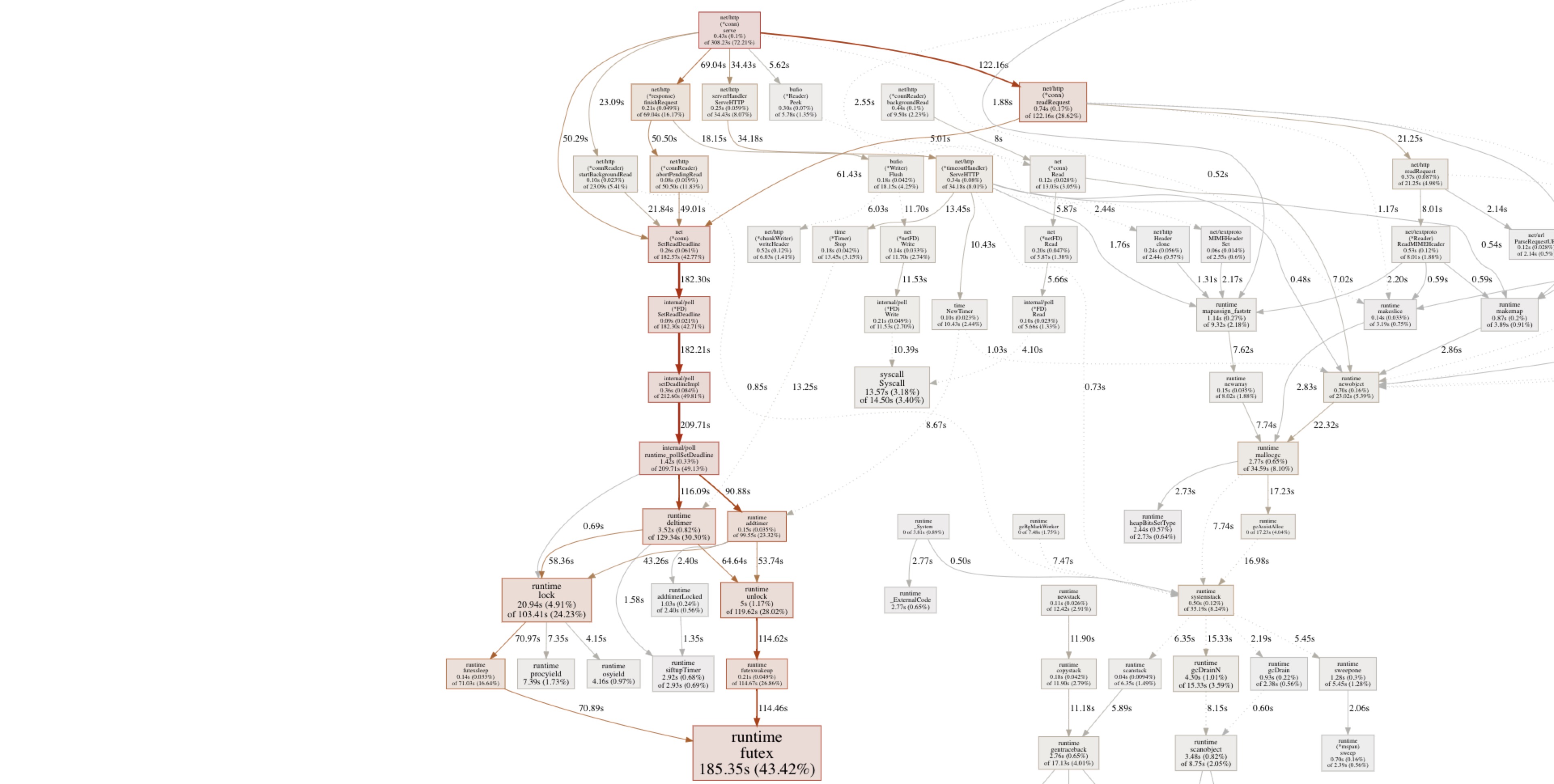
最近在开发一个web 框架,然后业务方使用过程中,跟我们说,压测qps 上不去,我就很纳闷,httprouter + net/http.httpserver , 性能不可能这么差啊,网上的压测结果都是10w qps 以上,几个middleware 至于将性能拖垮?后来一番排查,发现些有意思的东西。 首先,我就简单压测hello world, 每个请求进来,我日志都不打,然后,打开pprof ,显示的情况如下: 这里futex 怎么这么高?看着上面的一些操作,addtimer, deltimer 我想到以前的自己实现的定时器,这估计是超时引起的。然后检查版本,go1.9, 然后框架默认为每个conn 设置了4个timeout,readtimeout, writetimeout, idletimeout, headertimeout ,这直接导致了定时器在添加和删除回调的时候,锁的压力特别大。 下面我们分析下,正常的加超时操作,到底发生了些什么,下面是个最简单的例子,为了安全,每个连接设置超时。 package main import ( "fmt" "github.com/julienschmidt/httprouter" "log" "net/http" "time" ) func Index(w http.ResponseWriter, r *http.Request, _ httprouter.Params) { fmt.Fprint(w, "Welcome!\n") } func Hello(w http.ResponseWriter, r *http.Request, ps httprouter.Params) { fmt.Fprintf(w, "hello, %s!\n", ps.ByName("name")) } func main() { router := httprouter.New() router.GET("/", Index) router.GET("/hello/:name", Hello) srv := &http.Server{ ReadTimeout: 5 * time.Second, WriteTimeout: 10 * time.Second, ReadHeaderTimeout: 10 * time.Second, IdleTimeout: 10 * time.Second, Addr: "0.0.0.0:8998", Handler: router, } log.Fatal(srv.ListenAndServe()) } 其中,ListenAndServe() 在调用accept 每个连接后,会调用 server.serve(), 根据是否添加超时,调用conn.SetReadDeadline等函数,对应的是 net/http/server.go,如下: // Serve a new connection. func (c *conn) serve(ctx context.Context) { ... if tlsConn, ok := c.rwc.(*tls.Conn); ok { if d := c.server.ReadTimeout; d != 0 { c.rwc.SetReadDeadline(time.Now().Add(d)) // 设置读超时 } if d := c.server.WriteTimeout; d != 0 { c.rwc.SetWriteDeadline(time.Now().Add(d))// 设置写超时 } if err := tlsConn.Handshake(); err != nil { c.server.logf("http: TLS handshake error from %s: %v", c.rwc.RemoteAddr(), err) return } c.tlsState = new(tls.ConnectionState) *c.tlsState = tlsConn.ConnectionState() if proto := c.tlsState.NegotiatedProtocol; validNPN(proto) { if fn := c.server.TLSNextProto[proto]; fn != nil { h := initNPNRequest{tlsConn, serverHandler{c.server}} fn(c.server, tlsConn, h) } return } } ... 之后,con.SetReadDeadline 会调用 internal/poll/fd_poll_runtime.go的fd.setReadDeadline,最后调用runtime/netpoll.go 的poll_runtime_pollSetDeadline, 这个函数会链接成internal/poll.runtime_pollSetDeadline。这个函数比较关键: //go:linkname poll_runtime_pollSetDeadline internal/poll.runtime_pollSetDeadline func poll_runtime_pollSetDeadline(pd *pollDesc, d int64, mode int) { lock(&pd.lock) if pd.closing { unlock(&pd.lock) return } pd.seq++ // invalidate current timers // Reset current timers. if pd.rt.f != nil { deltimer(&pd.rt) pd.rt.f = nil } if pd.wt.f != nil { deltimer(&pd.wt) pd.wt.f = nil } // Setup new timers. if d != 0 && d <= nanotime() { d = -1 } if mode == 'r' || mode == 'r'+'w' { pd.rd = d } if mode == 'w' || mode == 'r'+'w' { pd.wd = d } if pd.rd > 0 && pd.rd == pd.wd { pd.rt.f = netpollDeadline pd.rt.when = pd.rd // Copy current seq into the timer arg. // Timer func will check the seq against current descriptor seq, // if they differ the descriptor was reused or timers were reset. pd.rt.arg = pd pd.rt.seq = pd.seq addtimer(&pd.rt) } else { if pd.rd > 0 { pd.rt.f = netpollReadDeadline // 设置读的定时回调 pd.rt.when = pd.rd pd.rt.arg = pd pd.rt.seq = pd.seq addtimer(&pd.rt) // 添加到系统定时器中 } if pd.wd > 0 { pd.wt.f = netpollWriteDeadline // 设置写的定时回调 pd.wt.when = pd.wd pd.wt.arg = pd pd.wt.seq = pd.seq addtimer(&pd.wt) // 添加到系统定时器中 } } // If we set the new deadline in the past, unblock currently pending IO if any. var rg, wg *g atomicstorep(unsafe.Pointer(&wg), nil) // full memory barrier between stores to rd/wd and load of rg/wg in netpollunblock if pd.rd < 0 { rg = netpollunblock(pd, 'r', false) } if pd.wd < 0 { wg = netpollunblock(pd, 'w', false) } unlock(&pd.lock) if rg != nil { netpollgoready(rg, 3) } if wg != nil { netpollgoready(wg, 3) } } 这里主要工作就是检查过期定时器,然后添加定时器,设置回调函数为netpollReadDeadline 或者netpollWriteDeadline。 从中可以看出添加和删除定时器操作为addtimer(&pd.rt), deltimer(&pd.rt)。 后面就是核心了,为啥加超时后这么慢,看下addtimer 的实现,timer 是个四叉小顶堆,每次添加一个超时,最后都需要对一个全局的timers 进行加锁,当qps 很高,一个请求,多次加锁,这性能能很高吗? type timer struct { i int // heap index // Timer wakes up at when, and then at when+period, ... (period > 0 only) // each time calling f(arg, now) in the timer goroutine, so f must be // a well-behaved function and not block. when int64 period int64 f func(interface{}, uintptr) arg interface{} seq uintptr } var timers struct { lock mutex gp *g created bool sleeping bool rescheduling bool sleepUntil int64 waitnote note t []*timer } //添加一个定时器 func addtimer(t *timer) { lock(&timers.lock) addtimerLocked(t) unlock(&timers.lock) } 解决锁冲突改怎么办?分段锁是很常见一个思路,在go1.10 后,timers 由一个,变成64个,定时器被打散到64个锁上去,自然锁冲突就降低了。看1.10的runtime/time.go 可以发现定义如下,每个p有单独的timer, 每个timer能被多个p使用: // Package time knows the layout of this structure. // If this struct changes, adjust ../time/sleep.go:/runtimeTimer. // For GOOS=nacl, package syscall knows the layout of this structure. // If this struct changes, adjust ../syscall/net_nacl.go:/runtimeTimer. type timer struct { tb *timersBucket // the bucket the timer lives in i int // heap index // Timer wakes up at when, and then at when+period, ... (period > 0 only) // each time calling f(arg, now) in the timer goroutine, so f must be // a well-behaved function and not block. when int64 period int64 f func(interface{}, uintptr) arg interface{} seq uintptr } // timersLen is the length of timers array. // // Ideally, this would be set to GOMAXPROCS, but that would require // dynamic reallocation // // The current value is a compromise between memory usage and performance // that should cover the majority of GOMAXPROCS values used in the wild. const timersLen = 64 //64个bucket // timers contains "per-P" timer heaps. // // Timers are queued into timersBucket associated with the current P, // so each P may work with its own timers independently of other P instances. // // Each timersBucket may be associated with multiple P // if GOMAXPROCS > timersLen. var timers [timersLen]struct { timersBucket // The padding should eliminate false sharing // between timersBucket values. pad [sys.CacheLineSize - unsafe.Sizeof(timersBucket{})%sys.CacheLineSize]byte } 下面是go1.10 后的timer 数据结构(此图来源于网络): 总结,网上很多httpserver 框架压测 qps 很高,但是它们的demo并没有设置超时,数据真实值会差很多。线上如果需要设置超时,需要注意go 的版本,qps 很高的情况下,最好使用1.10以上。最终我们不做任何其他操作情况下,仅将go 版本提高到1.10,qps 提高接近2倍。 本文来自云栖社区合作伙伴“开源中国” 本文作者:鼎铭 原文链接