前言
在项目中经常会遇到下载或导出服务端资源的需求,一般分为2种做法
- 获取文件流,编码后下载
- 获取文件的url,直接下载
本文主要探讨第二种方法,在最后会提及文件流的方法。
浏览器的安全策略
在介绍方法之前,我们需要知道浏览器的一些安全机制,防止恶意代码对用户的破坏。
现代浏览器(ie8除外)检测到非用户直接操作产生的新窗口,一般会阻止,比如在ajax的回调中打开新的窗口,因为这些操作并不是在用户点击的线程中,所以会拦截。
预开新标签页
做法
- 在异步操作之前,先打开一个新标签页
- 请求后端资源的地址
- 获取url后去修改空白页的url
const downloadTab = window.open('about:blank');

ajax.get('xxx').then(url => {
    // 使用后端资源的url进行下载
    downloadTab.location.href = href;
}).catch(err => {
    // 处理异常
    downloadTab.close();
})
缺点
- 不管请求成功还是失败都会有新页面的闪烁出现
- 打开的新页面在什么时候关闭是个问题,因为如果请求时间过长,用户可能自己关闭新页面,更不好处理的情况是页面什么时候触发了下载,因为如果只是更改url就关闭窗口可能还没有开始下载的操作。
生成iframe
做法
为了避免页面闪烁与关闭时机的问题,可以在当前页面使用动态创建iframe的方式,直接下载
ajax.get('xxx').then(href => {
    if (!href) {
      return;
    }

    if (!this.downIframe) {
      this.downIframe = document.createElement('iframe'); // 动态创建iframe
      this.downIframe.src = href; // iframe 中加载的页面
      this.downIframe.id = 'downloadIframe'; // iframe 中加载的页面
      this.downIframe.style.width = '1px';
      this.downIframe.style.height = '1px';
      this.downIframe.style.position = 'absolute';
      this.downIframe.style.left = '-100px';
      document.body.appendChild(this.downIframe); // 添加到当前窗体
    } else {
      this.downIframe.src = href; // iframe 中加载的页面
    }
}).catch(err => {
    // 处理异常
})
缺点
虽然可以优雅的下载文件了,可是如果需要定制下载文件的名称就会令人头疼了,我们需要时机去改变下载文件的名称,否则就会使服务端的文件名称。
生成标签
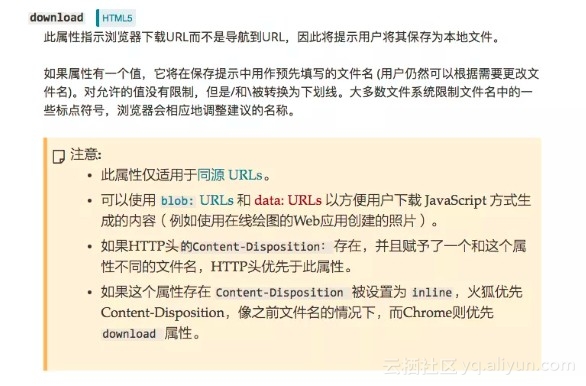
利用download属性设置文件名,
![0ca6df19dff4c25687376d33742502ab527eddfc]()
ajax.get('xxx').then(href => {
    if (!href) {
      return;
    }

    var a = document.createElement('a');
    var url = href;
    var filename = 'test.zip';
    a.href = url;
    a.download = filename; // 在没有download属性的情况,target="_blank",仍会阻止打开
    a.click();
}).catch(err => {
    // 处理异常
})
注意:
有些浏览器需要将a标签嵌入页面才可执行。
处理文件流
最后大概讲一下如果后端返回流怎么处理。
function funDownload(content, filename) {
    // 创建隐藏的可下载链接
    var link = document.createElement('a');
    link.download = filename;
    link.style.display = 'none';

    // 字符内容转变成blob地址
    var blob = new Blob([content]);
    //如果是excel格式
    //var blob = new Blob([content], {type: 'application/vnd.ms-excel'}),
    link.href = URL.createObjectURL(blob);

    // 触发点击
    document.body.appendChild(link);
    link.click();
    // 然后移除
    document.body.removeChild(link);
};
URL.createObjectURL() 静态方法会创建一个
DOMString,其中包含一个表示参数中给出的对象的URL。这个 URL 的生命周期和创建它的窗口中的
document 绑定。这个新的URL 对象表示指定的
File 对象或
Blob 对象。
注意:
在每次调用
createObjectURL() 方法时,都会创建一个新的 URL 对象,即使你已经用相同的对象作为参数创建过。当不再需要这些 URL 对象时,每个对象必须通过调用
URL.revokeObjectURL() 方法来释放。浏览器会在文档退出的时候自动释放它们,但是为了获得最佳性能和内存使用状况,你应该在安全的时机主动释放掉它们。
原文发布时间为:2018年06月15日
原文作者:nanchenk
本文来源: 掘金 如需转载请联系原作者