ios 缺少合规证明
现在app上传到appStore的时候,项目中如果出现加密,状态栏是:缺少合规证明。 解决的方法是在Info。plist文件中添加:ITSAppUsesNonExemptEncryption 设置为NO 如下图:
- 背景
在 Android 5.1 系统上,在项目中遇到一个WebView引起的问题,每打开一个带webview的界面,退出后,这个activity都不会被释放,activity的实例会被持有,由于我们项目中经常会用到浏览web页面的地方,可能引起内存积压,导致内存溢出的现象,所以这个问题还是比较严重的。
使用Android Studio的内存monitor,得到了以下的内存分析,我打开了三个BookDetailActivity界面(都有webview),检查结果显示有3个activity泄漏,如下图所示: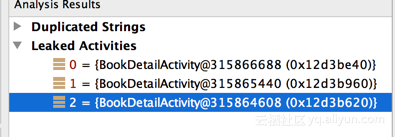
这个问题还是比较严重的,那么进一步看详细的信息,找出到底是哪里引起的内存泄漏,详情的reference tree如下图所示: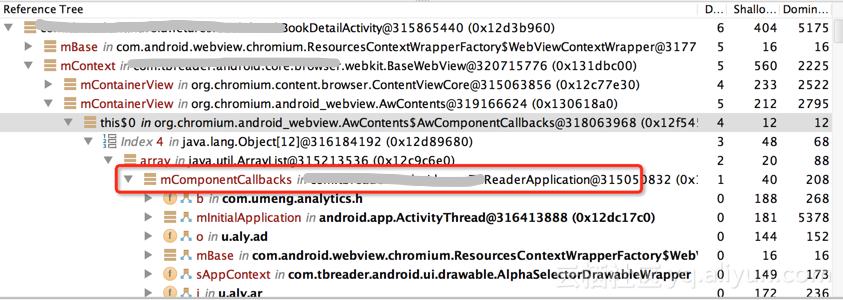
从上图中可以看出,在第1层中的 TBReaderApplication 中的 mComponentCallbacks 成员变量,它是一个array list,它里面会持有住activity,引导关系是 __mComponentCallbacks->AwContents->BaseWebView->BookDetailActivity__, 代码在 Application 类里面,代码如下所示:
    public void registerComponentCallbacks(ComponentCallbacks callback) {
        synchronized (mComponentCallbacks) {
            mComponentCallbacks.add(callback);
        }
    }

    public void unregisterComponentCallbacks(ComponentCallbacks callback) {
        synchronized (mComponentCallbacks) {
            mComponentCallbacks.remove(callback);
        }
    }
上面两个方法,会在 Context 基类中被调用,代码如下:
    /**
     * Add a new {@link ComponentCallbacks} to the base application of the
     * Context, which will be called at the same times as the ComponentCallbacks
     * methods of activities and other components are called.  Note that you
     * <em>must</em> be sure to use {@link #unregisterComponentCallbacks} when
     * appropriate in the future; this will not be removed for you.
     *
     * @param callback The interface to call.  This can be either a
     * {@link ComponentCallbacks} or {@link ComponentCallbacks2} interface.
     */
    public void registerComponentCallbacks(ComponentCallbacks callback) {
        getApplicationContext().registerComponentCallbacks(callback);
    }

    /**
     * Remove a {@link ComponentCallbacks} object that was previously registered
     * with {@link #registerComponentCallbacks(ComponentCallbacks)}.
     */
    public void unregisterComponentCallbacks(ComponentCallbacks callback) {
        getApplicationContext().unregisterComponentCallbacks(callback);
    }
从第二张图我们已经知道,是webview引起的内存泄漏,而且能看到是在 org.chromium.android_webview.AwContents 类中,难道是这个类注册了component callbacks,但是未反注册?一般按系统设计,都会反注册的,最有可能的原因就是某些情况下导致不能正常反注册,不多说,read the fucking source。基于这个思路,我把chromium的源码下载下来,代码在这里 chromium_org
然后找到 org.chromium.android_webview.AwContents 类,看看这两个方法 onAttachedToWindow 和 onDetachedFromWindow:
    @Override
    public void onAttachedToWindow() {
        if (isDestroyed()) return;
        if (mIsAttachedToWindow) {
            Log.w(TAG, "onAttachedToWindow called when already attached. Ignoring");
            return;
        }
        mIsAttachedToWindow = true;

        mContentViewCore.onAttachedToWindow();
        nativeOnAttachedToWindow(mNativeAwContents, mContainerView.getWidth(),
                mContainerView.getHeight());
        updateHardwareAcceleratedFeaturesToggle();

        if (mComponentCallbacks != null) return;
        mComponentCallbacks = new AwComponentCallbacks();
        mContext.registerComponentCallbacks(mComponentCallbacks);
    }

    @Override
    public void onDetachedFromWindow() {
        if (isDestroyed()) return;
        if (!mIsAttachedToWindow) {
            Log.w(TAG, "onDetachedFromWindow called when already detached. Ignoring");
            return;
        }
        mIsAttachedToWindow = false;
        hideAutofillPopup();
        nativeOnDetachedFromWindow(mNativeAwContents);

        mContentViewCore.onDetachedFromWindow();
        updateHardwareAcceleratedFeaturesToggle();

        if (mComponentCallbacks != null) {
            mContext.unregisterComponentCallbacks(mComponentCallbacks);
            mComponentCallbacks = null;
        }

        mScrollAccessibilityHelper.removePostedCallbacks();
    }
系统会在attach处detach进行注册和反注册component callback,注意到 onDetachedFromWindow() 方法的第一行,if (isDestroyed()) return;, 如果 isDestroyed() 返回 true 的话,那么后续的逻辑就不能正常走到,所以就不会执行unregister的操作,通过看代码,可以得到,调用主动调用 destroy()方法,会导致 isDestroyed() 返回 _true_。
    /**
     * Destroys this object and deletes its native counterpart.
     */
    public void destroy() {
        if (isDestroyed()) return;
        // If we are attached, we have to call native detach to clean up
        // hardware resources.
        if (mIsAttachedToWindow) {
            nativeOnDetachedFromWindow(mNativeAwContents);
        }
        mIsDestroyed = true;
        new Handler().post(new Runnable() {
            @Override
            public void run() {
                destroyNatives();
            }
        });
    }
一般情况下,我们的activity退出的时候,都会主动调用 WebView.destroy() 方法,经过分析,destroy()的执行时间在onDetachedFromWindow之前,所以就会导致不能正常进行unregister()。
找到了原因后,解决方案也比较简单,核心思路就是让onDetachedFromWindow先走,那么在主动调用之前destroy(),把webview从它的parent上面移除掉。
    ViewParent parent = mWebView.getParent();
    if (parent != null) {
        ((ViewGroup) parent).removeView(mWebView);
    }

    mWebView.destroy();
完整的代码如下:
    public void destroy() {
        if (mWebView != null) {
            // 如果先调用destroy()方法,则会命中if (isDestroyed()) return;这一行代码,需要先onDetachedFromWindow(),再
            // destory()
            ViewParent parent = mWebView.getParent();
            if (parent != null) {
                ((ViewGroup) parent).removeView(mWebView);
            }

            mWebView.stopLoading();
            // 退出时调用此方法,移除绑定的服务,否则某些特定系统会报错
            mWebView.getSettings().setJavaScriptEnabled(false);
            mWebView.clearHistory();
            mWebView.clearView();
            mWebView.removeAllViews();

            try {
                mWebView.destroy();
            } catch (Throwable ex) {

            }
        }
    }
对比了5.1之前的代码,它是不会存在这样的问题的,以下是kitkat的代码,它少了一行 if (isDestroyed()) return;,有点不明白,为什么google在高版本把这一行代码加上。
    /**
     * @see android.view.View#onDetachedFromWindow()
     */
    public void onDetachedFromWindow() {
        mIsAttachedToWindow = false;
        hideAutofillPopup();
        if (mNativeAwContents != 0) {
            nativeOnDetachedFromWindow(mNativeAwContents);
        }

        mContentViewCore.onDetachedFromWindow();

        if (mComponentCallbacks != null) {
          mContainerView.getContext().unregisterComponentCallbacks(mComponentCallbacks);
          mComponentCallbacks = null;
        }

        if (mPendingDetachCleanupReferences != null) {
            for (int i = 0; i < mPendingDetachCleanupReferences.size(); ++i) {
                mPendingDetachCleanupReferences.get(i).cleanupNow();
            }
            mPendingDetachCleanupReferences = null;
        }
    }
在开发过程中,还发现一个支付宝SDK的内存问题,也是因为这个原因,具体的类是 com.alipay.sdk.app.H5PayActivity,我们没办法,也想了一个不是办法的办法,在每个activity destroy时,去主动把 H5PayActivity 中的webview从它的parent中移除,但这个问题限制太多,不是特别好,但的确也能解决问题,方案如下:
    /**
     * 解决支付宝的 com.alipay.sdk.app.H5PayActivity 类引起的内存泄漏。
     *
     * <p>
     *     说明:<br>
     *         这个方法是通过监听H5PayActivity生命周期,获得实例后,通过反射将webview拿出来,从
     *         它的parent中移除。如果后续支付宝SDK官方修复了该问题,则我们不需要再做什么了,不管怎么
     *         说,这个方案都是非常恶心的解决方案,非常不推荐。同时,如果更新了支付宝SDK后,那么内部被混淆
     *         的字段名可能更改,所以该方案也无效了。
     * </p>
     *
     * @param activity
     */
    public static void resolveMemoryLeak(Activity activity) {
        if (activity == null) {
            return;
        }

        String className = activity.getClass().getCanonicalName();
        if (TextUtils.equals(className, "com.alipay.sdk.app.H5PayActivity")) {
            Object object = Reflect.on(activity).get("a");

            if (DEBUG) {
                LogUtils.e(TAG, "AlipayMemoryLeak.resolveMemoryLeak activity = " + className
                    + ",  field = " + object);
            }

            if (object instanceof WebView) {
                WebView webView = (WebView) object;
                ViewParent parent = webView.getParent();
                if (parent instanceof ViewGroup) {
                    ((ViewGroup) parent).removeView(webView);
                }
            }
        }
    }
以上是对发现的WebView内存泄漏的一个简单分析,权且记录一下。
参考文章: 零号路杂货铺 - Android 5.1 Webview 内存泄漏新场景 , 我也是在这个基础之上进行一些学习,感谢~~
(完)

微信关注我们
转载内容版权归作者及来源网站所有!
低调大师中文资讯倾力打造互联网数据资讯、行业资源、电子商务、移动互联网、网络营销平台。持续更新报道IT业界、互联网、市场资讯、驱动更新,是最及时权威的产业资讯及硬件资讯报道平台。
为解决软件依赖安装时官方源访问速度慢的问题,腾讯云为一些软件搭建了缓存服务。您可以通过使用腾讯云软件源站来提升依赖包的安装速度。为了方便用户自由搭建服务架构,目前腾讯云软件源站支持公网访问和内网访问。
Spring框架(Spring Framework)是由Rod Johnson于2002年提出的开源Java企业级应用框架,旨在通过使用JavaBean替代传统EJB实现方式降低企业级编程开发的复杂性。该框架基于简单性、可测试性和松耦合性设计理念,提供核心容器、应用上下文、数据访问集成等模块,支持整合Hibernate、Struts等第三方框架,其适用范围不仅限于服务器端开发,绝大多数Java应用均可从中受益。
Rocky Linux(中文名:洛基)是由Gregory Kurtzer于2020年12月发起的企业级Linux发行版,作为CentOS稳定版停止维护后与RHEL(Red Hat Enterprise Linux)完全兼容的开源替代方案,由社区拥有并管理,支持x86_64、aarch64等架构。其通过重新编译RHEL源代码提供长期稳定性,采用模块化包装和SELinux安全架构,默认包含GNOME桌面环境及XFS文件系统,支持十年生命周期更新。
Sublime Text具有漂亮的用户界面和强大的功能,例如代码缩略图,Python的插件,代码段等。还可自定义键绑定,菜单和工具栏。Sublime Text 的主要功能包括:拼写检查,书签,完整的 Python API , Goto 功能,即时项目切换,多选择,多窗口等等。Sublime Text 是一个跨平台的编辑器,同时支持Windows、Linux、Mac OS X等操作系统。
扫码在手机上查看文章
扫描二维码,手机阅读更方便




有任何问题或合作意向欢迎联系我们
Email: 99873273@qq.com
QQ: 99873273