03.源码阅读(Activity启动流程--android api 23)
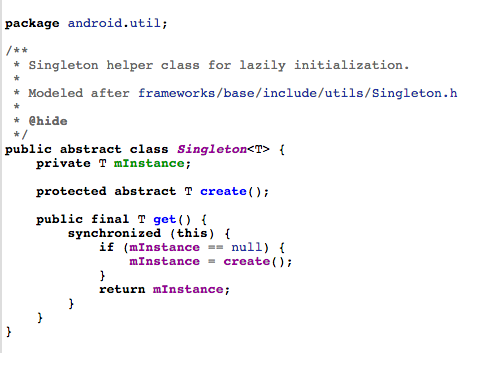
(创建于2017/10/16) 关键词: ActivityThread ApplicationThread IActivityManager IApplicationThread Instrumentation ActivityManagerService ActivityStack 这篇是去年写的,前几天看了一下api26的源码,发现有些地方看的衔接不上,还是低版本的源码看起来轻松一些 先说一个接口: IActivityManager 对于我们要实现绕过androidmanifest检测启动一个没有注册的activity,I ActivityManager是一个很关键的接口,这里定义了安卓四大组件相关的一些方法,比如startActivity startService registerReceiver getContentResolver等等,我们最终的目的就是要通过动态代理实现对这个接口的代理从而拦截activity的启动,达到绕过配置文件检测的目的 Activity中 从startActivity开始可以找到这个方法 public void startActivityForResult(Intent intent, int requestCode, @Nullable Bundle options) { if (mParent == null) { Instrumentation.ActivityResult ar = mInstrumentation.execStartActivity( this, mMainThread.getApplicationThread(), mToken, this, intent, requestCode, options); if (ar != null) { mMainThread.sendActivityResult( mToken, mEmbeddedID, requestCode, ar.getResultCode(), ar.getResultData()); } 。。。。 Instrumentation中 public ActivityResult execStartActivity( Context who, IBinder contextThread, IBinder token, Activity target, Intent intent, int requestCode, Bundle options) { IApplicationThread whoThread = (IApplicationThread) contextThread; Uri referrer = target != null ? target.onProvideReferrer() : null; if (referrer != null) { intent.putExtra(Intent.EXTRA_REFERRER, referrer); } if (mActivityMonitors != null) { synchronized (mSync) { final int N = mActivityMonitors.size(); for (int i=0; i<N; i++) { final ActivityMonitor am = mActivityMonitors.get(i); ActivityResult result = null; if (am.ignoreMatchingSpecificIntents()) { result = am.onStartActivity(intent); } if (result != null) { am.mHits++; return result; } else if (am.match(who, null, intent)) { am.mHits++; if (am.isBlocking()) { return requestCode >= 0 ? am.getResult() : null; } break; } } } } try { intent.migrateExtraStreamToClipData(); intent.prepareToLeaveProcess(who); int result = ActivityManager.getService() .startActivity(whoThread, who.getBasePackageName(), intent, intent.resolveTypeIfNeeded(who.getContentResolver()), token, target != null ? target.mEmbeddedID : null, requestCode, 0, null, options); checkStartActivityResult(result, intent); } catch (RemoteException e) { throw new RuntimeException("Failure from system", e); } return null; } 检测结果,异常捕获 /** @hide */ public static void checkStartActivityResult(int res, Object intent) { if (!ActivityManager.isStartResultFatalError(res)) { return; } switch (res) { case ActivityManager.START_INTENT_NOT_RESOLVED: case ActivityManager.START_CLASS_NOT_FOUND: if (intent instanceof Intent && ((Intent)intent).getComponent() != null) throw new ActivityNotFoundException( "Unable to find explicit activity class " + ((Intent)intent).getComponent().toShortString() + "; have you declared this activity in your AndroidManifest.xml?"); throw new ActivityNotFoundException( "No Activity found to handle " + intent); case ActivityManager.START_PERMISSION_DENIED: throw new SecurityException("Not allowed to start activity " + intent); case ActivityManager.START_FORWARD_AND_REQUEST_CONFLICT: throw new AndroidRuntimeException( "FORWARD_RESULT_FLAG used while also requesting a result"); case ActivityManager.START_NOT_ACTIVITY: throw new IllegalArgumentException( "PendingIntent is not an activity"); case ActivityManager.START_NOT_VOICE_COMPATIBLE: throw new SecurityException( "Starting under voice control not allowed for: " + intent); case ActivityManager.START_VOICE_NOT_ACTIVE_SESSION: throw new IllegalStateException( "Session calling startVoiceActivity does not match active session"); case ActivityManager.START_VOICE_HIDDEN_SESSION: throw new IllegalStateException( "Cannot start voice activity on a hidden session"); case ActivityManager.START_ASSISTANT_NOT_ACTIVE_SESSION: throw new IllegalStateException( "Session calling startAssistantActivity does not match active session"); case ActivityManager.START_ASSISTANT_HIDDEN_SESSION: throw new IllegalStateException( "Cannot start assistant activity on a hidden session"); case ActivityManager.START_CANCELED: throw new AndroidRuntimeException("Activity could not be started for " + intent); default: throw new AndroidRuntimeException("Unknown error code " + res + " when starting " + intent); } } 关键代码 int result = ActivityManager.getService() .startActivity(whoThread, who.getBasePackageName(), intent, intent.resolveTypeIfNeeded(who.getContentResolver()), token, target != null ? target.mEmbeddedID : null, requestCode, 0, null, options); ActivityManagerNative.getService().startActivity是一个进程间的通信(看源码) 有的版本叫 ActivityManagerNative.getDefault().startActivity ActivityManager.getService() /** * @hide */ public static IActivityManager getService() { return IActivityManagerSingleton.get(); } IActivityManagerSingleton.get() private static final Singleton<IActivityManager> IActivityManagerSingleton = new Singleton<IActivityManager>() { @Override protected IActivityManager create() { final IBinder b = ServiceManager.getService(Context.ACTIVITY_SERVICE); final IActivityManager am = IActivityManager.Stub.asInterface(b); return am; } }; Singleton 源码 public abstract class Singleton<T> { private T mInstance; protected abstract T create(); public final T get() { synchronized (this) { if (mInstance == null) { mInstance = create(); } return mInstance; } } } 也就是说ActivityManager.getService得到的是IActivityManager的一个实现类 这个实现类是ActivityManagerService ActivityManagerService中 @Override public final int startActivity(IApplicationThread caller, String callingPackage, Intent intent, String resolvedType, IBinder resultTo, String resultWho, int requestCode, int startFlags, ProfilerInfo profilerInfo, Bundle options) { return startActivityAsUser(caller, callingPackage, intent, resolvedType, resultTo, resultWho, requestCode, startFlags, profilerInfo, options, UserHandle.getCallingUserId()); } @Override public final int startActivityAsUser(IApplicationThread caller, String callingPackage, Intent intent, String resolvedType, IBinder resultTo, String resultWho, int requestCode, int startFlags, ProfilerInfo profilerInfo, Bundle options, int userId) { enforceNotIsolatedCaller("startActivity"); userId = handleIncomingUser(Binder.getCallingPid(), Binder.getCallingUid(), userId, false, ALLOW_FULL_ONLY, "startActivity", null); // TODO: Switch to user app stacks here. return mStackSupervisor.startActivityMayWait(caller, -1, callingPackage, intent, resolvedType, null, null, resultTo, resultWho, requestCode, startFlags, profilerInfo, null, null, options, false, userId, null, null); } ActivityStackSupervisor中 final int startActivityMayWait(IApplicationThread caller, int callingUid, String callingPackage, Intent intent, String resolvedType, IVoiceInteractionSession voiceSession, IVoiceInteractor voiceInteractor, IBinder resultTo, String resultWho, int requestCode, int startFlags, ProfilerInfo profilerInfo, WaitResult outResult, Configuration config, Bundle options, boolean ignoreTargetSecurity, int userId, IActivityContainer iContainer, TaskRecord inTask) { // Refuse possible leaked file descriptors if (intent != null && intent.hasFileDescriptors()) { throw new IllegalArgumentException("File descriptors passed in Intent"); } boolean componentSpecified = intent.getComponent() != null; // Don't modify the client's object! intent = new Intent(intent); // Collect information about the target of the Intent. ActivityInfo aInfo = resolveActivity(intent, resolvedType, startFlags, profilerInfo, userId); ActivityContainer container = (ActivityContainer)iContainer; synchronized (mService) { if (container != null && container.mParentActivity != null && container.mParentActivity.state != RESUMED) { // Cannot start a child activity if the parent is not resumed. return ActivityManager.START_CANCELED; } final int realCallingPid = Binder.getCallingPid(); final int realCallingUid = Binder.getCallingUid(); int callingPid; if (callingUid >= 0) { callingPid = -1; } else if (caller == null) { callingPid = realCallingPid; callingUid = realCallingUid; } else { callingPid = callingUid = -1; } final ActivityStack stack; if (container == null || container.mStack.isOnHomeDisplay()) { stack = mFocusedStack; } else { stack = container.mStack; } stack.mConfigWillChange = config != null && mService.mConfiguration.diff(config) != 0; if (DEBUG_CONFIGURATION) Slog.v(TAG_CONFIGURATION, "Starting activity when config will change = " + stack.mConfigWillChange); final long origId = Binder.clearCallingIdentity(); if (aInfo != null && (aInfo.applicationInfo.privateFlags &ApplicationInfo.PRIVATE_FLAG_CANT_SAVE_STATE) != 0) { // This may be a heavy-weight process! Check to see if we already // have another, different heavy-weight process running. if (aInfo.processName.equals(aInfo.applicationInfo.packageName)) { if (mService.mHeavyWeightProcess != null && (mService.mHeavyWeightProcess.info.uid != aInfo.applicationInfo.uid || !mService.mHeavyWeightProcess.processName.equals(aInfo.processName))) { int appCallingUid = callingUid; if (caller != null) { ProcessRecord callerApp = mService.getRecordForAppLocked(caller); if (callerApp != null) { appCallingUid = callerApp.info.uid; } else { Slog.w(TAG, "Unable to find app for caller " + caller + " (pid=" + callingPid + ") when starting: " + intent.toString()); ActivityOptions.abort(options); return ActivityManager.START_PERMISSION_DENIED; } } IIntentSender target = mService.getIntentSenderLocked( ActivityManager.INTENT_SENDER_ACTIVITY, "android", appCallingUid, userId, null, null, 0, new Intent[] { intent }, new String[] { resolvedType }, PendingIntent.FLAG_CANCEL_CURRENT | PendingIntent.FLAG_ONE_SHOT, null); Intent newIntent = new Intent(); if (requestCode >= 0) { // Caller is requesting a result. newIntent.putExtra(HeavyWeightSwitcherActivity.KEY_HAS_RESULT, true); } newIntent.putExtra(HeavyWeightSwitcherActivity.KEY_INTENT, new IntentSender(target)); if (mService.mHeavyWeightProcess.activities.size() > 0) { ActivityRecord hist = mService.mHeavyWeightProcess.activities.get(0); newIntent.putExtra(HeavyWeightSwitcherActivity.KEY_CUR_APP, hist.packageName); newIntent.putExtra(HeavyWeightSwitcherActivity.KEY_CUR_TASK, hist.task.taskId); } newIntent.putExtra(HeavyWeightSwitcherActivity.KEY_NEW_APP, aInfo.packageName); newIntent.setFlags(intent.getFlags()); newIntent.setClassName("android", HeavyWeightSwitcherActivity.class.getName()); intent = newIntent; resolvedType = null; caller = null; callingUid = Binder.getCallingUid(); callingPid = Binder.getCallingPid(); componentSpecified = true; try { ResolveInfo rInfo = AppGlobals.getPackageManager().resolveIntent( intent, null, PackageManager.MATCH_DEFAULT_ONLY | ActivityManagerService.STOCK_PM_FLAGS, userId); aInfo = rInfo != null ? rInfo.activityInfo : null; aInfo = mService.getActivityInfoForUser(aInfo, userId); } catch (RemoteException e) { aInfo = null; } } } } int res = startActivityLocked(caller, intent, resolvedType, aInfo, voiceSession, voiceInteractor, resultTo, resultWho, requestCode, callingPid, callingUid, callingPackage, realCallingPid, realCallingUid, startFlags, options, ignoreTargetSecurity, componentSpecified, null, container, inTask); Binder.restoreCallingIdentity(origId); if (stack.mConfigWillChange) { // If the caller also wants to switch to a new configuration, // do so now. This allows a clean switch, as we are waiting // for the current activity to pause (so we will not destroy // it), and have not yet started the next activity. mService.enforceCallingPermission(android.Manifest.permission.CHANGE_CONFIGURATION, "updateConfiguration()"); stack.mConfigWillChange = false; if (DEBUG_CONFIGURATION) Slog.v(TAG_CONFIGURATION, "Updating to new configuration after starting activity."); mService.updateConfigurationLocked(config, null, false, false); } if (outResult != null) { outResult.result = res; if (res == ActivityManager.START_SUCCESS) { mWaitingActivityLaunched.add(outResult); do { try { mService.wait(); } catch (InterruptedException e) { } } while (!outResult.timeout && outResult.who == null); } else if (res == ActivityManager.START_TASK_TO_FRONT) { ActivityRecord r = stack.topRunningActivityLocked(null); if (r.nowVisible && r.state == RESUMED) { outResult.timeout = false; outResult.who = new ComponentName(r.info.packageName, r.info.name); outResult.totalTime = 0; outResult.thisTime = 0; } else { outResult.thisTime = SystemClock.uptimeMillis(); mWaitingActivityVisible.add(outResult); do { try { mService.wait(); } catch (InterruptedException e) { } } while (!outResult.timeout && outResult.who == null); } } } return res; } } final int startActivityLocked(IApplicationThread caller, Intent intent, String resolvedType, ActivityInfo aInfo, IVoiceInteractionSession voiceSession, IVoiceInteractor voiceInteractor, IBinder resultTo, String resultWho, int requestCode, int callingPid, int callingUid, String callingPackage, int realCallingPid, int realCallingUid, int startFlags, Bundle options, boolean ignoreTargetSecurity, boolean componentSpecified, ActivityRecord[] outActivity, ActivityContainer container, TaskRecord inTask) { int err = ActivityManager.START_SUCCESS; 。 。省略很多代码需要话去源码中看 。 err = startActivityUncheckedLocked(r, sourceRecord, voiceSession, voiceInteractor, startFlags, true, options, inTask); if (err < 0) { // If someone asked to have the keyguard dismissed on the next // activity start, but we are not actually doing an activity // switch... just dismiss the keyguard now, because we // probably want to see whatever is behind it. notifyActivityDrawnForKeyguard(); } return err; } final int startActivityUncheckedLocked(final ActivityRecord r, ActivityRecord sourceRecord, IVoiceInteractionSession voiceSession, IVoiceInteractor voiceInteractor, int startFlags, boolean doResume, Bundle options, TaskRecord inTask) { 。 。省略很多代码需要话去源码中看 。 targetStack.startActivityLocked(r, newTask, doResume, keepCurTransition, options); if (!launchTaskBehind) { // Don't set focus on an activity that's going to the back. mService.setFocusedActivityLocked(r, "startedActivity"); } return ActivityManager.START_SUCCESS; } ActivityStack中 final void startActivityLocked(ActivityRecord r, boolean newTask, boolean doResume, boolean keepCurTransition, Bundle options) { 。 。省略很多代码需要话去源码中看 。 if (doResume) { mStackSupervisor.resumeTopActivitiesLocked(this, r, options); } } 再回到ActivityStackSupervisor中 boolean resumeTopActivitiesLocked(ActivityStack targetStack, ActivityRecord target, Bundle targetOptions) { if (targetStack == null) { targetStack = mFocusedStack; } // Do targetStack first. boolean result = false; if (isFrontStack(targetStack)) { result = targetStack.resumeTopActivityLocked(target, targetOptions); } for (int displayNdx = mActivityDisplays.size() - 1; displayNdx >= 0; --displayNdx) { final ArrayList<ActivityStack> stacks = mActivityDisplays.valueAt(displayNdx).mStacks; for (int stackNdx = stacks.size() - 1; stackNdx >= 0; --stackNdx) { final ActivityStack stack = stacks.get(stackNdx); if (stack == targetStack) { // Already started above. continue; } if (isFrontStack(stack)) { stack.resumeTopActivityLocked(null); } } } return result; } 再次回到ActivityStack中 final boolean resumeTopActivityLocked(ActivityRecord prev) { return resumeTopActivityLocked(prev, null); } final boolean resumeTopActivityLocked(ActivityRecord prev, Bundle options) { if (mStackSupervisor.inResumeTopActivity) { // Don't even start recursing. return false; } boolean result = false; try { // Protect against recursion. mStackSupervisor.inResumeTopActivity = true; if (mService.mLockScreenShown == ActivityManagerService.LOCK_SCREEN_LEAVING) { mService.mLockScreenShown = ActivityManagerService.LOCK_SCREEN_HIDDEN; mService.updateSleepIfNeededLocked(); } result = resumeTopActivityInnerLocked(prev, options); } finally { mStackSupervisor.inResumeTopActivity = false; } return result; } private boolean resumeTopActivityInnerLocked(ActivityRecord prev, Bundle options) { { 。 。省略很多代码需要话去源码中看 。 mStackSupervisor.startSpecificActivityLocked(next, true, true); } if (DEBUG_STACK) mStackSupervisor.validateTopActivitiesLocked(); return true; } 再回到ActivityStackSupervisor中 void startSpecificActivityLocked(ActivityRecord r, boolean andResume, boolean checkConfig) { // Is this activity's application already running? ProcessRecord app = mService.getProcessRecordLocked(r.processName, r.info.applicationInfo.uid, true); r.task.stack.setLaunchTime(r); if (app != null && app.thread != null) { try { if ((r.info.flags&ActivityInfo.FLAG_MULTIPROCESS) == 0 || !"android".equals(r.info.packageName)) { // Don't add this if it is a platform component that is marked // to run in multiple processes, because this is actually // part of the framework so doesn't make sense to track as a // separate apk in the process. app.addPackage(r.info.packageName, r.info.applicationInfo.versionCode, mService.mProcessStats); } realStartActivityLocked(r, app, andResume, checkConfig); return; } catch (RemoteException e) { Slog.w(TAG, "Exception when starting activity " + r.intent.getComponent().flattenToShortString(), e); } // If a dead object exception was thrown -- fall through to // restart the application. } mService.startProcessLocked(r.processName, r.info.applicationInfo, true, 0, "activity", r.intent.getComponent(), false, false, true); } final boolean realStartActivityLocked(ActivityRecord r, ProcessRecord app, boolean andResume, boolean checkConfig) throws RemoteException { if (andResume) { r.startFreezingScreenLocked(app, 0); mWindowManager.setAppVisibility(r.appToken, true); // schedule launch ticks to collect information about slow apps. r.startLaunchTickingLocked(); } // Have the window manager re-evaluate the orientation of // the screen based on the new activity order. Note that // as a result of this, it can call back into the activity // manager with a new orientation. We don't care about that, // because the activity is not currently running so we are // just restarting it anyway. if (checkConfig) { Configuration config = mWindowManager.updateOrientationFromAppTokens( mService.mConfiguration, r.mayFreezeScreenLocked(app) ? r.appToken : null); mService.updateConfigurationLocked(config, r, false, false); } r.app = app; app.waitingToKill = null; r.launchCount++; r.lastLaunchTime = SystemClock.uptimeMillis(); if (DEBUG_ALL) Slog.v(TAG, "Launching: " + r); int idx = app.activities.indexOf(r); if (idx < 0) { app.activities.add(r); } mService.updateLruProcessLocked(app, true, null); mService.updateOomAdjLocked(); final TaskRecord task = r.task; if (task.mLockTaskAuth == LOCK_TASK_AUTH_LAUNCHABLE || task.mLockTaskAuth == LOCK_TASK_AUTH_LAUNCHABLE_PRIV) { setLockTaskModeLocked(task, LOCK_TASK_MODE_LOCKED, "mLockTaskAuth==LAUNCHABLE", false); } final ActivityStack stack = task.stack; try { if (app.thread == null) { throw new RemoteException(); } List<ResultInfo> results = null; List<ReferrerIntent> newIntents = null; if (andResume) { results = r.results; newIntents = r.newIntents; } if (DEBUG_SWITCH) Slog.v(TAG_SWITCH, "Launching: " + r + " icicle=" + r.icicle + " with results=" + results + " newIntents=" + newIntents + " andResume=" + andResume); if (andResume) { EventLog.writeEvent(EventLogTags.AM_RESTART_ACTIVITY, r.userId, System.identityHashCode(r), task.taskId, r.shortComponentName); } if (r.isHomeActivity() && r.isNotResolverActivity()) { // Home process is the root process of the task. mService.mHomeProcess = task.mActivities.get(0).app; } mService.ensurePackageDexOpt(r.intent.getComponent().getPackageName()); r.sleeping = false; r.forceNewConfig = false; mService.showAskCompatModeDialogLocked(r); r.compat = mService.compatibilityInfoForPackageLocked(r.info.applicationInfo); ProfilerInfo profilerInfo = null; if (mService.mProfileApp != null && mService.mProfileApp.equals(app.processName)) { if (mService.mProfileProc == null || mService.mProfileProc == app) { mService.mProfileProc = app; final String profileFile = mService.mProfileFile; if (profileFile != null) { ParcelFileDescriptor profileFd = mService.mProfileFd; if (profileFd != null) { try { profileFd = profileFd.dup(); } catch (IOException e) { if (profileFd != null) { try { profileFd.close(); } catch (IOException o) { } profileFd = null; } } } profilerInfo = new ProfilerInfo(profileFile, profileFd, mService.mSamplingInterval, mService.mAutoStopProfiler); } } } if (andResume) { app.hasShownUi = true; app.pendingUiClean = true; } app.forceProcessStateUpTo(mService.mTopProcessState); app.thread.scheduleLaunchActivity(new Intent(r.intent), r.appToken, System.identityHashCode(r), r.info, new Configuration(mService.mConfiguration), new Configuration(stack.mOverrideConfig), r.compat, r.launchedFromPackage, task.voiceInteractor, app.repProcState, r.icicle, r.persistentState, results, newIntents, !andResume, mService.isNextTransitionForward(), profilerInfo); if ((app.info.privateFlags&ApplicationInfo.PRIVATE_FLAG_CANT_SAVE_STATE) != 0) { // This may be a heavy-weight process! Note that the package // manager will ensure that only activity can run in the main // process of the .apk, which is the only thing that will be // considered heavy-weight. if (app.processName.equals(app.info.packageName)) { if (mService.mHeavyWeightProcess != null && mService.mHeavyWeightProcess != app) { Slog.w(TAG, "Starting new heavy weight process " + app + " when already running " + mService.mHeavyWeightProcess); } mService.mHeavyWeightProcess = app; Message msg = mService.mHandler.obtainMessage( ActivityManagerService.POST_HEAVY_NOTIFICATION_MSG); msg.obj = r; mService.mHandler.sendMessage(msg); } } } catch (RemoteException e) { if (r.launchFailed) { // This is the second time we failed -- finish activity // and give up. Slog.e(TAG, "Second failure launching " + r.intent.getComponent().flattenToShortString() + ", giving up", e); mService.appDiedLocked(app); stack.requestFinishActivityLocked(r.appToken, Activity.RESULT_CANCELED, null, "2nd-crash", false); return false; } // This is the first time we failed -- restart process and // retry. app.activities.remove(r); throw e; } r.launchFailed = false; if (stack.updateLRUListLocked(r)) { Slog.w(TAG, "Activity " + r + " being launched, but already in LRU list"); } if (andResume) { // As part of the process of launching, ActivityThread also performs // a resume. stack.minimalResumeActivityLocked(r); } else { // This activity is not starting in the resumed state... which // should look like we asked it to pause+stop (but remain visible), // and it has done so and reported back the current icicle and // other state. if (DEBUG_STATES) Slog.v(TAG_STATES, "Moving to STOPPED: " + r + " (starting in stopped state)"); r.state = STOPPED; r.stopped = true; } // Launch the new version setup screen if needed. We do this -after- // launching the initial activity (that is, home), so that it can have // a chance to initialize itself while in the background, making the // switch back to it faster and look better. if (isFrontStack(stack)) { mService.startSetupActivityLocked(); } // Update any services we are bound to that might care about whether // their client may have activities. mService.mServices.updateServiceConnectionActivitiesLocked(r.app); return true; } 关键代码 app.thread.scheduleLaunchActivity(new Intent(r.intent), r.appToken, System.identityHashCode(r), r.info, new Configuration(mService.mConfiguration), new Configuration(stack.mOverrideConfig), r.compat, r.launchedFromPackage, task.voiceInteractor, app.repProcState, r.icicle, r.persistentState, results, newIntents, !andResume, mService.isNextTransitionForward(), profilerInfo); 通过看源码可以知道,app.thread是IApplicationThread的一个实现类,并且这个实现类是ActivityThread中的一个内部类 ApplicationThread 可以看到这里还有其他关于activity生命周期的方法 pause create destroy。。。。 @Override public final void scheduleLaunchActivity(Intent intent, IBinder token, int ident, ActivityInfo info, Configuration curConfig, Configuration overrideConfig, CompatibilityInfo compatInfo, String referrer, IVoiceInteractor voiceInteractor, int procState, Bundle state, PersistableBundle persistentState, List<ResultInfo> pendingResults, List<ReferrerIntent> pendingNewIntents, boolean notResumed, boolean isForward, ProfilerInfo profilerInfo) { updateProcessState(procState, false); ActivityClientRecord r = new ActivityClientRecord(); r.token = token; r.ident = ident; r.intent = intent; r.referrer = referrer; r.voiceInteractor = voiceInteractor; r.activityInfo = info; r.compatInfo = compatInfo; r.state = state; r.persistentState = persistentState; r.pendingResults = pendingResults; r.pendingIntents = pendingNewIntents; r.startsNotResumed = notResumed; r.isForward = isForward; r.profilerInfo = profilerInfo; r.overrideConfig = overrideConfig; updatePendingConfiguration(curConfig); sendMessage(H.LAUNCH_ACTIVITY, r); } public void handleMessage(Message msg) { if (DEBUG_MESSAGES) Slog.v(TAG, ">>> handling: " + codeToString(msg.what)); switch (msg.what) { case LAUNCH_ACTIVITY: { Trace.traceBegin(Trace.TRACE_TAG_ACTIVITY_MANAGER, "activityStart"); final ActivityClientRecord r = (ActivityClientRecord) msg.obj; r.packageInfo = getPackageInfoNoCheck( r.activityInfo.applicationInfo, r.compatInfo); handleLaunchActivity(r, null); Trace.traceEnd(Trace.TRACE_TAG_ACTIVITY_MANAGER); } break; private void handleLaunchActivity(ActivityClientRecord r, Intent customIntent) { // If we are getting ready to gc after going to the background, well // we are back active so skip it. unscheduleGcIdler(); mSomeActivitiesChanged = true; if (r.profilerInfo != null) { mProfiler.setProfiler(r.profilerInfo); mProfiler.startProfiling(); } // Make sure we are running with the most recent config. handleConfigurationChanged(null, null); if (localLOGV) Slog.v( TAG, "Handling launch of " + r); // Initialize before creating the activity WindowManagerGlobal.initialize(); Activity a = performLaunchActivity(r, customIntent); if (a != null) { r.createdConfig = new Configuration(mConfiguration); Bundle oldState = r.state; handleResumeActivity(r.token, false, r.isForward, !r.activity.mFinished && !r.startsNotResumed); if (!r.activity.mFinished && r.startsNotResumed) { // The activity manager actually wants this one to start out // paused, because it needs to be visible but isn't in the // foreground. We accomplish this by going through the // normal startup (because activities expect to go through // onResume() the first time they run, before their window // is displayed), and then pausing it. However, in this case // we do -not- need to do the full pause cycle (of freezing // and such) because the activity manager assumes it can just // retain the current state it has. try { r.activity.mCalled = false; mInstrumentation.callActivityOnPause(r.activity); // We need to keep around the original state, in case // we need to be created again. But we only do this // for pre-Honeycomb apps, which always save their state // when pausing, so we can not have them save their state // when restarting from a paused state. For HC and later, // we want to (and can) let the state be saved as the normal // part of stopping the activity. if (r.isPreHoneycomb()) { r.state = oldState; } if (!r.activity.mCalled) { throw new SuperNotCalledException( "Activity " + r.intent.getComponent().toShortString() + " did not call through to super.onPause()"); } } catch (SuperNotCalledException e) { throw e; } catch (Exception e) { if (!mInstrumentation.onException(r.activity, e)) { throw new RuntimeException( "Unable to pause activity " + r.intent.getComponent().toShortString() + ": " + e.toString(), e); } } r.paused = true; } } else { // If there was an error, for any reason, tell the activity // manager to stop us. try { ActivityManagerNative.getDefault() .finishActivity(r.token, Activity.RESULT_CANCELED, null, false); } catch (RemoteException ex) { // Ignore } } } private Activity performLaunchActivity(ActivityClientRecord r, Intent customIntent) { // System.out.println("##### [" + System.currentTimeMillis() + "] ActivityThread.performLaunchActivity(" + r + ")"); ActivityInfo aInfo = r.activityInfo; if (r.packageInfo == null) { r.packageInfo = getPackageInfo(aInfo.applicationInfo, r.compatInfo, Context.CONTEXT_INCLUDE_CODE); } ComponentName component = r.intent.getComponent(); if (component == null) { component = r.intent.resolveActivity( mInitialApplication.getPackageManager()); r.intent.setComponent(component); } if (r.activityInfo.targetActivity != null) { component = new ComponentName(r.activityInfo.packageName, r.activityInfo.targetActivity); } Activity activity = null; try { java.lang.ClassLoader cl = r.packageInfo.getClassLoader(); activity = mInstrumentation.newActivity( cl, component.getClassName(), r.intent); StrictMode.incrementExpectedActivityCount(activity.getClass()); r.intent.setExtrasClassLoader(cl); r.intent.prepareToEnterProcess(); if (r.state != null) { r.state.setClassLoader(cl); } } catch (Exception e) { if (!mInstrumentation.onException(activity, e)) { throw new RuntimeException( "Unable to instantiate activity " + component + ": " + e.toString(), e); } } try { Application app = r.packageInfo.makeApplication(false, mInstrumentation); if (localLOGV) Slog.v(TAG, "Performing launch of " + r); if (localLOGV) Slog.v( TAG, r + ": app=" + app + ", appName=" + app.getPackageName() + ", pkg=" + r.packageInfo.getPackageName() + ", comp=" + r.intent.getComponent().toShortString() + ", dir=" + r.packageInfo.getAppDir()); if (activity != null) { Context appContext = createBaseContextForActivity(r, activity); CharSequence title = r.activityInfo.loadLabel(appContext.getPackageManager()); Configuration config = new Configuration(mCompatConfiguration); if (DEBUG_CONFIGURATION) Slog.v(TAG, "Launching activity " + r.activityInfo.name + " with config " + config); activity.attach(appContext, this, getInstrumentation(), r.token, r.ident, app, r.intent, r.activityInfo, title, r.parent, r.embeddedID, r.lastNonConfigurationInstances, config, r.referrer, r.voiceInteractor); if (customIntent != null) { activity.mIntent = customIntent; } r.lastNonConfigurationInstances = null; activity.mStartedActivity = false; int theme = r.activityInfo.getThemeResource(); if (theme != 0) { activity.setTheme(theme); } activity.mCalled = false; if (r.isPersistable()) { mInstrumentation.callActivityOnCreate(activity, r.state, r.persistentState); } else { mInstrumentation.callActivityOnCreate(activity, r.state); } if (!activity.mCalled) { throw new SuperNotCalledException( "Activity " + r.intent.getComponent().toShortString() + " did not call through to super.onCreate()"); } r.activity = activity; r.stopped = true; if (!r.activity.mFinished) { activity.performStart(); r.stopped = false; } if (!r.activity.mFinished) { if (r.isPersistable()) { if (r.state != null || r.persistentState != null) { mInstrumentation.callActivityOnRestoreInstanceState(activity, r.state, r.persistentState); } } else if (r.state != null) { mInstrumentation.callActivityOnRestoreInstanceState(activity, r.state); } } if (!r.activity.mFinished) { activity.mCalled = false; if (r.isPersistable()) { mInstrumentation.callActivityOnPostCreate(activity, r.state, r.persistentState); } else { mInstrumentation.callActivityOnPostCreate(activity, r.state); } if (!activity.mCalled) { throw new SuperNotCalledException( "Activity " + r.intent.getComponent().toShortString() + " did not call through to super.onPostCreate()"); } } } r.paused = true; mActivities.put(r.token, r); } catch (SuperNotCalledException e) { throw e; } catch (Exception e) { if (!mInstrumentation.onException(activity, e)) { throw new RuntimeException( "Unable to start activity " + component + ": " + e.toString(), e); } } return activity; } 关键代码 activity = mInstrumentation.newActivity( cl, component.getClassName(), r.intent); 最终回到这里反射获取activity,于是我们终于知道了,activity是如何启动的,其实就是ClassLoader加载的 public Activity newActivity(ClassLoader cl, String className, Intent intent) throws InstantiationException, IllegalAccessException, ClassNotFoundException { return (Activity)cl.loadClass(className).newInstance(); } 具体ClassLoader是如何loadClass的,这就涉及到安卓类的加载机制,会在ClassLoader源码中进行分析