Java线程池在实际的应用开发中十分广泛。虽然Java1.5之后在JUC包中提供了内置线程池可以拿来就用,但是这之前仍有许多老的应用和系统是需要程序员自己开发的。因此,基于线程池的需求背景、技术要求了解线程池原理和实现,一方面可以更为深刻理解Java多线程开发,有助于解决业务系统中因为线程问题所产生的bug;另一方面也有利于对遗留代码的重构。
如果需要先行了解Java并发编程的基础知识,可参考以下随笔:
1. Java并发编程之线程创建和启动(Thread、Runnable、Callable和Future)
2. Java并发编程之线程生命周期、守护线程、优先级、关闭和join、sleep、yield、interrupt
3. Java并发编程之线程安全、线程通信
4. Java并发编程之ThreadGroup
线程池原理
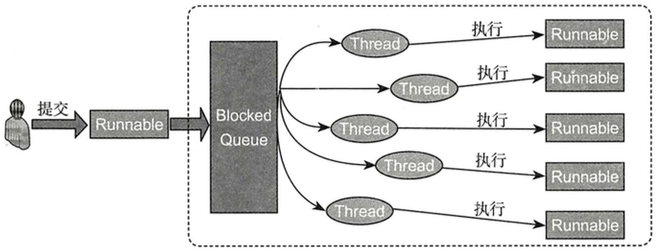
所谓的线程池,跟JDBC连接池、代理池等一样,属于一种“池”的设计模式。在设计好的数据结构中存放一定数量的线程,并且根据任务需要自动调整线程数量的多少,直到峰值。具体说来,线程池需要满足若干条件:
1. 任务队列:用于缓存提交的任务
2. QueueSize:任务队列存放的Runnable任务实例的数量,需要有限制值防止内存溢出。
3. 线程数量管理:创建线程时初始的数量init;线程池自动扩充时最大的线程数量max;空闲时的活跃线程或核心线程数量core。三者满足init<=core<=max
4. 工作线程队列:用于存储工作线程,并统计工作线程的数量。
5. 任务拒绝策略:如果线程数量达到上限且任务队列已满,需要有拒绝策略通知任务提交者,这个在工程实践中非常重要。
6. 线程工厂:用于个性化定制线程,如设置守护线程、线程名称等。
7. Keepedalive时间:线程各个重要参数自动维护的时间间隔。
线程池原理图如下:
![]()
线程池实现
“模块设计,类图先行”。明确了线程池需要实现的功能之后,就可以画出线程池的草图了,核心接口及实现类如下:
![]()
ThreadPool接口
ThreadPool接口主要定义一个线程池的基本属性,如任务提交、初始容量、最大容量、核心容量等。实现代码如下:
 1 public interface ThreadPool {
 2
 3     //submit tasks to thread pool
 4     void execute(Runnable runnable);
 5     //close pool
 6     void shutdown();
 7     //get the initial size of pool
 8     int getInitSize();
 9     //get the max size of pool
10     int getMaxSize();
11     //get the core size of pool
12     int getCoreSize();
13     //get the cache tasks queue of pool
14     int getQueueSize();
15     //get the active thread volume of pool
16     int getActiveCount();
17     //check if pool has been shutdown
18     boolean isShutdown();
19 }
RunnableQueue接口
这个接口的作用与BlockingQueue接口一样,用于存储提交的Runnable实现类任务。
1 public interface RunnableQueue {
2     //提交任务到队列
3     void offer(Runnable runnable);
4     //从队列中获取任务
5     Runnable take() throws InterruptedException;
6     //返回队列中任务数
7     int size();
8 }
ThreadFactory接口
定义了个性化创建线程的工厂方法
1 @FunctionalInterface
2 public interface ThreadFactory {
3
4     Thread createThread(Runnable runnable);
5
6 }
DenyPolicy接口
定义了线程池的拒绝策略,即当任务队列达到上限时,采取何种措施拒绝。注意接口内定义了内部类作为外围接口的实现类(该类自动为public和static,像这种嵌套类的实现,可查询《Java编程思想》)。
 1 @FunctionalInterface
 2 public interface DenyPolicy {
 3
 4     void reject(Runnable runnable, ThreadPool threadPool);
 5     //定义嵌套类作为拒绝策略的实现类
 6     //1.拒绝并丢弃任务
 7     class DiscardDenyPolicy implements DenyPolicy{
 8
 9         @Override
10         public void reject(Runnable runnable, ThreadPool threadPool) {
11
12         }
13     }
14
15     //2.拒绝并抛出自定义异常
16     class AbortDenyPolicy implements DenyPolicy{
17
18         @Override
19         public void reject(Runnable runnable, ThreadPool threadPool) {
20             throw new RunnableDenyException("The runnable " + runnable + " will abort.");
21         }
22     }
23
24     //3.拒绝, 使用提交者所在线程来完成线程任务.
25     class RunnerDenyPolicy implements DenyPolicy{
26
27         @Override
28         public void reject(Runnable runnable, ThreadPool threadPool) {
29
30             if(!threadPool.isShutdown()) {
31                 runnable.run();
32             }
33         }
34     }
35 }
其实实现了自定义异常类RunnableDenyException:
1 public class RunnableDenyException extends RuntimeException {
2
3     private static final long serialVersionUID = 112311231231412L;
4
5     public RunnableDenyException(String message) {
6         super(message);
7     }
8 }
InternalTask实现类
Runnable的实现类,会使用到RunnableQueue,它的作用其实是封装了一个任务实例,把Runnable任务的run方法封装到自己的Run方法实现中,并且提供了一个stop方法,用于在线程池销毁或数量维护时停止当前线程。
 1 public class InternalTask implements Runnable {
 2     //组合一个RunnableQueue的引用
 3     private final RunnableQueue runnableQueue;
 4     //使用volatile关键字修饰开关变量
 5     private volatile boolean running = true;
 6
 7     public InternalTask(RunnableQueue runnableQueue) {
 8         this.runnableQueue = runnableQueue;
 9     }
10     @Override
11     public void run() {
12         // if current task match "both running and isInterrupt" are true
13         // continue to take runnable from queue and run
14         while(running && !Thread.currentThread().isInterrupted()) {
15             try {
16                 Runnable task = runnableQueue.take();
17                 task.run();
18             } catch (Exception e) {
19                 running = false;
20                 break;
21             }
22         }
23
24     }
25     //停止线程的开关方法
26     public void stop() {
27         this.running = false;
28     }
29 }
到这里,一个基本线程池的骨架就搭好了,接下来主要是实现各接口,实现具体的方法。
1. 队列的实现类LinkedRunnableQueue
 1 public class LinkedRunnableQueue implements RunnableQueue {
 2     //设置队列上限
 3     private final int limit;
 4     //设置拒绝策略的引用
 5     private final DenyPolicy denyPolicy;
 6     //使用LinkedList作为队列的具体实现类
 7     private final LinkedList<Runnable> runnableList = new LinkedList<>();
 8     //设置线程池的引用
 9     private final ThreadPool threadPool;
10     //构造方法时赋初始值
11     public LinkedRunnableQueue(int limit, DenyPolicy denyPolicy, ThreadPool threadPool) {
12         this.limit = limit;
13         this.denyPolicy = denyPolicy;
14         this.threadPool = threadPool;
15     }
16
17     @Override
18     public void offer(Runnable runnable) {
19         //使用同步锁, 确保入队的线程安全
20         synchronized (runnableList) {
21             //当达到队列上限, 调用拒绝策略;否则加入队尾, 并唤醒阻塞中的线程.
22             if(runnableList.size() >= limit) {
23                 denyPolicy.reject(runnable, threadPool);
24             }else {
25                 runnableList.addLast(runnable);
26                 runnableList.notifyAll();
27             }
28         }
29     }
30
31     @Override
32     public Runnable take() throws InterruptedException {
33         synchronized (runnableList) {
34
35             while(runnableList.isEmpty()) {
36                 try {
37                     //如果队列中没有可执行任务, 线程挂起, 进入runnableList关联的monitor waitset中等待被唤醒
38                     runnableList.wait();
39                 } catch (InterruptedException e) {
40                     //如果被中断, 需要抛出异常
41                     throw e;
42                 }
43             }
44             return runnableList.removeFirst();
45         }
46     }
47
48     @Override
49     public int size() {
50         synchronized (runnableList) {
51             //返回队列中的任务数量
52             return runnableList.size();
53         }
54     }
55 }
2. 线程工厂的实现
 1 public class DefaultThreadFactory implements ThreadFactory {
 2     //定义原子类的Integer作为线程组的计数
 3     private static final AtomicInteger GROUP_COUNTER = new AtomicInteger(1);
 4     //定义线程组对象
 5     private static final ThreadGroup group = new ThreadGroup("MyThreadPool-"+ GROUP_COUNTER.getAndDecrement());
 6     //定义生产的线程计数
 7     private static final AtomicInteger COUNTER = new AtomicInteger(0);
 8
 9     @Override
10     public Thread createThread(Runnable runnable) {
11         return new Thread(group, runnable, "thread-pool-" + COUNTER.getAndDecrement());
12     }
13 }
3. 线程池的实现
线程池的实现相对比较复杂, 运用了多种设计模式的思想,核心的要点包括:
1. 使用私有内部类的方式来复用Thread类,防止向外暴露Thread类的方法;
2. 核心组成部分主要是LinkedList实现的任务队列和ArrayDeque实现的工作线程队列,构成了主要的存储主体。
3. 核心的扩容机制需要RunnableQueue + InternalTask + ThreadFactory的结合, 简单说来就是通过判定任务数是否达到阈值,然后增加工作线程的数量。
  1 public class BasicThreadPool implements ThreadPool {
  2     //为了不暴露Thread类的方法, 使用私有内部类WorkThread来继承Thread类
  3     private WorkThread workThread;
  4     //线程池的基本属性
  5     private final int initSize;
  6     private final int maxSize;
  7     private final int coreSize;
  8     private int activeCount;
  9     //线程工厂引用
 10     private final ThreadFactory threadFactory;
 11     //队列引用
 12     private final RunnableQueue runnableQueue;
 13     //线程池销毁标识
 14     private volatile boolean isShutdown = false;
 15     //工作线程的队列, 使用ArrayDeque实现
 16     private final Queue<ThreadTask> threadQueue = new ArrayDeque<>();
 17     //定义了一个默认的拒绝策略
 18     private final static DenyPolicy DEFAULT_DENY_POLICY = new DenyPolicy.DiscardDenyPolicy();
 19     //定义了一个默认的工厂对象
 20     private final static ThreadFactory DEFAULT_THREAD_FACTORY = new DefaultThreadFactory();
 21
 22     private final long keepAliveTime;
 23     private final TimeUnit timeUnit;
 24     //默认的构造器, 只需要传入初始容量, 最大容量, 核心容量和队列上限
 25     public BasicThreadPool(int initSize, int maxSize, int coreSize, int queueSize) {
 26         this(initSize, maxSize, coreSize, queueSize, DEFAULT_THREAD_FACTORY,
 27                 DEFAULT_DENY_POLICY,10,TimeUnit.SECONDS);
 28     }
 29     //完整构造器
 30     public BasicThreadPool(int initSize, int maxSize, int coreSize, int queueSize, ThreadFactory threadFactory,
 31             DenyPolicy denyPolicy,long keepAliveTime, TimeUnit timeUnit) {
 32         this.workThread = new WorkThread();
 33         this.initSize = initSize;
 34         this.maxSize = maxSize;
 35         this.coreSize = coreSize;
 36         this.threadFactory = threadFactory;
 37         this.runnableQueue = new LinkedRunnableQueue(queueSize, denyPolicy, this);
 38         this.keepAliveTime = keepAliveTime;
 39         this.timeUnit = timeUnit;
 40         this.init();
 41     }
 42     //线程池的初始化方法, 在构造器中被调用, 用于启动工作线程
 43     private void init() {
 44         workThread.start();
 45         for(int i = 0; i < initSize; i++) {
 46             newThread();
 47         }
 48     }
 49     //封装了工作线程的启动方法:
 50     //1. 使用InternalTask封装RunnableQueue对象
 51     //2. 通过工厂方法制造工作线程并启动
 52     //3. 工作线程入队, 工作线程队列计数器+1
 53     private void newThread() {
 54         InternalTask internalTask = new InternalTask(runnableQueue);
 55         Thread thread = this.threadFactory.createThread(internalTask);
 56         ThreadTask threadTask = new ThreadTask(thread, internalTask);
 57         threadQueue.offer(threadTask);
 58         this.activeCount++;
 59         thread.start();
 60     }
 61     //工作线程出队的方法
 62     private void removeThread() {
 63         ThreadTask threadTask = threadQueue.remove();
 64         threadTask.internalTask.stop();
 65         this.activeCount--;
 66     }
 67     //核心:通过内部类继承Thread方法, 设计了自动扩容的机制.
 68     //为了防止过快增加到Max容量, 使用continue来退出循环
 69     private class WorkThread extends Thread{
 70         @Override
 71         public void run() {
 72             while(!isShutdown && !isInterrupted()) {
 73                 try {
 74                     timeUnit.sleep(keepAliveTime);
 75                 } catch (InterruptedException e) {
 76                     isShutdown = true;
 77                     break;
 78                 }
 79                 synchronized (this) {
 80                     if(isShutdown) {
 81                         break;
 82                     }
 83                     if(runnableQueue.size() > 0 && activeCount < coreSize) {
 84                         for(int i = initSize; i<coreSize;i++) {
 85                             newThread();
 86                         }
 87                         continue;
 88                     }
 89                     if(runnableQueue.size() > 0 && activeCount < maxSize) {
 90                         for(int i = coreSize; i<maxSize;i++) {
 91                             newThread();
 92                         }
 93                     }
 94                     if(runnableQueue.size()==0 && activeCount > coreSize) {
 95                         for(int i = coreSize; i < activeCount; i++) {
 96                             removeThread();
 97                         }
 98                     }
 99
100                 }
101             }
102         }
103     }
104
105     @Override
106     public void execute(Runnable runnable) {
107         //如果线程池已经销毁, 将抛出异常
108         if(this.isShutdown) {
109             throw new IllegalStateException("the thread pool is destoried");
110         }
111         this.runnableQueue.offer(runnable);
112     }
113
114     @Override
115     public void shutdown() {
116         synchronized(this) {
117             //防止重复销毁
118             if(isShutdown) {
119                 return;
120             }
121             //重置关闭标识
122             isShutdown = true;
123             //关闭任务工作线程
124             threadQueue.forEach(threadTask -> {
125                 threadTask.internalTask.stop();
126                 threadTask.thread.interrupt();
127             });
128             //关闭线程池的工作线程
129             this.workThread.interrupt();
130         }
131     }
132
133     @Override
134     public int getInitSize() {
135         if(isShutdown) {
136             throw new IllegalStateException("The thread pool is destroy");
137         }
138         return this.initSize;
139     }
140
141     @Override
142     public int getMaxSize() {
143         if(isShutdown) {
144             throw new IllegalStateException("The thread pool is destroy");
145         }
146         return this.maxSize;
147     }
148
149     @Override
150     public int getCoreSize() {
151         if(isShutdown) {
152             throw new IllegalStateException("The thread pool is destroy");
153         }
154         return this.coreSize;
155     }
156
157     @Override
158     public int getQueueSize() {
159         if(isShutdown) {
160             throw new IllegalStateException("The thread pool is destroy");
161         }
162         return runnableQueue.size();
163     }
164
165     @Override
166     public int getActiveCount() {
167         synchronized(this) {
168             return this.activeCount;
169         }
170     }
171
172     @Override
173     public boolean isShutdown() {
174         return this.isShutdown;
175     }
176 }
线程池的测试
编写一个简单的测试类,同时启动20个任务,测试线程池的活动状态:
 1 public class ThreadPoolTest {
 2
 3     public static void main(String[] args) throws InterruptedException {
 4
 5         final ThreadPool threadPool = new BasicThreadPool(2, 6, 4, 1000);
 6
 7         for(int i = 0; i < 20; i++) {
 8             threadPool.execute(() -> {
 9                 try {
10                     TimeUnit.SECONDS.sleep(10);
11                     System.out.println(Thread.currentThread().getName() + "is Running and done");
12                 } catch (InterruptedException e) {
13                     e.printStackTrace();
14                 }
15             });
16         }
17         while(true) {
18             System.out.println("getActiveCount: " + threadPool.getActiveCount());
19             System.out.println("getQueueSize: " + threadPool.getQueueSize());
20             System.out.println("getCoreSize: " + threadPool.getCoreSize());
21             System.out.println("getMaxSize: " + threadPool.getMaxSize());
22             System.out.println("================================================");
23             TimeUnit.SECONDS.sleep(5);
24         }
25     }
26 }
输出结果如下
thread-pool--1is Running and done
thread-pool-0is Running and done
getActiveCount: 4
getQueueSize: 14
getCoreSize: 4
getMaxSize: 6
================================================
getActiveCount: 4
getQueueSize: 14
getCoreSize: 4
getMaxSize: 6
================================================
thread-pool--3is Running and done
thread-pool--2is Running and done
thread-pool--1is Running and done
thread-pool-0is Running and done
getActiveCount: 6
getQueueSize: 8
getCoreSize: 4
getMaxSize: 6